




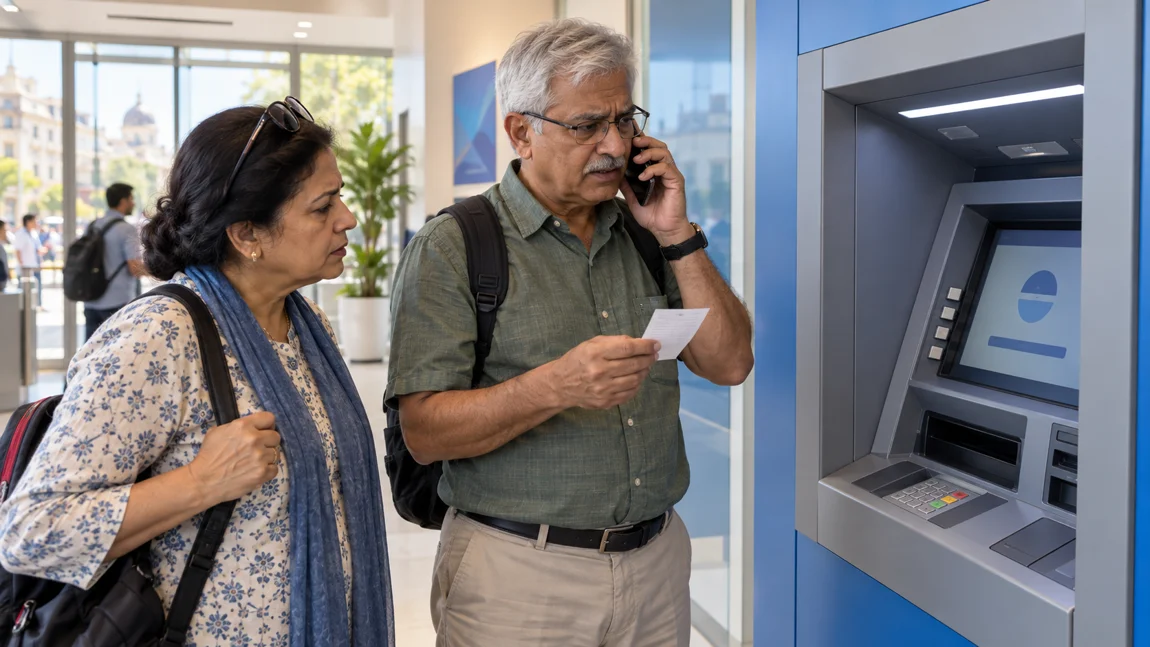
If an overseas ATM gives no cash but your Indian account shows a debit, record what happened and contact the bank that issued your card through its official channel. Describe it as a withdrawal you attempted but for which cash was not dispensed. Do not assume that a domestic failed-ATM reversal deadline or compensation rule applies to an overseas withdrawal.
First make a clear record of this attempt
From a safe place, note the ATM operator, machine identifier if displayed, full location, date and local time. Write down the currency and amount requested, whether no cash or only part of the cash arrived, and whether the card came back. Keep any receipt, including one that says the transaction failed. If the machine issued none, say that in your report rather than inventing a reference.
Check the entry in your bank's own app or statement. Save its amount, currency, transaction reference and status. A phone alert is useful evidence of what you saw, but ask the issuer whether the entry is pending, posted or reversed. Keep the requested local-currency amount as well as the amount debited in INR; do not treat an exchange-rate difference as proof of how much cash was delivered.
Report cash not dispensed, not a purchase refund
Tell the issuer that the withdrawal was yours, but the ATM did not dispense the requested cash. If you received only part, report the exact amount you actually received and the shortfall. If you did not authorise the withdrawal at all, make that clear instead. These are different facts and may require a different dispute reason.
ICICI Bank's official CardMember Dispute Form lists both an ATM attempt that did not dispense cash and one that partially dispensed cash, and asks for the ATM slip. Its document list distinguishes domestic and international transactions. HSBC India's electronic-banking FAQ separately lists cash not dispensed from an ATM among dispute categories and advises prompt reporting to the bank, contact centre or branch. These examples show why a precise reason matters; your issuer decides its own current process and documents.
Use a verified issuer route and keep a case number
Use your banking app, the number printed on the card or a contact reached independently from the issuer's own website. Give the ATM details, withdrawal amount, actual cash received, bank entry and reference. Ask how to file the cash-not-dispensed dispute for an international ATM withdrawal, what evidence is required, the reporting deadline and how you can track the case from abroad.
If an ATM-owner contact is printed on the machine, record it, but verify the operator before using it. Do not hand a card, PIN, password or one-time code to a stranger offering to fix the machine. Do not send unmasked card or account records to a travel group or public social post. Submit sensitive documents only through the issuer's verified process.
Ask about the overseas timetable, do not borrow one
Ask the issuer when it expects an update, whether you need to submit a signed form, and when to follow up if the debit remains. Keep the complaint reference and the bank's written response. Do not assume the amount will return instantly, that a provisional credit is final, or that every dispute will be accepted.
Domestic failed-transaction articles can describe specific reversal periods or compensation. This article has not confirmed a universal overseas deadline or compensation entitlement. The ATM country, card product, issuer and actual transaction matter. Ask which rules apply to your case rather than relying on a timeline copied from a different market.
Separate the dispute from today's cash need
A complaint acknowledgement does not put cash in your hand. If you still need money for the journey, use a backup you have actually checked, such as an accessible second payment method or help arranged through your bank. Do not keep repeating withdrawals at the same malfunctioning machine to test whether it works. Record any separate later attempt on its own, so multiple debits do not get mixed into one story.
If the ATM also retained the card, tell the issuer and ask about securing it. A cash dispute and protecting a retained card are not the same task.
Close the loop against the statement
Check whether the debit is reversed or a credit appears, the amount and currency, and the issuer's final case decision. If the result does not match the cash shortfall you reported, ask the issuer to explain it and provide the next escalation route. Keep the original evidence until the matter is settled.
TripKeeper's practical recommendation is to leave a clean trail from one ATM attempt to one bank case: where, when, requested cash, received cash, debit and complaint reference. We do not promise a refund, a fixed processing time or an emergency cash service.
Sources and limits
Checked 4 November 2026: ICICI Bank dispute form and HSBC India electronic-banking FAQ. The forms and FAQ are examples of issuer processes, not one rule for every Indian card abroad. No universal overseas reversal deadline, compensation amount, exchange-rate treatment or guaranteed reimbursement is confirmed here.

A Miranda House graduate and lawyer who traded courtrooms for slow travel. Cheshta travels with the batches we host ourselves, with a soft spot for travelling alongside elders.
Planning your next trip?
We'll handle insurance, hotels, airport assistance and the itinerary — the same way we do it for every trip.
Questions on this article
asked by readers, answered by us
Was this helpful?
one tap, no sign-up