




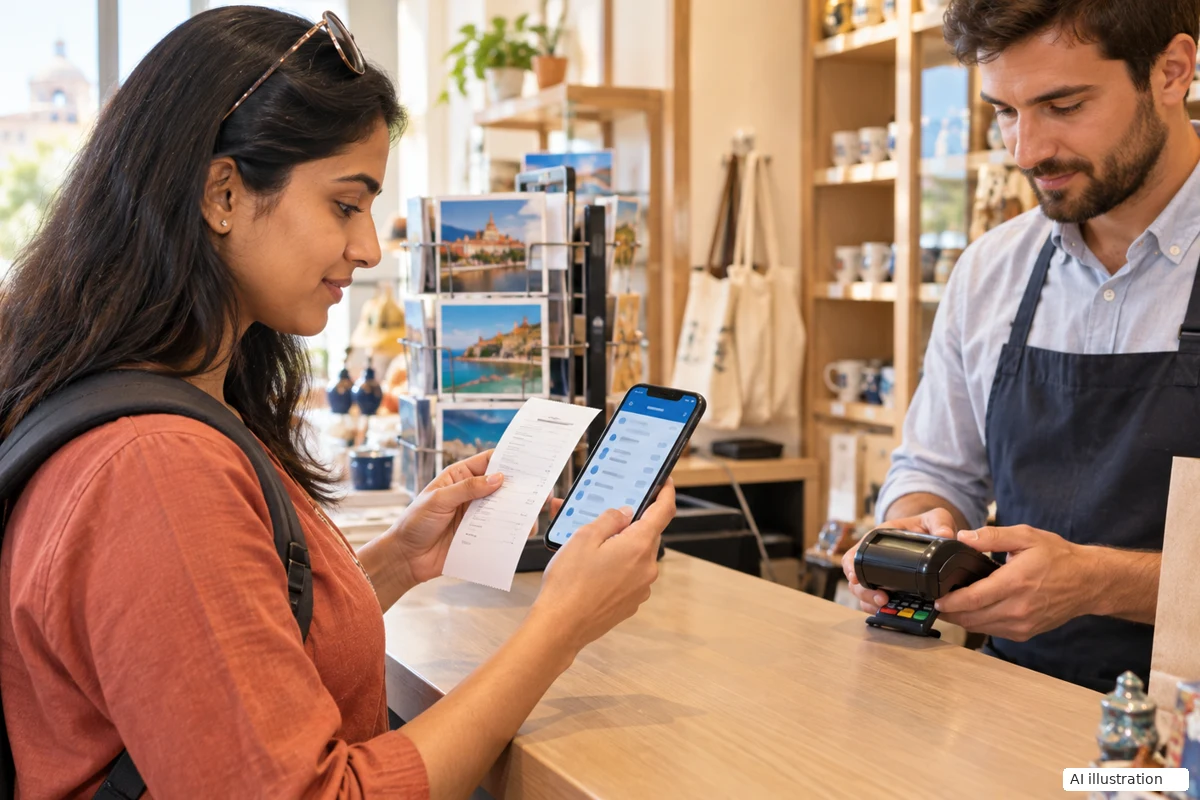
If a shop abroad appears to charge your Indian card twice for one purchase, save the receipt and check both entries with your card issuer. Two SMS alerts or app notifications alone do not settle whether two payments finally posted. Ask the merchant to check its records too, but do not let a verbal "it will reverse" promise replace reporting within your issuer's applicable process.
First compare the two entries
Use your bank's own app or statement, not only the notification screen. Note the merchant name, transaction date and local time, amount, currency, status and available reference for each entry. Ask the issuer whether each is pending, an authorization, posted, reversed or otherwise still being processed. Do not assume an SMS debit, a reduced available limit and a settled statement charge mean the same thing.
Keep the original purchase amount and currency visible in your private evidence. Differences in the INR amount are a question for the issuer, not proof that the second entry is a different purchase. Avoid publishing unmasked account screenshots.
Ask the merchant to check one purchase against its terminal records
Explain that you made one purchase but see two entries. Show the genuine receipt and only the transaction details needed to identify it. Ask whether the second attempt was voided, whether two payments were captured and whether a reversal or refund has been initiated. Request written confirmation and its reference if available.
If the first terminal attempt appeared to fail and you were asked to tap or insert again, record that sequence. ICICI Bank's reversal guidance specifically describes double-swiping after a missing charge slip as a scenario that can lead to duplicate payment. That example explains why the record matters; it is not a guarantee of the outcome in your case.
Keep a small dispute evidence file
- The purchase invoice and genuine card charge slip, if issued.
- Both bank entries with dates, amounts, currencies and references.
- The number of purchases you actually made and a short timeline of the payment attempts.
- The merchant's reply, void receipt or refund confirmation.
- Your issuer's complaint number and requested next steps.
ICICI Bank's official dispute form includes "charged twice for the same transaction" and asks for the genuine charge slip in a related duplicate-transaction declaration. The documents required for your card and reason may differ. Use your issuer's current official process and provide only what it asks through a verified channel.
Contact the issuer promptly if it remains unresolved
Use the official banking app, the number printed on your card or a contact reached from the issuer's own site. Explain that this is a possible duplicate for one purchase. Ask how to raise the correct dispute, what evidence is needed, the applicable reporting deadline and how to track it. Do not assume a time limit from another bank, card product or internet guide applies.
HDFC Bank's online dispute guidance describes selecting the card product, merchant and transaction, then entering the dispute reason. Its customer-care page also lists disputed transactions among matters it can handle. These are examples of issuer routes, not instructions to give your card details to a travel agent or to TripKeeper.
If the bank says an entry is pending, ask what to watch for and when to contact it again if the entry remains or posts. Do not wait beyond a reporting deadline because a merchant promised an automatic reversal. Keep any bank explanation in your case record.
Do not confuse duplicate billing with an unfamiliar transaction
If you do not recognise the merchant or did not authorise the transaction at all, tell the issuer that promptly and ask about protecting the card. Do not label every duplicate alert as fraud, but do not treat a genuinely unrecognised payment as an ordinary shop refund either.
Never share a PIN, password, security code or one-time code with someone offering a refund. Verify unexpected calls or links independently through the issuer's official channel. Do not use contact details supplied only by an unknown message.
Check the result, not only the complaint acknowledgement
Track whether the disputed entry is reversed or a refund appears and whether the issuer closes the case. A complaint number is evidence of reporting, not proof of reimbursement. Ask the issuer how the dispute affects any amount due and follow its instructions rather than simply omitting a charge from payment.
TripKeeper's practical point is to preserve the single genuine purchase and the extra entry as a clear evidence trail. We do not promise that a duplicate will reverse within a fixed number of days or that every claim will be accepted.
Sources and limits
Checked 4 November 2026: ICICI Bank dispute form; ICICI Bank reversal guidance; HDFC Bank online dispute guidance; HDFC Bank card customer care. No universal dispute deadline, reversal time, overseas fee treatment or reimbursement outcome is confirmed here. Ask the issuer about your actual card and entries.

A Miranda House graduate and lawyer who traded courtrooms for slow travel. Cheshta travels with the batches we host ourselves, with a soft spot for travelling alongside elders.
Planning your next trip?
We'll handle insurance, hotels, airport assistance and the itinerary — the same way we do it for every trip.
Questions on this article
asked by readers, answered by us
Was this helpful?
one tap, no sign-up