




- Scope
- National climate patterns
- Summer
- December-February
- Winter
- June-August
- Forecast
- Not provided
- Sources checked
- 17 November 2026
As per NIWA and Tourism New Zealand guidance checked on 17 November 2026. Climate patterns, not a forecast.
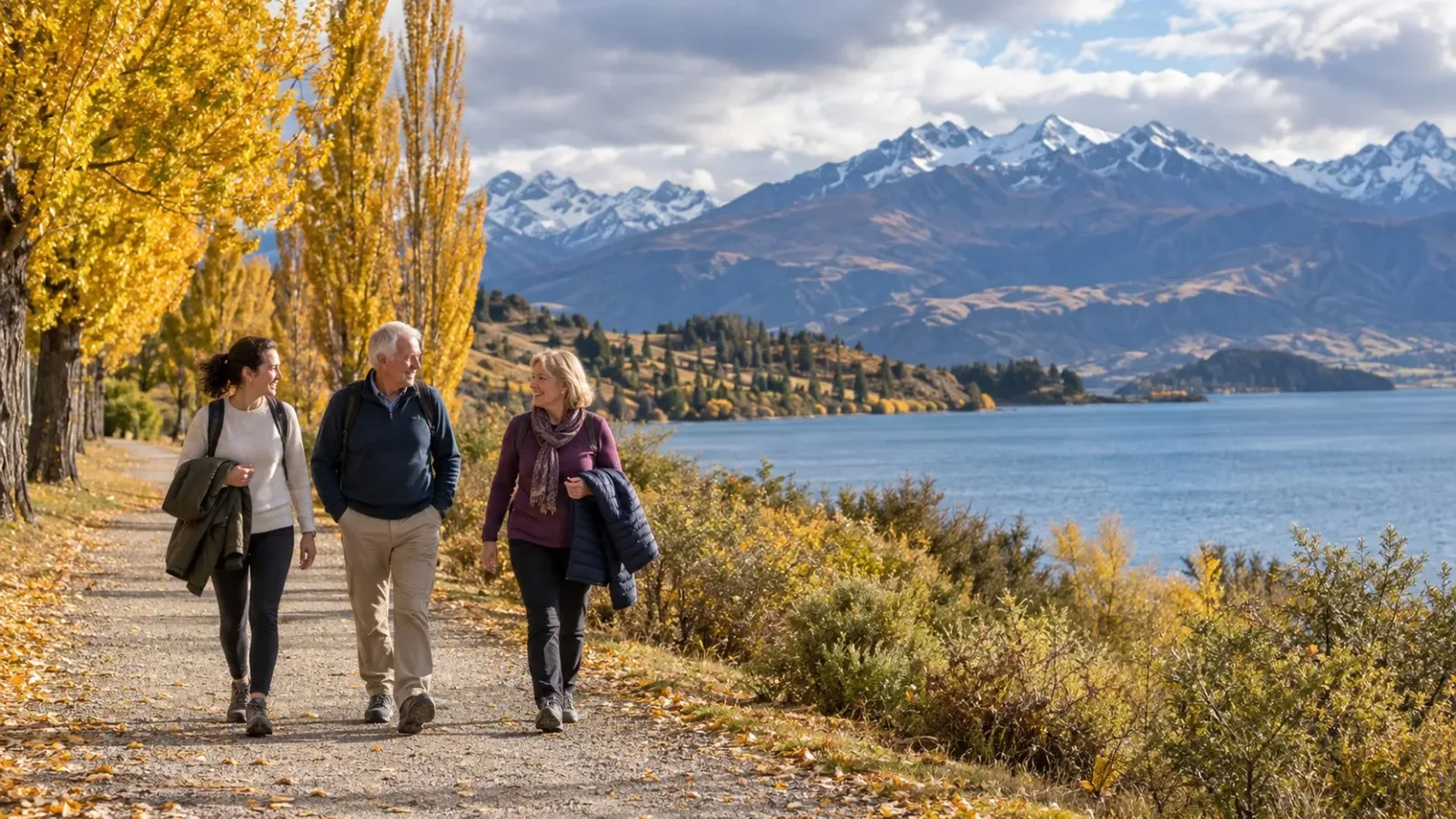
AI-generated fictional scene of three adults on an autumn lakeside path, not an identified New Zealand route, current conditions or an access record.
New Zealand does not have one best travel month for every region. Its far north can be subtropical, its far south is cooler, and the mountains have severe alpine conditions. Choosing dates works better when you first decide which parts of the country you want to see.
NIWA's national climate overview is the basis for the regional picture below. Tourism New Zealand supplies the seasonal month groupings. Both were checked on 17 November 2026. This is climate guidance, not a forecast for your travel dates.
Put the four seasons on the calendar
New Zealand's summer runs from December to February, autumn from March to May, winter from June to August and spring from September to November. For travellers used to the Northern Hemisphere, that reverses the familiar calendar: a December trip falls in summer, not winter.
NIWA says the warmest month is usually January or February and the coldest is usually July. Those are broad climate patterns, not dates when conditions switch on or off. The beginning of spring does not remove mountain cold, and a summer month does not describe every place on the route equally well.
Compare north, south and altitude
Latitude is part of the story. The national overview describes a progression from the warmer far north to the cooler far south. Altitude adds another difference: mountainous areas can have severe alpine conditions, even where the nearest lowland town gives a gentler impression.
A countrywide temperature number therefore hides important choices. A coastal stay, an inland town and a high mountain area are different climate settings. NIWA also notes that the seasonal temperature contrast is greater inland and east of the mountain ranges than in many other areas. Think about the actual places on the route, rather than transfer one city's weather summary to the whole trip.
Read rainfall by region
Mountain chains interrupt the prevailing westerly winds and help create sharply different climate regions. NIWA identifies the South Island's West Coast as the wettest area, while land east of the mountains can be much drier. Nearby-looking places on a map need not share the same rainfall pattern.
The wettest season is not identical everywhere either. Northern and central areas generally receive more rain in winter than in summer. Across much of the south, winter is instead the season with the least rain. That does not make southern winter warm or rain-free; temperature and rainfall answer different questions.
Snow has a regional pattern too. NIWA says most falls in mountain areas. Coastal parts of the North Island and the west of the South Island rarely receive it, while eastern and southern parts of the South Island may experience winter snow. Frosts can occur throughout the country. A winter visit is not a promise of a snow-covered city.
Turn the climate picture into a travel choice
Start with your route and preferred climate setting. If warmth matters most, the north-south pattern is relevant. If mountains are central to the trip, altitude deserves its own consideration. If you dislike rain, compare the side of the ranges and the regional seasonal pattern, rather than look for a countrywide dry month. These are ways to use the climate evidence, not guarantees of the weather you will get.
Long-term averages help with that first choice; a current forecast answers a different question. NIWA's overview includes historical climate-zone data and maps, not a prediction for a particular holiday. Once dates and places are chosen, check local forecasts and current conditions separately. Weather averages alone do not establish that a trail, attraction or seasonal activity is operating.
Frequently asked questions
What are New Zealand's summer months?
December, January and February. Winter is June, July and August.
Is one month best for the whole country?
No single month fits all regions and interests. Latitude, altitude and the mountain ranges make a difference.
Is winter the wettest season everywhere?
No. NIWA distinguishes northern/central patterns from much of the south, where winter is the least-rainfall season.
Will every winter trip include snow?
No. Most snow falls in mountain areas; coastal and regional patterns differ.
Can climate averages confirm that an activity is operating?
No. Check the actual trail, attraction or activity and current conditions separately. A climate summary is not an operating notice.
Should I use one city's weather for the whole country?
No. NIWA's national overview distinguishes latitude, altitude and the effects of mountain ranges. Check the actual regions on your route.
Official sources and limits
As per the named climate and seasonal guidance checked 17 November 2026. Historical regional patterns, not a forecast, universal best month, snow guarantee or activity-opening confirmation.

A Miranda House graduate and lawyer who traded courtrooms for slow travel. Cheshta travels with the batches we host ourselves, with a soft spot for travelling alongside elders.
Planning your next trip?
We'll handle insurance, hotels, airport assistance and the itinerary — the same way we do it for every trip.
Questions on this article
asked by readers, answered by us
Was this helpful?
one tap, no sign-up