




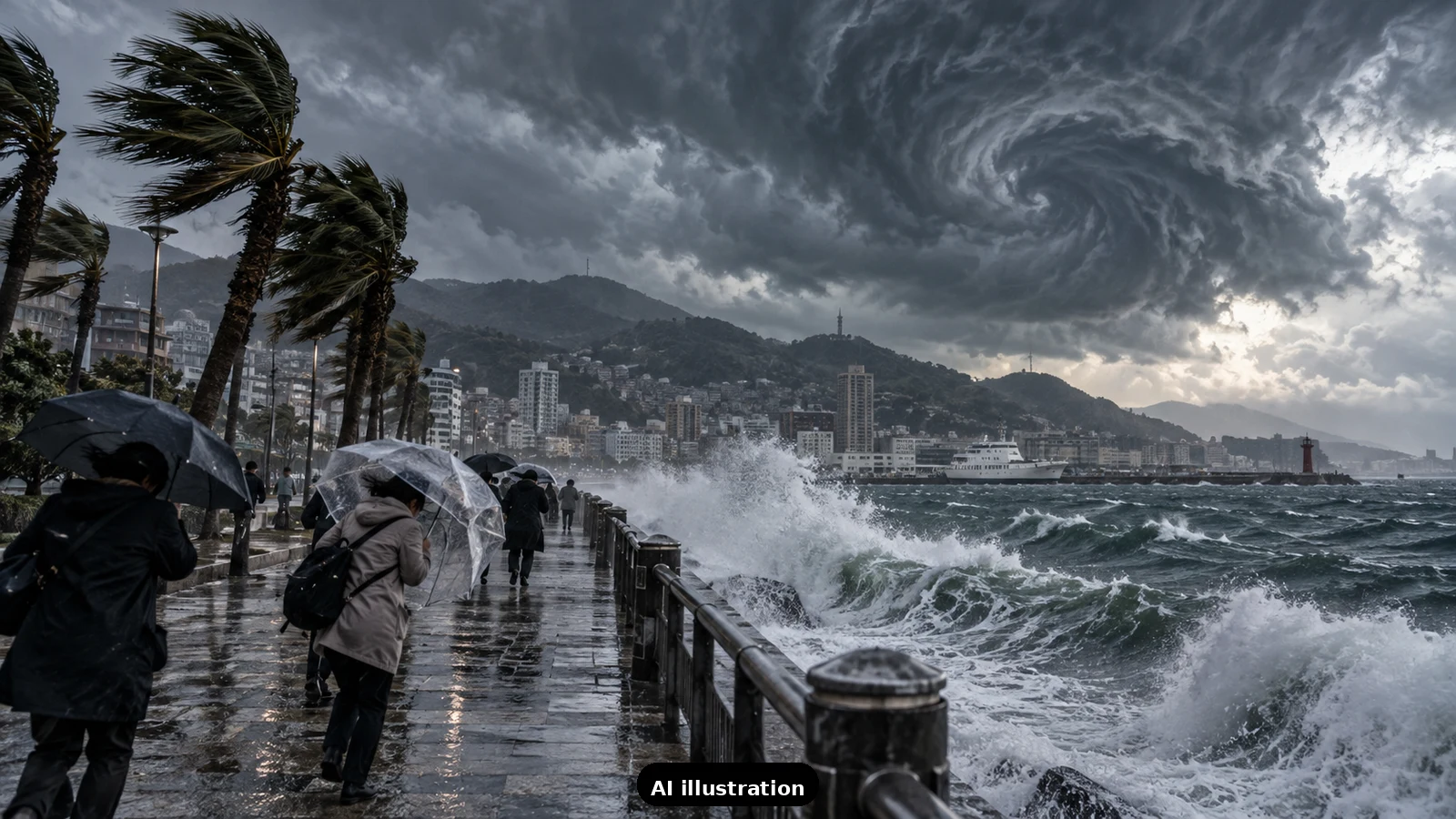
September and October are two of the best months to be in Japan - the summer heat breaks, the crowds thin after Obon, and the first autumn color starts in the north. They are also the heart of typhoon season, which is why travelers hesitate. Here is the honest picture: what typhoons actually do to a trip, how Japan's warning system keeps you ahead of them, and the booking habits that make these months a smart choice rather than a gamble.
What typhoon season actually means. Typhoons are the Pacific's hurricanes, and Japan's main typhoon months run roughly August through October, with September typically the most active for landfalls on the main islands. That does not mean constant storms - a typical September or October week in Japan is calm and pleasant. It means that somewhere in the season, several typhoons will approach the country, each disrupting travel in its path for a day or two. The odds that one crosses your exact itinerary on your exact dates are low; the odds that you will feel at least a day of wind and rain across a two-week autumn trip are real.
What a typhoon does to your plans. The honest disruption list: shinkansen lines suspend or slow on announced sections (operators decide the day before and publish it), flights cancel in waves around the storm's path, expressways close, and outdoor attractions shut - usually for 12 to 36 hours per event, then everything restarts remarkably fast. Cities hunker down politely: shops close early, trains thin out, and hotels are very used to storm nights. The dangerous parts are flooding, landslides in mountain areas, and being outdoors or on exposed coast during the peak - none of which a sensible traveler in a city hotel needs to experience.
The warning system is your friend. Japan tracks typhoons for days before arrival, in English: the Japan Meteorological Agency (JMA) issues forecasts, warnings and advisories, and NHK World and major railway operators publish suspension plans in advance. The practical rhythm: three days out you know a storm might matter, one day out you know which regions and lines it will hit, and operators tell you what will stop and when. A typhoon almost never surprises a traveler who checks the forecast each morning.
How to book for typhoon season. The whole game is flexibility. Choose hotels with free cancellation, so a storm day can become a rerouted day. Avoid tight chains of non-refundable segments - a same-day flight off a remote island after a ferry is a bad idea in September. Build one slack day into every week. Take travel insurance that covers weather disruption, and keep key bookings (rail passes, reserved trains) on refundable or rebookable terms where offered. None of this is exotic advice - it is how experienced Japan travelers always book, with extra weight in storm season.
Storm-day strategy. When one is coming, the right move is simple: be in a major city, not in transit. Tokyo, Osaka and Fukuoka are excellent places to wait out a typhoon - department stores, covered arcades, museums, aquariums and some of the world's best convenience-store dinners. Do not schedule the mountain, island or coastal day for the storm window; swap days instead. And respect the closures: if the railway says the line stops at 6 PM, plan to be home by 5.
So: September, October, or neither? Go. September still carries late-summer warmth with thinning crowds; October is many repeat travelers' single favorite month - stable weather, clear skies after fronts, festivals everywhere, and the start of foliage in the high country. The typhoon risk is real but manageable, and it comes with a gift: the clearest, crispest days of the Japanese year often arrive in the two days right after a typhoon passes. Travel with flexible bookings, a morning forecast habit, and one slack day, and typhoon season becomes a reason these months are good value rather than a reason to stay away.
How TripKeeper handles storm season. Our team watches JMA and operator advisories for every trip in the August-October window, builds itineraries with swappable days and city-based storm positions, and rebooks trains and hotels when a suspension is announced - travelers hear the plan, not the panic. Founder-hosted autumn batches run with that margin built in; independent travelers get the same advisory monitoring and flexible-booking structure through the trip-planning inquiry.

A Miranda House graduate and lawyer who traded courtrooms for slow travel. Cheshta travels with the batches we host ourselves, with a soft spot for travelling alongside elders.
Planning your next trip?
We'll handle insurance, hotels, airport assistance and the itinerary — the same way we do it for every trip.
Questions on this article
asked by readers, answered by us
Was this helpful?
one tap, no sign-up
