




The Trip Keeper The Trip Keeper
three doors, pick the one that fits your family How do you want to travel?
Cheshta Agarwal, founder and host of The Trip Keeper, smiling on a green country road
Hosted by Cheshta

Founder-Hosted Group Tour

the trips where Cheshta travels with you

Our own exclusive group trips. Cheshta is on the trip, from the first flight to the last dinner.

  • Cheshta travels with the group
  • One clear price, inclusions listed
  • Meet your travel family
Next up: Vietnam, 17 DecView →
See founder trips →
A fixed-departure batch on tour

fixed dates, fixed flights

Join a batch of fellow travellers on set dates. Limited seats, flights included, with options. Our team doesn't travel on these.

  • Fixed dates and flights
  • Limited seats per batch
  • Flight options available
See departures →
A private family trip

Private Tour

your dates

just your family, nobody else

Trips planned around your family, your pace and your dates. Milestone birthdays and anniversaries.

  • Travel on your own dates
  • Route shaped around you
Ask for a quote →
← Journal ☏
Trip Planning 3 min read

Can Indian tourists carry packaged thepla into Australia?

Generally yes - but only if you declare it. Australia requires every food item to be declared on the Incoming Passenger Card, no exceptions for small amounts or ingredients. A commercially sealed, labelled pack of thepla usually passes inspection; homemade loose packs are harder to clear. Declare and you can never be fined over food - the worst case is the bin. Hide it and you risk real fines and visa trouble.

share WhatsApp Facebook X
Text size
Can Indian tourists carry packaged thepla into Australia?
Send to Mummy-Papa Opens WhatsApp with a short summary — pick who to send it to.

Short answer: usually yes, provided you declare it. Australia does not run a simple banned/allowed food list at the border - it runs a declare-everything system. The Australian Border Force is blunt about it: food items brought into Australia must be declared on your Incoming Passenger Card, even small amounts or cooking ingredients, and biosecurity officers may inspect whatever you bring.

Why thepla is mostly fine. Thepla is a cooked, dry, flour-based flatbread - the kind of shelf-stable baked good that typically clears Australian biosecurity when it is for personal consumption. The red flags in food inspection are meat, dairy, fresh fruit and vegetables, seeds for planting, and raw unprocessed ingredients. A plain thepla (wheat flour, oil, salt, spices) has none of those in any meaningful quantity once cooked.

Packaging changes the odds. A commercially manufactured, vacuum-sealed pack with a printed ingredient list is the easiest version to clear: the officer can read exactly what is inside. Homemade thepla in a zip-lock bag is not banned, but it is unverifiable - the officer cannot confirm ingredients, and anything they cannot assess can be binned. If you carry homemade, expect questions and accept that the answer may be no.

Check the ingredient list against Australia's current bans. Some items are outright prohibited right now - under khapra beetle biosecurity actions, cumin, coriander and fennel seeds and dried chillies cannot come in as raw commodities. Cooked trace amounts inside a bread are a different case from carrying a packet of the spice itself, but read the label, and never pack raw spice pouches, whole seeds or chutneys and pickles alongside your thepla - wet, oily accompaniments are both a liquids problem on the plane and a biosecurity problem at the border.

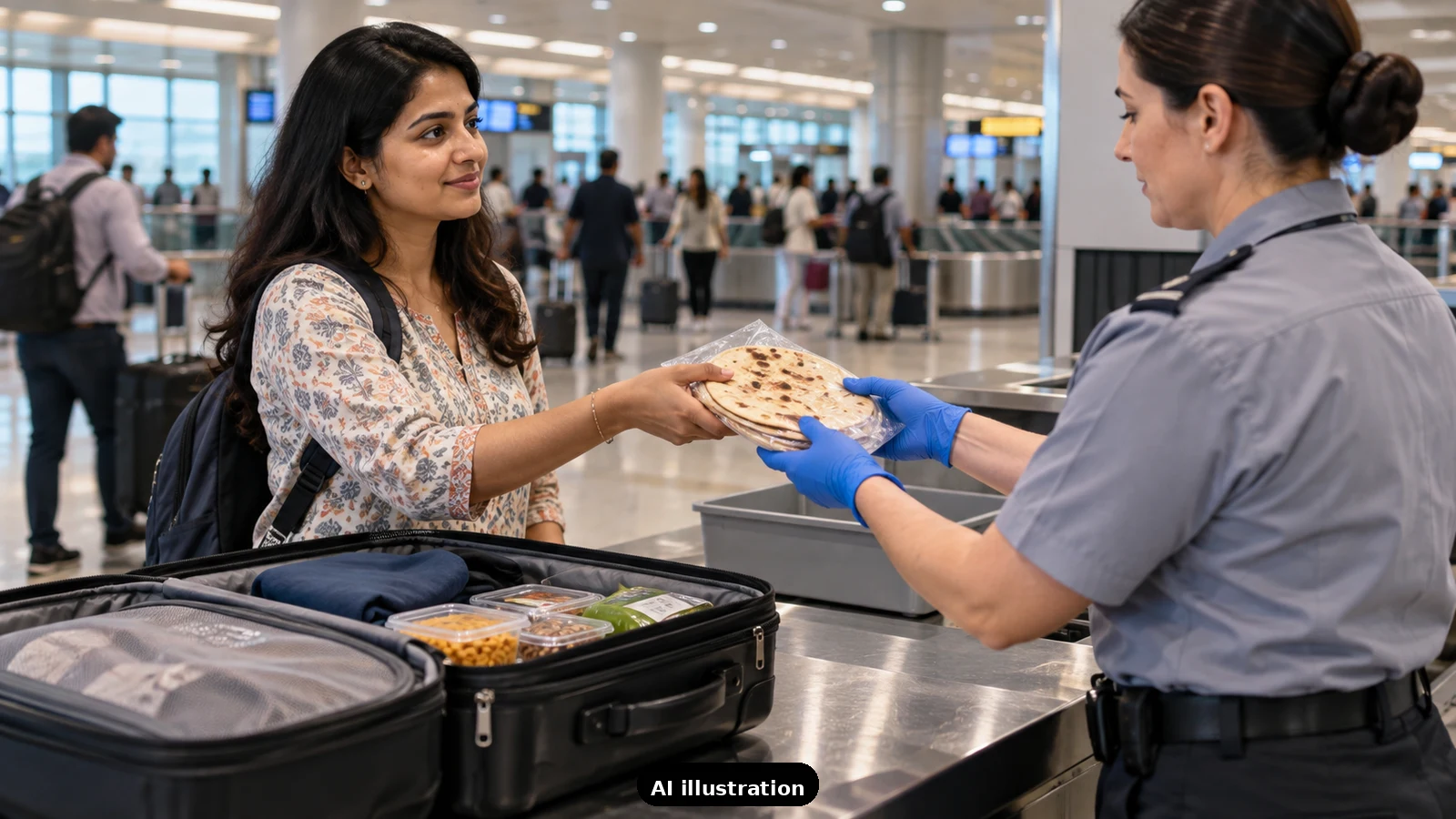
How declaration actually works. On the flight you get an Incoming Passenger Card. Tick YES to the food question. On arrival you go through the declaration lane, tell the officer you have packaged thepla, and they either wave you through or inspect it. Inspection takes minutes. The critical part: declaring never gets you fined, even if the item is not allowed - the officer just disposes of it. Failing to declare and being caught (and there are detector dogs and x-ray) is where on-the-spot fines and, for serious cases, visa consequences begin.

Quantities and the mailing trap. Keep it to personal-consumption amounts - a few packs for the family, not a suitcase to distribute. And the same declaration rules apply to food sent by post, so a relative mailing thepla parcels needs to declare the contents on the parcel too.

When in doubt, check BICON. The Department of Agriculture's Biosecurity Import Conditions system (BICON) lists the current import conditions for specific foods. Rules change with pest outbreaks, so look up your item close to travel.

How TripKeeper fits in. Border food rules are exactly the sort of small print that trips up a family holiday. When we plan an Australia trip, we brief you on what to pack, what to declare and what to leave behind, so the arrival lane is a formality. Send us a trip-planning inquiry and travel sorted.

Send to Mummy-Papa Opens WhatsApp with a short summary — pick who to send it to.
Cheshta Agarwal
Founder · Travel Creator · Lawyer

A Miranda House graduate and lawyer who traded courtrooms for slow travel. Cheshta travels with the batches we host ourselves, with a soft spot for travelling alongside elders.

or let us do all of it

Planning your next trip?

We'll handle insurance, hotels, airport assistance and the itinerary — the same way we do it for every trip.

Questions on this article

asked by readers, answered by us

Can I carry thepla to Australia from India?

Generally yes, if you declare it. All food must be declared on the Incoming Passenger Card. Cooked, dry flatbread like thepla typically passes biosecurity inspection for personal consumption - declare it and let the officer decide.

Do I really have to declare a few packs of thepla?

Yes. Australia requires every food item to be declared, including small amounts and cooking ingredients. Declaring costs nothing and you cannot be fined for a declared item - the worst outcome is the officer bins it. Not declaring and getting caught can mean on-the-spot fines.

Is commercially packaged thepla better than homemade for Australia?

Yes. A sealed commercial pack with a printed ingredient list is easy for officers to assess and usually clears. Homemade loose packs are not banned but are unverifiable, so they are more likely to be inspected and disposed of.

What food items are outright banned in Australia?

Under current khapra beetle actions, cumin, coriander and fennel seeds and dried chillies are prohibited as raw commodities. Meat, dairy, fresh fruit and vegetables are high-risk. Do not pack raw spices, seeds, pickles or chutneys - check BICON for current conditions before travel.

What happens if I declare food at Australian customs?

You go through the declaration lane, tell the officer what you have, and they either wave you through or inspect it. Inspection takes minutes. If the item is not allowed, it is disposed of - declaring itself never attracts a fine.

Can someone mail thepla to me in Australia?

Food sent by post faces the same biosecurity rules and must be declared on the parcel. Commercially sealed, labelled packs have the best chance; parcels can be inspected and contents destroyed if not permitted.

Was this helpful?

one tap, no sign-up

Read next

← Journal See our trips