




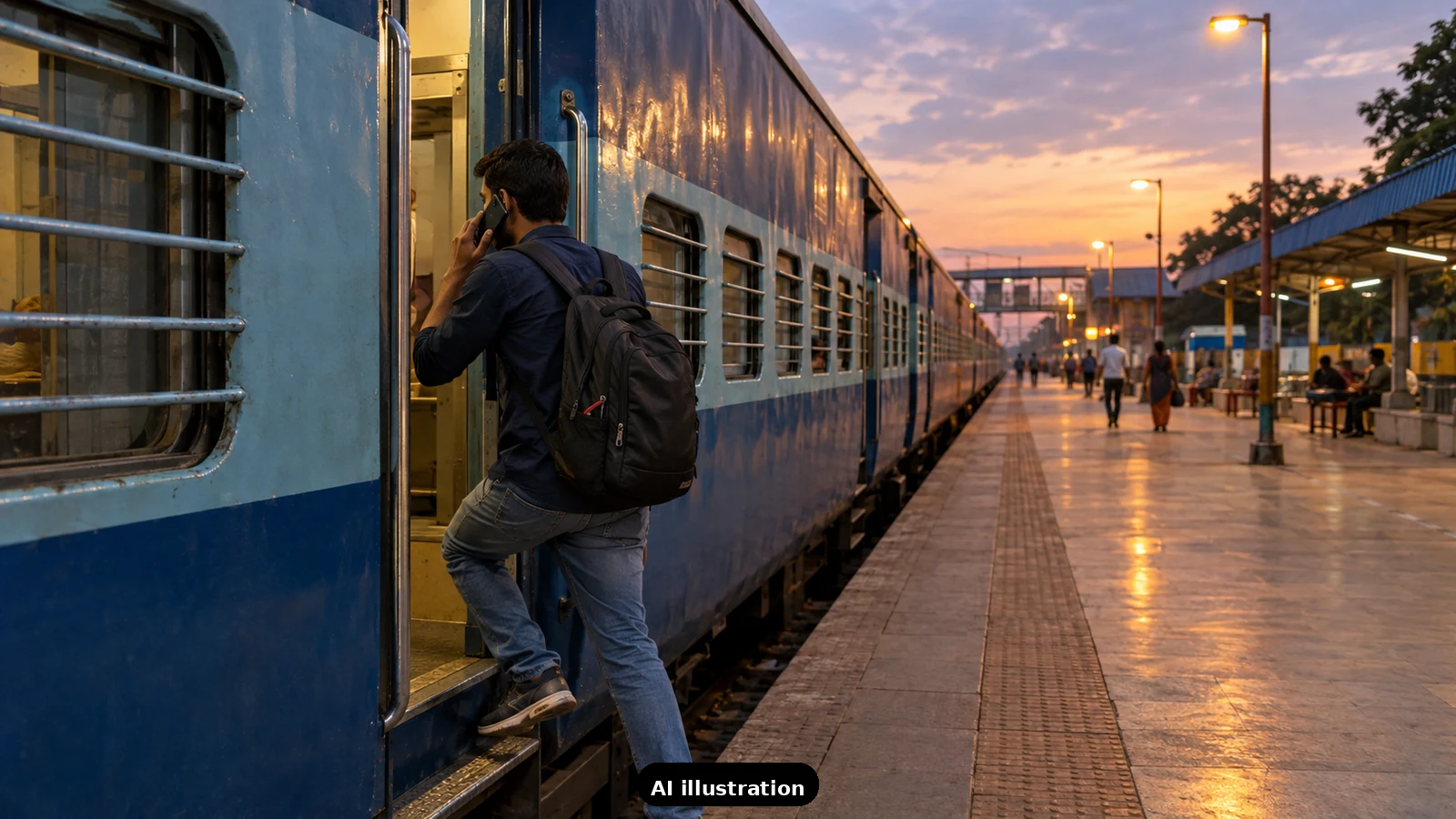
Short answer: yes, one family member can physically join the train at a later station while everyone else boards at the origin - but the official boarding-point change facility does not work per passenger. It applies once per PNR, so on a shared family ticket it moves everyone's recorded boarding station together. Knowing that, there are three realistic ways to handle the situation, and one risky way people commonly get wrong.
Why the shared PNR is the constraint. IRCTC's boarding-point facility is tied to the ticket, not to individual names on it. It can be used once per PNR, the new station must lie on the train's route between the original boarding station and destination, and it is limited to confirmed and RAC tickets - waitlisted e-tickets, PNRs booked with the VIKALP option, I-tickets and current bookings are excluded. Since 1 April 2026 the deadline has been relaxed: instead of the old 24-hour cutoff (which IRCTC's own help page still shows), changes are accepted up to the preparation of the second, final reservation chart - typically about 30 minutes before the train leaves its origin. But changing the shared family PNR to the later station forfeits the right to board at the origin: family members who still board there could be treated as travelling without proper authority for that stretch and charged fare plus penalty.
The clean solution: split the booking from the start. If you know in advance that one person will join later, book that passenger on a separate PNR and everyone else on the family PNR. Then change the boarding point only on the late joiner's PNR - online through IRCTC's Booked Ticket History or at any PRS counter before the final chart. Their recorded boarding station is now correct, their seat is protected, and the family's ticket is untouched. The trade-off: seats may not be together, and the boarding-point change removes any refund for the unused stretch between the original and new boarding stations.
If the tickets are already on one PNR. People do board later without changing anything, and it often works - but understand the risk. Once the train leaves your recorded boarding station, the final chart can show that passenger as absent, and the berth can be allotted to RAC or waitlisted passengers. The late joiner then has to negotiate with the TTE on board, and may find the seat taken. If you must do this, keep the risk low: board at the earliest convenient station, have a family member already on board tell the TTE immediately that the passenger is joining down the line, and keep the PNR and ID ready. It is a gamble, not a right.
Sometimes the simplest fix is a station swap. If the later station suits one member better, check whether it suits everyone: a family can often all board at the later station after a boarding-point change on the single PNR, or the late joiner can take a local train or cab to the origin. Compare that against the cost of a split booking before deciding.
How TripKeeper plans split boardings. When we book family train travel around different joining cities, we structure the PNRs so each traveller's boarding station is correct from day one - no chart-day gambles. If you would like your family's tickets planned this way, send us a trip-planning inquiry.

A Miranda House graduate and lawyer who traded courtrooms for slow travel. Cheshta travels with the batches we host ourselves, with a soft spot for travelling alongside elders.
Planning your next trip?
We'll handle insurance, hotels, airport assistance and the itinerary — the same way we do it for every trip.
Questions on this article
asked by readers, answered by us
Was this helpful?
one tap, no sign-up