




The Trip Keeper The Trip Keeper
three doors, pick the one that fits your family How do you want to travel?
Cheshta Agarwal, founder and host of The Trip Keeper, smiling on a green country road
Hosted by Cheshta

Founder-Hosted Group Tour

the trips where Cheshta travels with you

Our own exclusive group trips. Cheshta is on the trip, from the first flight to the last dinner.

  • Cheshta travels with the group
  • One clear price, inclusions listed
  • Meet your travel family
Next up: Vietnam, 17 DecView →
See founder trips →
A fixed-departure batch on tour

fixed dates, fixed flights

Join a batch of fellow travellers on set dates. Limited seats, flights included, with options. Our team doesn't travel on these.

  • Fixed dates and flights
  • Limited seats per batch
  • Flight options available
See departures →
A private family trip

Private Tour

your dates

just your family, nobody else

Trips planned around your family, your pace and your dates. Milestone birthdays and anniversaries.

  • Travel on your own dates
  • Route shaped around you
Ask for a quote →
← Journal ☏
Trip Planning 4 min read

Can passengers with hearing loss request written boarding information at airports?

Yes - and the system is built for it, if you ask the right way at the right time. Airlines carry a standard booking code for deaf and hard-of-hearing passengers (SSR DEAF), Indian aviation rules require airlines to assist passengers with disabilities, and gate staff can write down boarding times and gate changes when you tell them you will not hear the announcements. Here is exactly how to set it up, from booking day to boarding gate.

share WhatsApp Facebook X
Text size
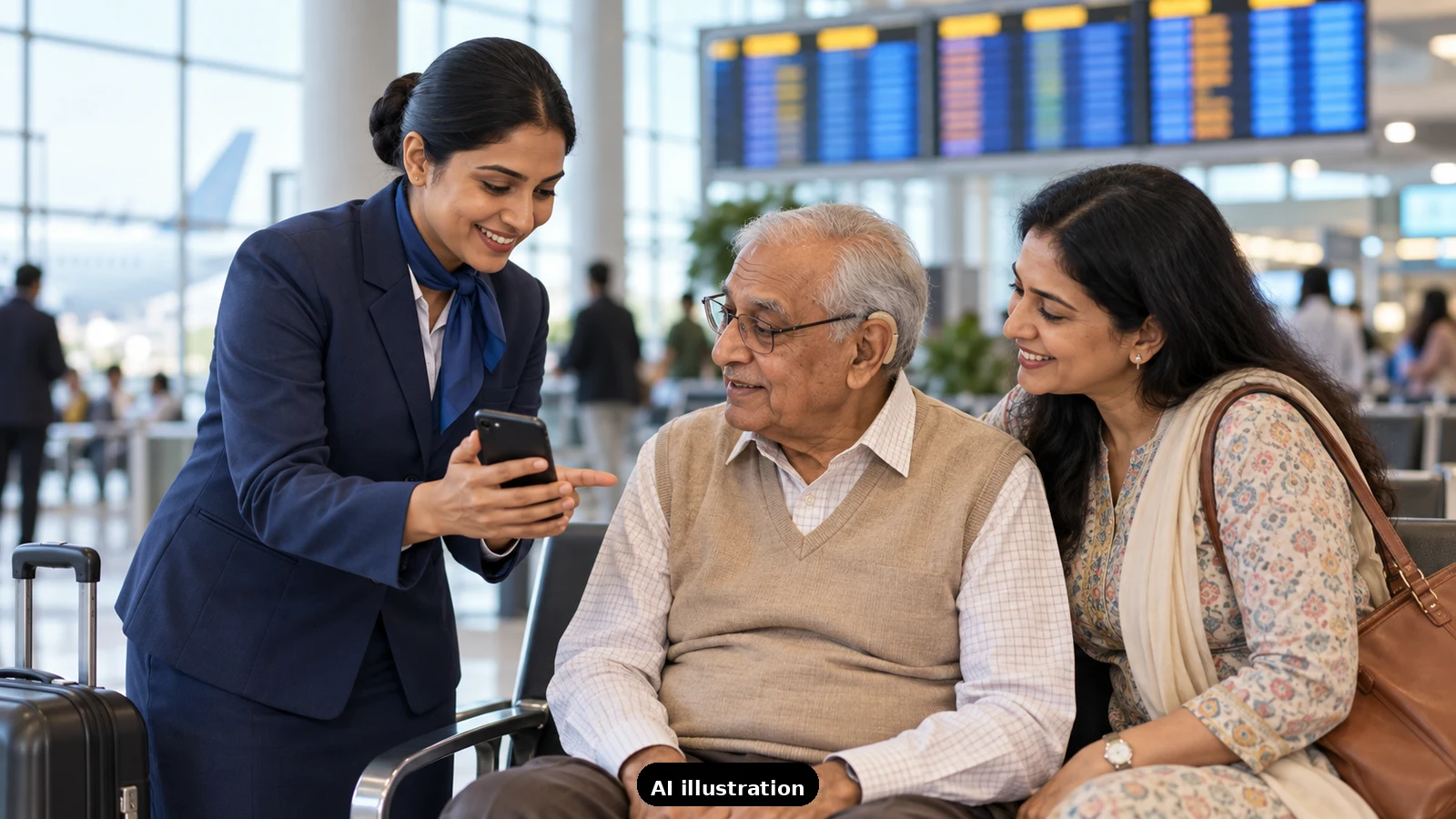
Airport staff showing a smartphone with flight information to an elderly passenger with a hearing aid
Send to Mummy-Papa Opens WhatsApp with a short summary — pick who to send it to.

Short answer: yes, and you do not have to rely on announcements at all. Air travel has a formal assistance channel for deaf and hard-of-hearing passengers, and informal written help at the gate is a completely ordinary request. The trick is to use both: register the need with the airline in advance, then make yourself visible to the people who know what is happening - check-in staff and the gate team.

Step one: tell the airline at booking, not at the airport. Airlines communicate passenger assistance needs through standard IATA codes in the booking itself. The code for a deaf passenger is DEAF - Air India, for instance, lists it among its special-service codes on its disability-assistance page. You can usually add it through the airline's manage-booking page, its customer-care line, or the agent who issued the ticket. India's civil aviation accessibility standards ask passengers with an impairment to inform the airline of their full requirement 48 hours before departure, so do this at least two days ahead. Once the code is in the booking, the request travels with the passenger to every flight on the ticket.

Step two: say it again at check-in and at the gate. Codes in a booking help, but the humans in front of you are what actually protect the journey. At the check-in counter, tell the agent clearly: I have hearing loss, please note it, and please tell me the gate number and boarding time now - write it down if possible. Then repeat the same at the boarding gate, because the gate team is where changes actually get announced. A gate change or delay is almost always called out by speaker first; the screen may lag. If the staff know you will not hear it, they can come to you.

The one line worth memorising. For parents travelling alone, write this on a card in their wallet or save it as the phone's lock-screen note: "I have hearing loss and cannot hear announcements. Please write down my gate number, boarding time and any changes. Thank you." Showing a written line works in any Indian airport, in any language environment, and it removes the awkwardness of explaining from scratch at every desk.

Written information is already everywhere - point them to it. The flight information display screens show gate, boarding status and delays in writing; teach your parent to check the screen nearest their seat every fifteen minutes or so, and always after visiting the washroom or a shop. The airline's app and SMS alerts push gate changes and boarding calls as text - install the app, log in with the PNR, and keep notifications on. And the boarding pass itself has the boarding time printed on it; circle it with a pen when you hand it over.

On board, the same principle holds. Tell the cabin crew at boarding. They can give the safety briefing individually, point to the printed safety card, and personally update the passenger about descent and arrival rather than relying on the intercom. This is routine for them - every full-service Indian carrier trains for it.

The rules are on your side. India's aviation regulator, the DGCA, issues Civil Aviation Requirements for the carriage of persons with disabilities and reduced mobility: airlines cannot refuse carriage to a passenger because of a disability, and assistance must be provided without discrimination. If your parent carries a UDID card or other disability documentation, keep a copy with the travel papers - airlines ask for it when registering certain assistance types.

How we set this up at TripKeeper. When a traveller with hearing loss books with us, we add the right assistance code to the booking, confirm it with the airline before departure day, and send the family a one-page journey sheet with gates, times and the show-to-staff line already filled in. Send us a trip-planning inquiry and let the airport speak to your parent in writing.

Send to Mummy-Papa Opens WhatsApp with a short summary — pick who to send it to.
Cheshta Agarwal
Founder · Travel Creator · Lawyer

A Miranda House graduate and lawyer who traded courtrooms for slow travel. Cheshta travels with the batches we host ourselves, with a soft spot for travelling alongside elders.

or let us do all of it

Planning your next trip?

We'll handle insurance, hotels, airport assistance and the itinerary — the same way we do it for every trip.

Questions on this article

asked by readers, answered by us

Can a passenger with hearing loss ask airport staff for written boarding information?

Yes - it is an ordinary, reasonable request. Tell check-in staff and the gate team that you cannot hear announcements and ask them to write down the gate number, boarding time and any changes. Staff at Indian airports do this routinely, and gate teams can come to you directly when a change is announced by speaker.

Is there a formal way to register hearing loss with an airline?

Yes. Airlines use standard IATA special-service codes in the booking; the code for a deaf passenger is DEAF. Add it through the airline's manage-booking page or customer care. Indian accessibility standards ask passengers to inform the airline of their requirements 48 hours before departure, so register at least two days ahead.

Will flight announcements really be a problem at Indian airports?

They can be. Gate changes and boarding calls go out by speaker first, and display screens sometimes lag. That is why a two-layer approach works: register the DEAF code in the booking, and make sure the gate staff know to reach you in person or in writing for any change.

What should I write on the card for a parent who cannot hear announcements?

Keep it short: 'I have hearing loss and cannot hear announcements. Please write down my gate number, boarding time and any changes. Thank you.' A card in the wallet or a lock-screen note on the phone works at any desk, in any language, without your parent having to explain anything.

Do apps and SMS alerts help passengers with hearing loss?

Very much. Airline apps push gate changes, delays and boarding calls as written notifications - install the app, add the PNR and keep notifications on. The flight information screens near the gate show the same in writing; check them regularly, especially after stepping away from the gate area.

Does Indian aviation law protect passengers with hearing loss?

Yes. The DGCA's Civil Aviation Requirements for the carriage of persons with disabilities and reduced mobility bar airlines from refusing carriage because of disability and require assistance without discrimination. Carrying a UDID card or medical documentation helps when registering assistance with the airline.

Was this helpful?

one tap, no sign-up

Read next

← Journal See our trips