




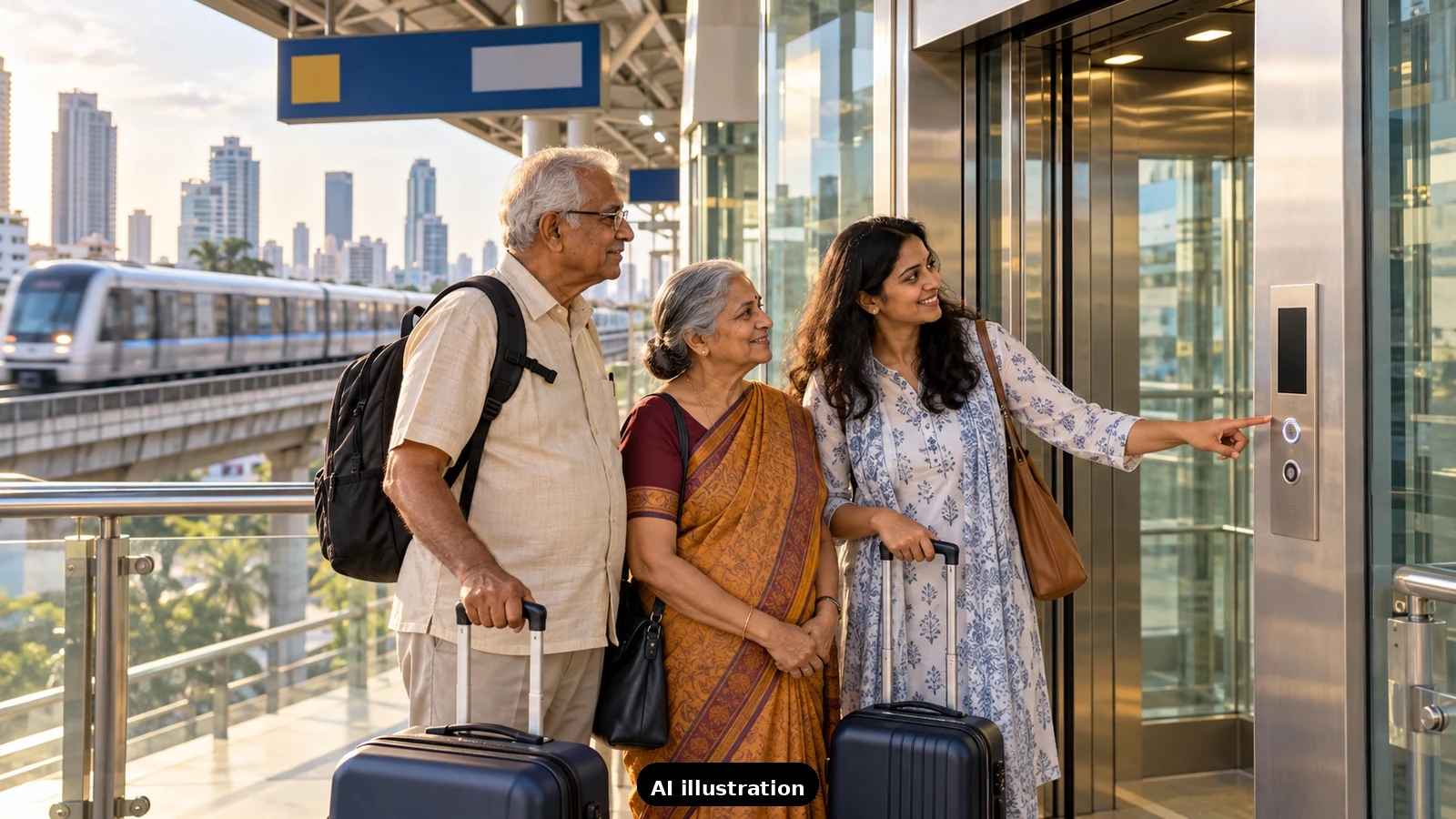
Short answer: verify the specific stations you will use - not the system in general - before setting out. The BTS Skytrain now has lifts at most of its stations, but not all of them, and at some stations the lift lands on only one side of a very busy road. The BTS official website lists service and facilities per station, and a two-minute check per station, done over breakfast, is the whole job. The MRT subway is simpler still: step-free at every station.
The official check: BTS's own station pages. The BTS website (bts.co.th) has a Service and Facilities section with a station selector - pick the station and it lists the facilities at that station, including lifts. This is the authoritative source, more current than any blog list, because lifts get added and occasionally taken out of service. Check three stations for every journey: where you board, where you change lines if you do, and where you get off. A lift at two of the three is not a lift.
Which stations tend to lack lifts. The newer lines and extensions were built with lifts from day one, usually on both sides of the road. The exceptions cluster among the older original stations on the Sukhumvit and Silom lines - the ones most tourists use - where retrofitting is still catching up, and where a station may have a lift on one side only, meaning a road crossing at street level. Do not memorise a list from any article, including this one: the pattern changes station by station and year by year, which is exactly why the per-station check exists.
The MRT is the step-free default. Bangkok's underground MRT was built later and to a better accessibility standard: every station has lifts from street to platform. When both a BTS and an MRT option exist for the same journey - and around Sukhumvit, Silom and Chatuchak they often do - choose the MRT for elderly parents and skip the verification dance entirely. Airport Rail Link stations also have lifts, which makes the airport run workable with a wheelchair or walker.
Google Maps as the second pair of eyes. Google Maps offers wheelchair-accessible route options for transit: put in your origin and destination, open route options, and choose the accessible preference - the app then favours stations with step-free access. Treat it as a cross-check on the official station pages, not the primary source: crowd-sourced lift data can lag a lift that is under maintenance today.
Plan the last fifty metres too. A lift at the station does not guarantee a smooth path to it. Bangkok pavements are famous for cracked slabs, high curbs, parked motorbikes and food carts, and the walk from the lift exit to your actual destination is often the hardest leg of the trip for a parent with a walker. Look at the station's street view in your map app, pick the exit on the correct side of the road, and keep distances short.
And keep the fallback warm. Bangkok taxis and app cabs are inexpensive and door to door. On days when a checked station turns out to have its lift closed for maintenance - it happens - do not soldier through the stairs with your mother; step back out and take the car. The BTS is a convenience, not a principle.
How we plan it at TripKeeper. On Bangkok itineraries with parents, we pre-check every station on every planned ride against the official facility lists, route around the lift-less stations, and mark taxi points on the day plan as the standing fallback. Send us a trip-planning inquiry and Bangkok will feel flat the whole way.

A Miranda House graduate and lawyer who traded courtrooms for slow travel. Cheshta travels with the batches we host ourselves, with a soft spot for travelling alongside elders.
Planning your next trip?
We'll handle insurance, hotels, airport assistance and the itinerary — the same way we do it for every trip.
Questions on this article
asked by readers, answered by us
Was this helpful?
one tap, no sign-up