




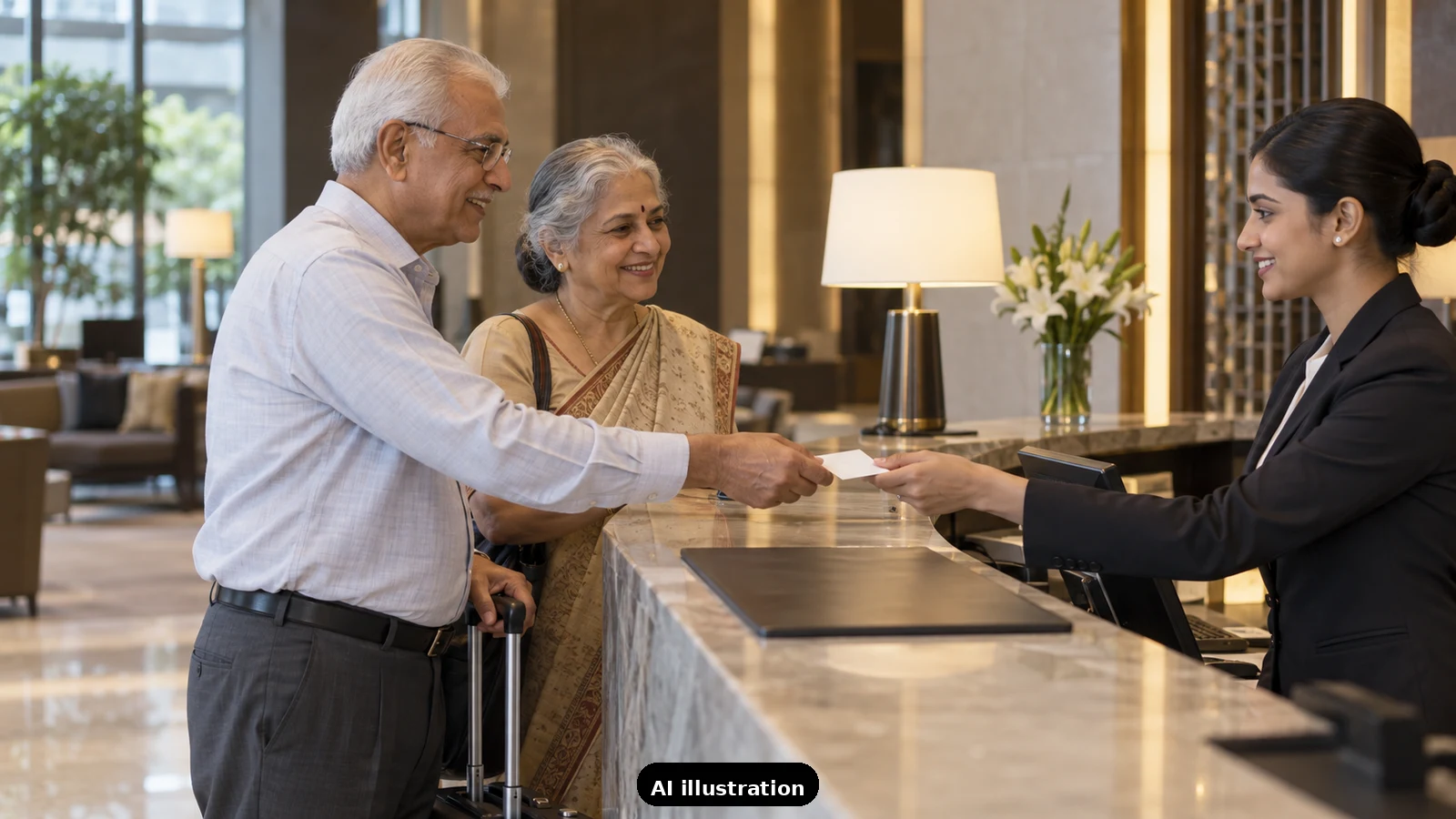
Short answer: it is a security deposit in the form of an authorisation hold, and almost every hotel does it, not just in Singapore. At check-in the hotel asks your card to set aside an amount - the room cost plus a cushion for incidentals like minibar, laundry or damages. Nothing has been spent. Your available credit simply shrinks by the blocked amount, which is why the SMS from your Indian bank can look alarmingly like a purchase. It is not one.
What the block actually is. Hotels group several different things under the everyday word "deposit". IHG's own help pages separate them cleanly: a deposit is money actually collected under the rate rules; an authorisation hold or pre-authorisation is a temporary reservation of funds to validate the card and cover estimated room, tax and incidental amounts; the final charge is what posts after checkout. The block your parents see is the middle one - a reservation, not a charge. It sits as a pending entry, and pending entries are precisely the ones that look scary on an app and then quietly disappear.
How much gets blocked. There is no single Singapore-wide figure - each hotel sets its own policy. Budget stays may skip the hold or keep it small; mid-range and full-service hotels commonly block the room plus a fixed nightly cushion, and some take a flat sum. One Singapore apart-hotel, for instance, takes a flat SGD 200 as an authorisation hold during online check-in. Expect roughly SGD 100-300 per stay, or the room total plus a margin - the point for your parents is to be emotionally ready for a four-to-five-figure rupee-equivalent block, not to predict the exact number.
Why it feels worse on an Indian credit card. Two reasons. First, Indian banks send an instant SMS and app alert for the hold itself, because the block genuinely reduces available credit - so it arrives dressed exactly like a spend. Second, if anyone in the family is sharing the limit - a card with a modest limit, or add-on cards - the block can squeeze headroom the trip was counting on. A Rs 3 lakh limit with a Rs 60,000 hotel block behaves like a Rs 2.4 lakh limit until the release lands.
The debit card warning. If your parents offer a debit card at check-in, the same hold logic touches real money - the account balance itself gets locked, not a credit line. IHG's guidance warns that debit card holds reduce the available account balance while open, and the Singapore apart-hotel mentioned above actively recommends credit cards because debit holds withdraw actual funds and can take days or weeks to return through banking channels. The family rule: check-in deposits go on a credit card, always.
When it releases. At checkout the hotel settles the final bill and releases the hold - but the release travels at banking speed, not hotel speed. Some banks free the amount within a day or two; others take a week or more, and the hold and the final charge can appear side by side for a while. This is normal. What helps: ask at checkout for confirmation that the hold is released, keep the final invoice, and give the bank a few working days before worrying. If two weeks pass with the block intact, call the card issuer with the checkout date and invoice.
The one line to teach your parents. "Hotel check-in par card se jo paisa block hota hai, woh kharcha nahi hai - checkout ke baad wapas aa jata hai" - the money blocked at check-in is not spent; it comes back after checkout. That sentence has saved more panic calls than any travel insurance.
How we cover it at TripKeeper. Before our travellers check in anywhere, we brief the family on which card to hand over at the desk and what hold to expect, so the first SMS alert from the bank raises a smile of recognition instead of alarm. If you want your parents travelling with that kind of forewarning, send us a trip-planning inquiry.

A Miranda House graduate and lawyer who traded courtrooms for slow travel. Cheshta travels with the batches we host ourselves, with a soft spot for travelling alongside elders.
Planning your next trip?
We'll handle insurance, hotels, airport assistance and the itinerary — the same way we do it for every trip.
Questions on this article
asked by readers, answered by us
Was this helpful?
one tap, no sign-up