




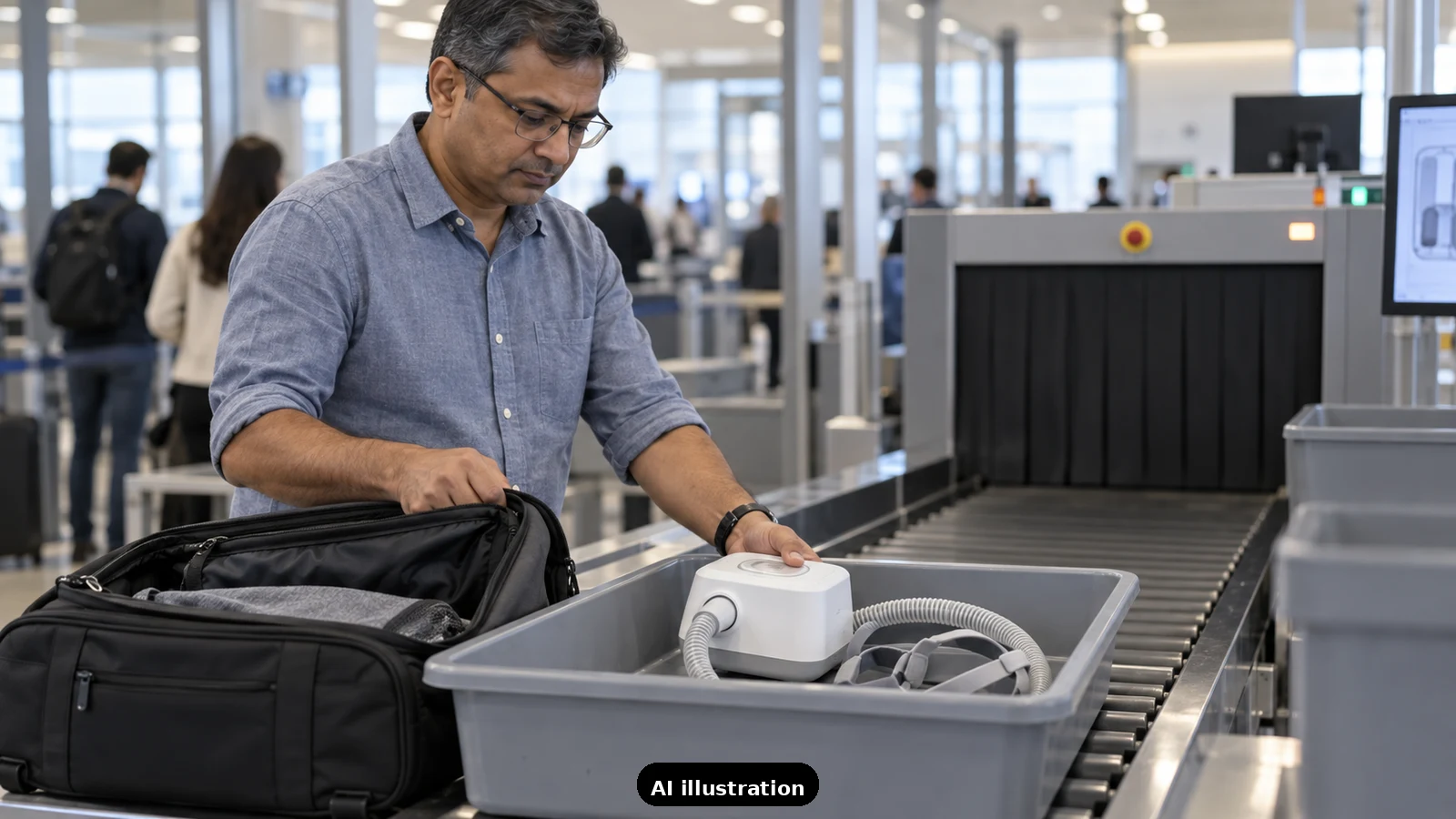
Short answer: yes. A CPAP machine is treated as a portable medical electronic device, and you can carry it in your cabin baggage on IndiGo's international flights. What needs planning is not permission but preparation: the battery limits, the advance call if you want to use it on board, the humidifier water at security, and the documents that make every checkpoint quick. Here is the full checklist.
What the rules actually say. IndiGo's dangerous-goods table covers portable electronic devices including medical devices: with a lithium battery up to 100 Wh the device is fine in the cabin; between 100 and 160 Wh it needs airline approval and is limited to two such devices per person; spare lithium batteries always go in the cabin with terminals protected, never in checked baggage. Devices in checked baggage must be fully switched off and protected from damage. Most travel CPAP batteries sit comfortably under 100 Wh - check the label on yours.
Cabin, not checked - and usually extra. Airlines generally treat a medical device you depend on as an assistive item carried in addition to your cabin allowance rather than inside it, and a CPAP in the cabin is also the safe choice: checked baggage gets thrown, frozen and lost, none of which your sleep can afford. Confirm the extra-bag treatment when you call IndiGo, and keep the device in its own padded bag.
Using it during the flight: the 48-hour call. Carrying the machine and using it on board are two different things. For comparable medical devices (portable oxygen concentrators) IndiGo requires a request at least 48 hours before departure, an FAA-approved device, and assigns a window seat to users - apply the same discipline to a CPAP you intend to run mid-flight: call IndiGo's customer care or use the special-assistance request at least 48 hours ahead, state the device model, and ask whether seat power is available on your aircraft. Many seats have none, so a compliant battery is your real plan.
Security screening. Expect the machine to come out of its bag for X-ray, like a laptop. Carry it in a clear plastic bag if you want to keep it clean on the belt. The mask, hose and machine are all fine through security; a doctor's letter or prescription speeds up any questions, especially on foreign security lanes.
The humidifier and the liquids rule. The water chamber is the one trap: empty it before security, because water in it counts toward the liquids limit. Refill after security from a water fountain or buy distilled water at your destination - tap water scales the chamber anyway.
Documents to carry. Your prescription or a doctor's letter stating sleep apnea and CPAP use, the device's manual or specification page showing the battery's watt-hour rating, and the airline's confirmation if you registered in-flight use. Photograph the battery label - watt-hour numbers settle arguments at counters.
On arrival abroad. CPAP machines are dual-voltage on modern models - check the power brick for 100-240V, then carry only a plug adapter for the destination. Pack a extension cord; hotel sockets are never where the bed is.
Where TripKeeper helps. For travellers with medical devices, we fold the airline notification, seat and power questions into trip planning itself, so the 48-hour calls happen on time. If that sounds useful for your next trip, send us a trip-planning inquiry.

A Miranda House graduate and lawyer who traded courtrooms for slow travel. Cheshta travels with the batches we host ourselves, with a soft spot for travelling alongside elders.
Planning your next trip?
We'll handle insurance, hotels, airport assistance and the itinerary — the same way we do it for every trip.
Questions on this article
asked by readers, answered by us
Was this helpful?
one tap, no sign-up