




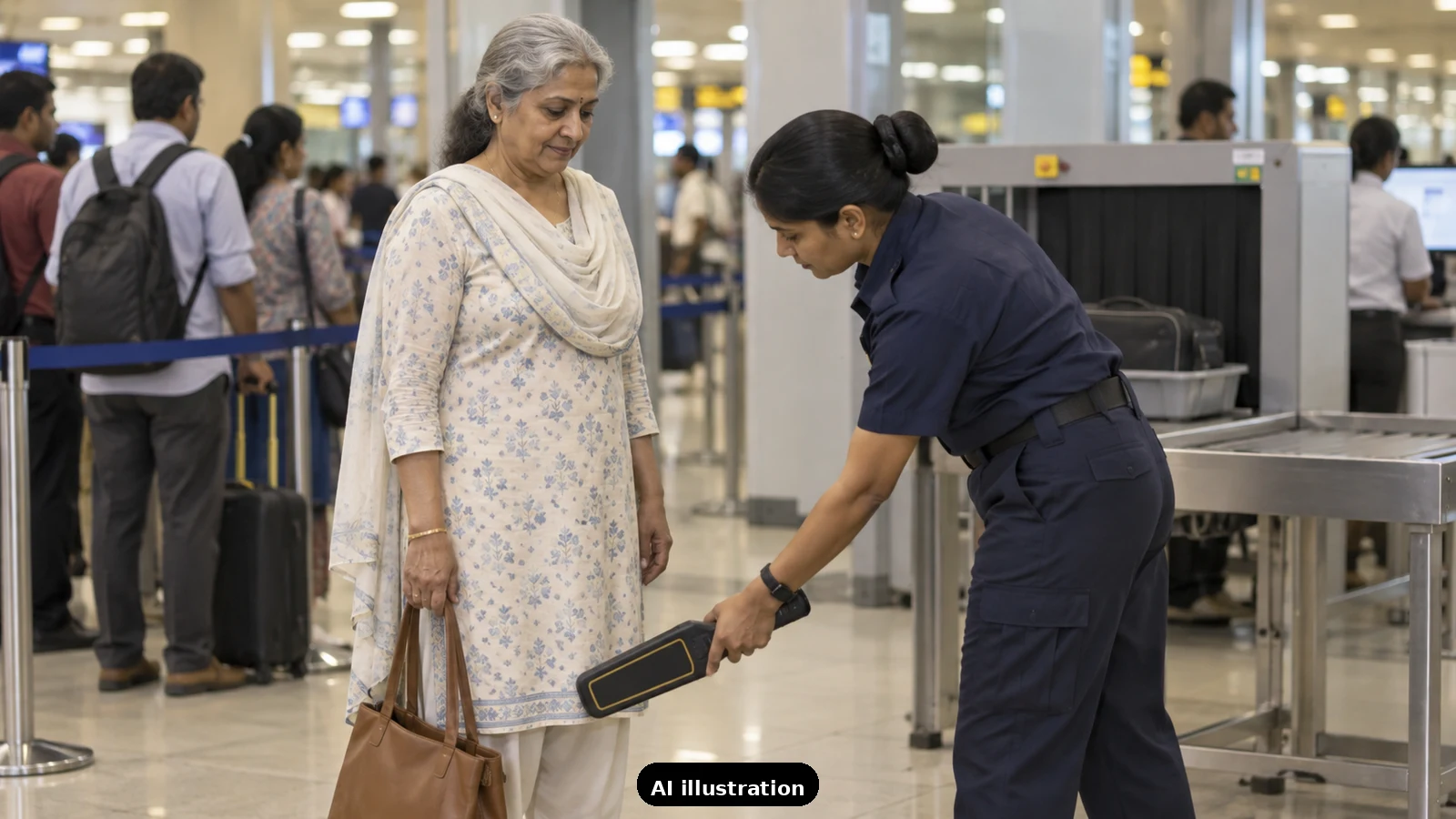
Short answer: no. There is no rule in India requiring a doctor's certificate, implant card or any special paperwork for a metal knee or hip implant at airport security. The Bureau of Civil Aviation Security's standard operating procedure for passengers with medical conditions (issued under AVSEC Circular 23/2005) states it plainly: medical documentation is helpful, but not essential.
What will happen at the checkpoint. A joint prosthesis is dense metal, so expect the door-frame metal detector to alarm. The standard sequence: you walk through the DFMD, the alarm sounds, and a security officer re-checks you with a hand-held metal detector and a pat-down around the knee. For prosthetics the BCAS protocol then allows screening at a private screening point with two officials, using the wand, a pat-down and, where needed, an explosive-trace swab and a careful visual check. Sensitive areas are protected and privacy is explicitly required throughout.
The one thing you must do: speak up first. The protocol asks you to inform the security staff about the implant before screening begins. Say it while you are in the queue - "I have a metal knee implant" - and the rest of the process follows the medical-conditions track rather than surprising anyone at the arch. Passengers can also use a notification card to communicate discreetly.
Your rights under the protocol. Three guarantees worth knowing. One: every airport must provide an enclosed private screening space - ask for it if you would rather not be wanded in the crowd. Two: dignity and privacy are written into the procedure, and a same-gender officer can be requested. Three: if standing in line is difficult, tell the staff - the protocol directs them to move you to the front of the queue or a separate line, and screening can be done seated.
One hard rule. If an alarm is raised by the detector, the wand or other technology, it has to be resolved before you pass. Cooperating through the extra two minutes of checks is not optional - an unresolved alarm means no entry beyond the checkpoint.
So why carry papers at all? Because "helpful" undersells it in practice. A hospital-issued implant identification card, the discharge summary, or even a photo of your knee X-ray on your phone turns an explanation into a ten-second conversation - especially useful at smaller airports, for elderly parents travelling alone, and when language is a barrier. Ask the hospital for the implant card at discharge; most joint-replacement centres issue one as routine.
For international departures. The same logic holds almost everywhere - no country demands implant paperwork, and every country's security will wand and pat down an alarming knee. The card travels well: it is language-neutral evidence. Keep it with the passport, not in the checked bag.
A practical script for the day. Arrive 20-30 minutes earlier than usual. Wear clothing that lets you show the knee area easily if asked. At the queue, inform the officer about the implant and request a female officer or the private room if preferred. Walk through, expect the alarm, follow the wand and pat-down. Five minutes, start to finish, on a normal day.
How TripKeeper supports this. When we plan trips for travellers with implants or reduced mobility, the airport plan is part of the itinerary - assistance requests, realistic buffer times, which documents to keep handy. Send us a trip-planning inquiry if you would like that thinking done for your family.

A Miranda House graduate and lawyer who traded courtrooms for slow travel. Cheshta travels with the batches we host ourselves, with a soft spot for travelling alongside elders.
Planning your next trip?
We'll handle insurance, hotels, airport assistance and the itinerary — the same way we do it for every trip.
Questions on this article
asked by readers, answered by us
Was this helpful?
one tap, no sign-up