




The Trip Keeper The Trip Keeper
three doors, pick the one that fits your family How do you want to travel?
Cheshta Agarwal, founder and host of The Trip Keeper, smiling on a green country road
Hosted by Cheshta

Founder-Hosted Group Tour

the trips where Cheshta travels with you

Our own exclusive group trips. Cheshta is on the trip, from the first flight to the last dinner.

  • Cheshta travels with the group
  • One clear price, inclusions listed
  • Meet your travel family
Next up: Vietnam, 17 DecView →
See founder trips →
A fixed-departure batch on tour

fixed dates, fixed flights

Join a batch of fellow travellers on set dates. Limited seats, flights included, with options. Our team doesn't travel on these.

  • Fixed dates and flights
  • Limited seats per batch
  • Flight options available
See departures →
A private family trip

Private Tour

your dates

just your family, nobody else

Trips planned around your family, your pace and your dates. Milestone birthdays and anniversaries.

  • Travel on your own dates
  • Route shaped around you
Ask for a quote →
← Journal ☏
Trip Planning 3 min read

Does a travel adapter go in checked luggage or the cabin bag?

A plain travel adapter is allowed in both - it holds no battery and breaks no rule. But the right answer for a trip is the cabin bag: you will want it at the transit lounge, on arrival, and on every day your checked bag is late. The one exception is an adapter with a built-in power bank, which is cabin-only by battery law. Here is the simple packing rule.

share WhatsApp Facebook X
Text size
Does a travel adapter go in checked luggage or the cabin bag?
Send to Mummy-Papa Opens WhatsApp with a short summary — pick who to send it to.

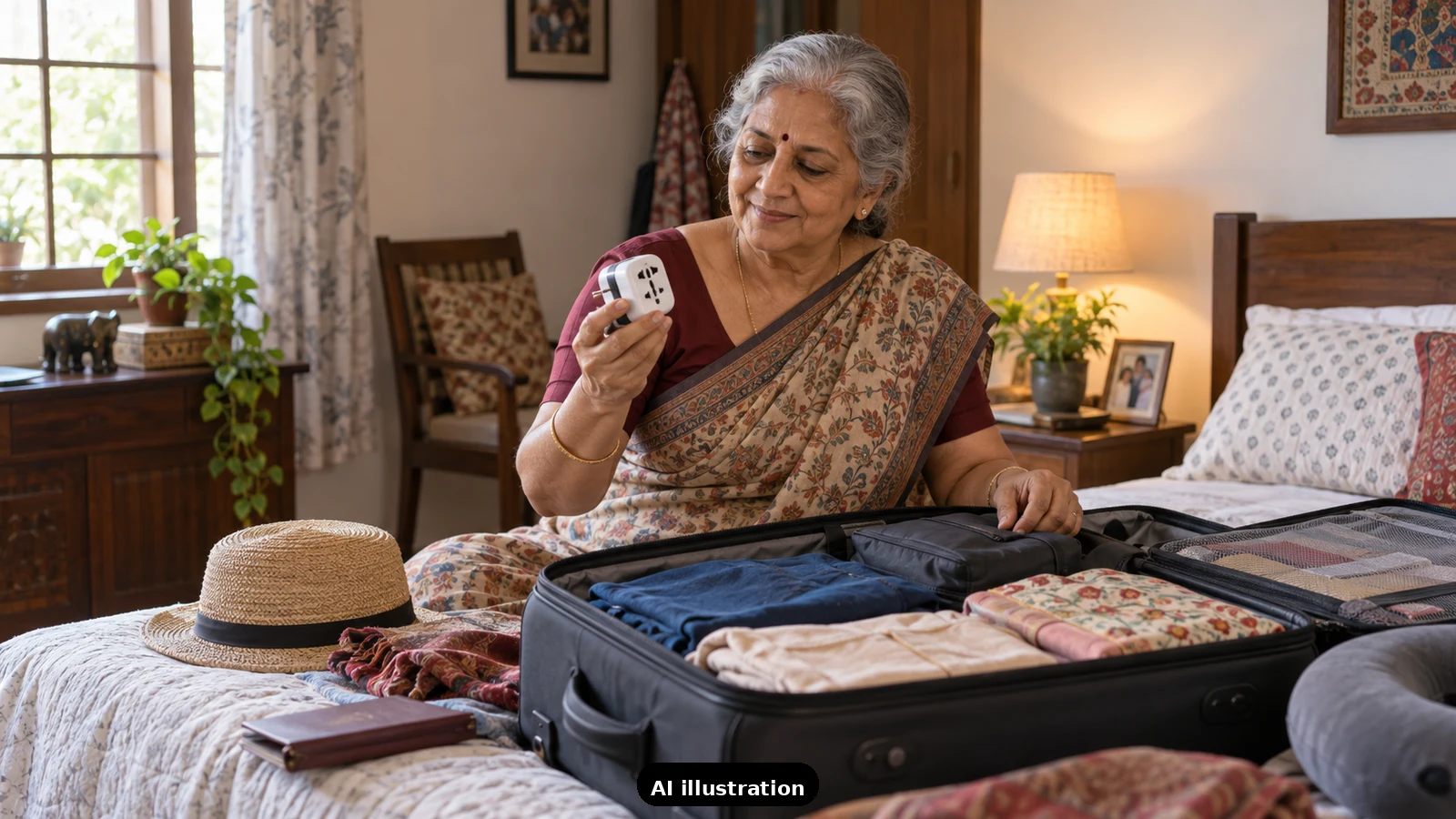
Short answer: legally, either bag; practically, the cabin bag. A standard travel adapter - the small plug shape-shifter with no battery inside - is permitted in checked luggage and in carry-on alike. Airline and security rules restrict energy storage, not plastic prongs, and adapters merely change plug compatibility. But packing one in the suitcase is how families land at 11 pm, discover the hotel wall has two flat pins, and spend the first night abroad with dying phones. The adapter belongs where the traveller is, not where the suitcase is.

The one adapter that cannot be checked. Some premium "universal adapters" quietly bundle a small power bank. If yours has any battery in it, the rules change completely: lithium batteries are a checked-baggage no under airline fire-safety rules, the same logic that keeps ordinary power banks in the cabin. Anything under 100Wh flies in carry-on without approval; the checked bag is simply not an option. Flip the adapter over - if it lists mAh or Wh, treat it as a battery and keep it with you.

Why the cabin wins even for the plain adapter. Three moments decide it. First, transit: multi-hour layovers are exactly when everyone's phone is at 12% and the lounge sockets are foreign. Second, arrival night: the checked bag is the last thing to appear, and the first thing anyone wants is a charged phone to call the cab or the family. Third, the disaster case: if the checked bag is delayed by a day, the traveller with the adapter in the cabin charges everything anyway. The suitcase version of that story ends at a hotel shop buying an overpriced duplicate.

What kind to pack for parents. One compact universal adapter per person beats one big family unit - sockets in hotel rooms are scattered, and two people sharing one adapter negotiate all night. Check the destination's plug type before buying; "universal" models cover the common ones but a quick check avoids surprises. And label each adapter - identical black bricks get mixed up in every family.

A word on what an adapter is not. It changes the shape of the plug, not the voltage. Modern phone and laptop chargers are dual-voltage and need nothing more, but older appliances - the family hairdryer, a shaver from 2009 - may not be. Check the tiny print on the charger: if it says 100-240V, it is safe anywhere with just an adapter; if it says only 220-240V, keep it away from 110V countries.

The one line to teach your parents. "Adapter cabin bag mein rakho, suitcase mein nahi - aur jisme battery ho, woh toh sirf cabin" - keep the adapter in the cabin bag, not the suitcase, and if it has a battery inside, then strictly cabin. That covers the rule and the reason in one breath.

How we cover it at TripKeeper. Packing lists for our travellers mark which small items stay in the cabin - adapter, chargers, medicines, documents - so the first night abroad never depends on a suitcase arriving on time. If you want your parents' list built that way, send us a trip-planning inquiry.

Send to Mummy-Papa Opens WhatsApp with a short summary — pick who to send it to.
Cheshta Agarwal
Founder · Travel Creator · Lawyer

A Miranda House graduate and lawyer who traded courtrooms for slow travel. Cheshta travels with the batches we host ourselves, with a soft spot for travelling alongside elders.

or let us do all of it

Planning your next trip?

We'll handle insurance, hotels, airport assistance and the itinerary — the same way we do it for every trip.

Questions on this article

asked by readers, answered by us

Can I put a travel adapter in checked luggage?

Yes - a plain adapter with no battery is allowed in both checked and cabin baggage. Airline restrictions target energy storage, not plug shapes. That said, the cabin is the smarter place, because you will likely need the adapter during transit and on arrival night, before your suitcase appears.

Are travel adapters allowed in cabin baggage?

Yes, fully. Adapters simply change plug compatibility and store no energy, so security has no issue with them in carry-on. Keep it in the cabin anyway - transit layovers and arrival night are exactly when you will need it.

What if my adapter has a built-in power bank?

Then it is battery luggage, not adapter luggage: lithium batteries are banned from checked bags under airline fire-safety rules, so it must travel in the cabin. Check the markings - anything listing mAh or Wh is a battery. Under 100Wh flies in carry-on without special approval.

Will my Indian charger work abroad with just an adapter?

For modern phone and laptop chargers, yes - they are dual-voltage (check for 100-240V in the tiny print) and need only the plug shape changed. Older single-voltage appliances may not be safe on a foreign voltage; an adapter never converts voltage, only the plug.

How many adapters should a family carry?

One compact universal adapter per person. Hotel sockets are scattered around the room and two people sharing one adapter spend the night negotiating. Label each one - identical black bricks get mixed up in every family.

Why not just buy an adapter at the destination?

You can - airport shops and hotel stores stock them - but you will pay tourist prices for the privilege, and you will need the adapter before you reach any of those shops: in the transit lounge and on arrival night. Packing one in the cabin bag costs nothing and removes the errand.

Was this helpful?

one tap, no sign-up

Read next

← Journal See our trips