
Dubai official culinary guide and UNESCO records checked on 17 November 2026. Dishes and shared traditions, not a menu or recipe.
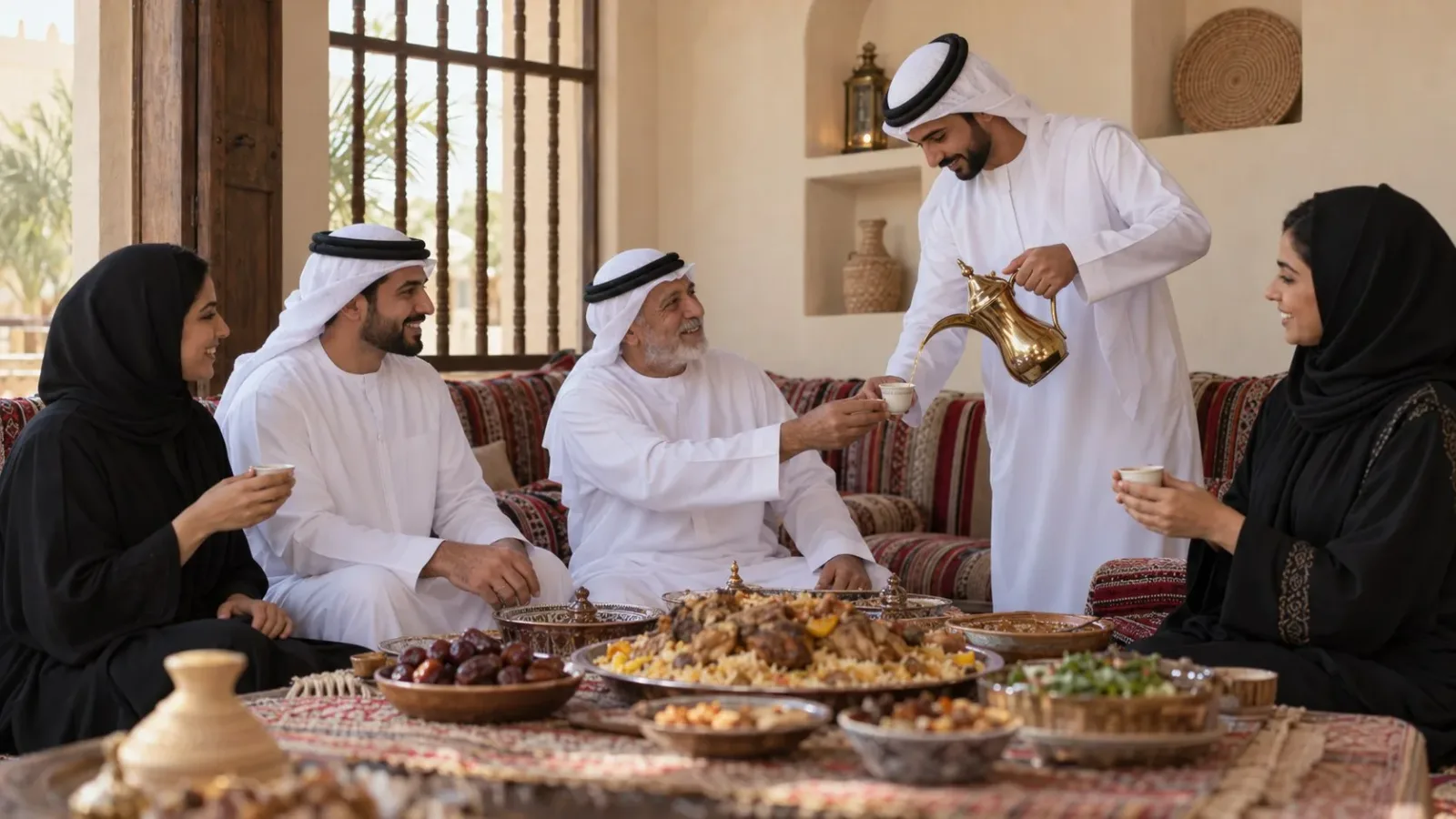
AI illustration: adults sharing Emirati dishes, dates and Arabic coffee in a majlis. Fictional scene, not an actual location, person or service.
Emirati food is a useful way to understand how land, sea and trade have shaped life in the UAE. Rice dishes, slow-cooked wheat, thin breads, dates and coffee offer different parts of that picture. Learning their names makes a meal easier to understand than treating everything served in a UAE city as one cuisine.
This introduction draws on Dubai's official culinary guide and UNESCO's records for harees and Arabic coffee, checked on 17 November 2026. It describes dishes and traditions, not restaurants, exact recipes or the contents of every serving.
Machboos
Machboos is a rice dish cooked in a spiced broth with meat or chicken. The official guide describes dried lime as part of its flavour and a shared platter as its presentation. Rice and the cooking liquid belong to the dish's identity; it is more than plain rice with a separate topping.
Harees and tharid
Harees has a different texture and base. UNESCO describes wheat grain, meat and ghee, prepared in large quantities and shared. Its account connects preparing and serving harees with hospitality, social gatherings and the passing of knowledge between generations. Ramadan and weddings are among the occasions it names, not the only times the dish can be prepared.
Tharid combines a meat-and-vegetable stew with flatbread. In the culinary guide's description, bread forms the base and absorbs the broth. That distinguishes it from both the separate grains of machboos and the smooth consistency associated with harees. These differences give you a useful starting point when several unfamiliar names appear together.
Breads and breakfast
Regag is a thin flatbread, described in the official guide as having crisp edges and a form that can be folded. The guide gives plain and filled examples; the name alone does not establish a particular filling.
Chebab is a pancake flavoured with cardamom and saffron. Khameer is a softer, slightly sweet bread. The guide discusses them alongside accompaniments such as honey or cheese. They belong to a different part of the food picture from a large shared rice platter.
Balaleet brings sweet and savoury together: vermicelli with sugar, saffron and cardamom, combined with eggs. The guide identifies it as a traditional breakfast dish. Knowing that combination helps distinguish it from a plain savoury noodle dish or a dessert of noodles alone.
Sweets and dates
Luqaimat are small fried dough balls, crisp outside and soft inside, with a date-syrup or sugar-syrup coating in the guide's description. Batheetha offers a contrasting form: dates combined with flour, ghee and spices. One is a small fried sweet; the other is a date-based mixture served in small portions.
Dates also appear on their own, particularly in hospitality and alongside coffee. The guide describes their place in agricultural life, storage and family food traditions, as well as their use in pastes and desserts. They are an ingredient across several kinds of food, not only a decorative finish.
Coffee and hospitality
Arabic coffee carries a social meaning beyond the drink itself. UNESCO's record describes serving and drinking it as a daily ritual associated with generosity, welcome and respect. It records customs such as serving older people and guests first and shaking the cup to indicate that you have finished. These describe a shared cultural practice, not a test every visitor must perform perfectly.
Shared heritage
The heritage context crosses borders. Harees was inscribed in 2023 through a record shared by the UAE, Oman and Saudi Arabia. The 2024 Arabic-coffee record includes the UAE, Saudi Arabia, Oman, Qatar and Jordan. Their place in Emirati life does not mean either tradition belongs exclusively to one country.
Sources
Source accounts checked 17 November 2026. Descriptive dish identities and shared heritage only, not recipes, exclusive origins, restaurants, menus, prices, health, halal or dietary claims.
Questions people ask at the gate
How do machboos and harees differ?
Machboos centres on spiced rice; harees uses wheat grain, meat and ghee with a different, smooth consistency.
What is tharid?
A meat-and-vegetable stew served over bread that absorbs the broth.
Is balaleet only sweet?
The guide describes sweet vermicelli combined with eggs, bringing sweet and savoury together.
Are harees and Arabic coffee exclusively Emirati traditions?
No. UNESCO's records name several countries, including the UAE, for these shared practices.
Does this introduction recommend restaurants or current menus?
No. It explains dishes and traditions without verifying a venue, menu, price or availability.
Does a typical description establish every serving's contents?
No. A dish description does not certify every serving. This introduction gives no health, halal or dietary assurance.
Next walk starts at a new gate.
Was this helpful?
one tap, no sign-up

A Miranda House graduate and lawyer who traded courtrooms for slow travel. Cheshta travels with the batches we host ourselves, with a soft spot for travelling alongside elders.