




Food allergies in Southeast Asia: confirm ingredients and the emergency plan
Plan restaurant communication before the trip. A chef card can explain an allergy, but it cannot guarantee that a kitchen can prevent cross-contact or provide a safe meal.
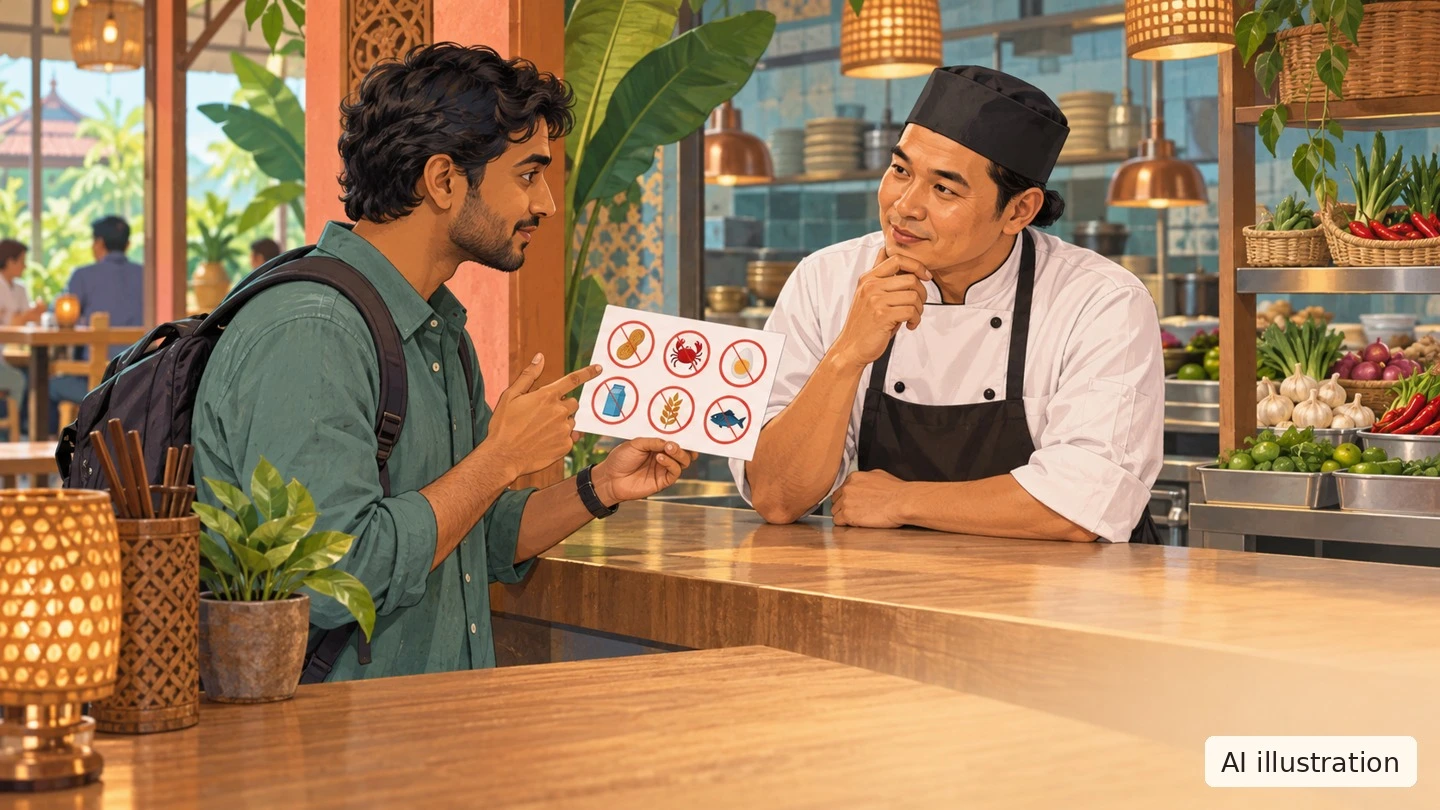
AI illustration: A traveller discusses a translated allergy card with a restaurant chef before ordering. Fictional scene, not an actual location, person or service.
Make the plan with the allergy team
FARE recommends carrying copies of the Food Allergy & Anaphylaxis Emergency Care Plan and prescribed medicines, and identifying a hospital near the stay. Ask your treating clinician what medicines, extra prescriptions and instructions you need. This article does not give a new dose or replace your emergency plan.
Prepare the right language
Carry a chef card in English and the language used at your destination. Get the allergen and the need to avoid cross-contact checked by someone qualified to translate it; a guessed phrase is not enough. Keep paper copies as well as a phone version. Tell staff this is a medical allergy, not a taste preference.
Ask about the dish and the process
In Thailand, Vietnam, Malaysia or another destination, do not assume an ingredient is absent because you cannot see it. Ask the kitchen about sauces, stocks, garnish, shared cooking oil and utensils relevant to your allergy. Regional labels such as “vegetarian” do not answer every allergy question. If staff cannot establish the ingredients or preparation, choose another meal.
Check packaged food again
FARE warns that the same product made in another country may not have exactly the same ingredients. Read the local label rather than relying on a familiar packet. Bring safe non-perishable food for gaps where permitted, and check the destination’s food-import rules before packing it. A snack backup is not permission to bring any food across a border.
Keep the emergency response usable
Save the local emergency number and the route to appropriate medical care for your actual destination. Keep medicines and the plan accessible rather than in a checked bag or distant hotel room. If a reaction occurs, follow the clinician’s emergency instructions and seek local emergency help; do not wait for a restaurant to decide whether it caused the problem.
Questions before you travel
Does a translated chef card guarantee a safe meal?
No. The kitchen still needs to understand the allergy and confirm whether it can prepare an appropriate meal.
Can I trust the ingredients of a familiar overseas brand?
Read the local label. FARE says products made elsewhere can differ.
Is vegetarian food automatically allergy-safe?
No. Check the particular allergen and preparation method.

A Miranda House graduate and lawyer who traded courtrooms for slow travel. Cheshta travels with the batches we host ourselves, with a soft spot for travelling alongside elders.
Planning your next trip?
We'll handle insurance, hotels, airport assistance and the itinerary — the same way we do it for every trip.
Was this helpful?
one tap, no sign-up