




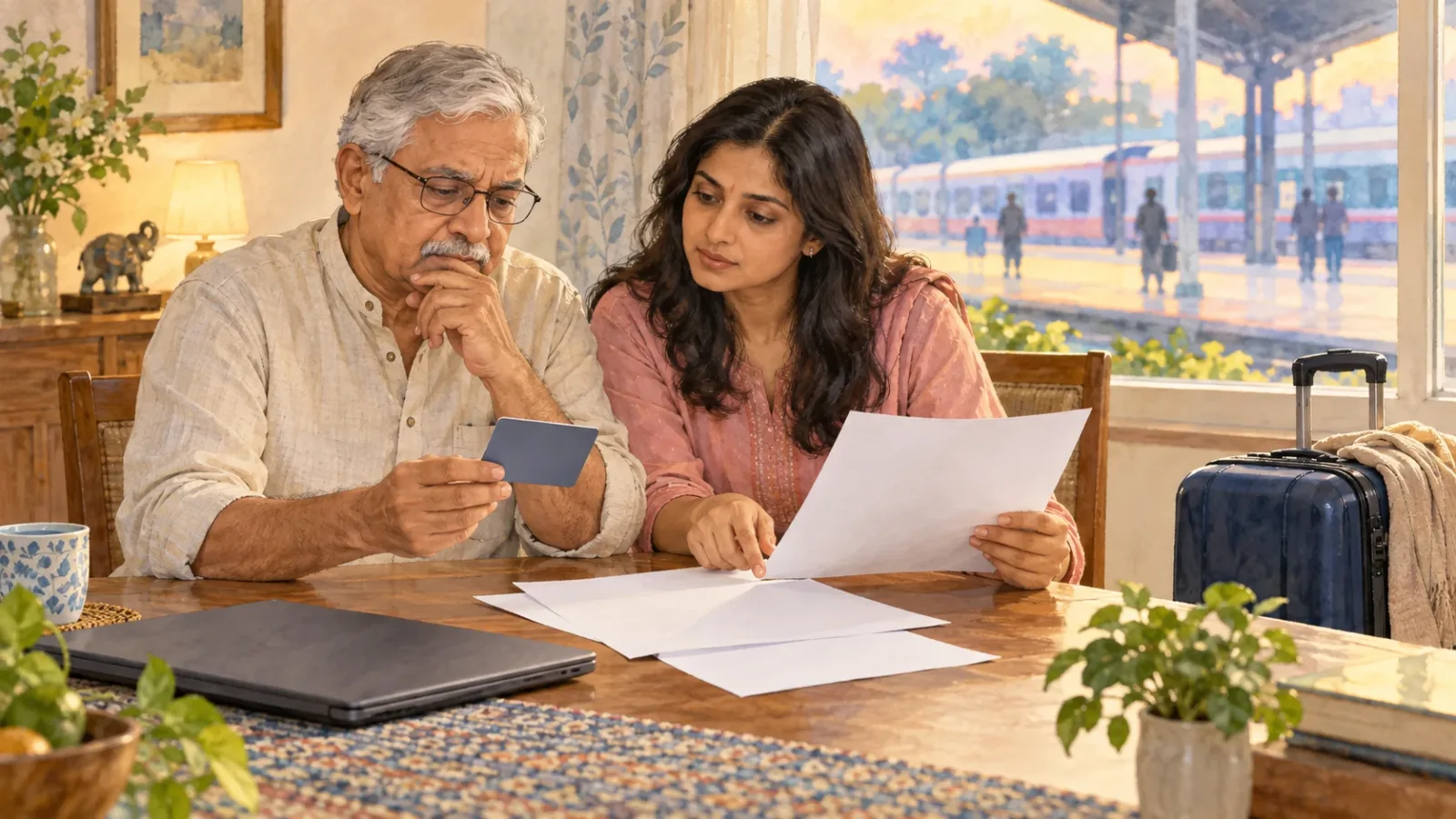
Start with the refund, not a replacement card
If your original card is blocked after buying a foreign train ticket, ask the ticket seller and the card issuer separate questions. First establish whether a refund is due and processed under that booking. Then establish what the issuer can receive and trace for the original payment. Do not unblock a compromised card or cancel another booking merely to make a refund work.
Find the party that sold the ticket
Keep the seller name, booking reference, passenger, train/date, ticket conditions, original payment record and any cancellation or disruption notice together. A railway operator and the website that took payment may be different parties. Ask the actual seller who handles this booking's refund, what request is needed and which deadline applies. A refund requested, a ticket cancelled and a credit received are separate states. This article does not establish a worldwide refund entitlement or tell you to cancel a non-refundable ticket.
Tell the issuer what is blocked
Explain whether the physical card was temporarily locked, permanently blocked, replaced, expired or connected to a closed account. These descriptions do not establish the same banking outcome. Ask whether the original account can receive a merchant credit, how the credit would be accessed and what evidence is needed if it is rejected or cannot be located. Give the original purchase and seller refund reference through the bank's verified private channel. A new card number alone is not proof the refund has been redirected.
A dated SNCF Connect example, not a global railway rule
SNCF Connect's refund help page, updated 10 September 2026, says refund rules and times depend on payment method, train company, ticket type and collection method. In its card-payment guidance it describes credit to the account linked to the original card. For a changed bank account it says it cannot transfer directly to the new account and advises contacting the former bank. This is that seller's published process, not a guarantee a blocked Indian card or another railway will receive a refund in the same way. It does not resolve the current state of your bank account.
Ask for traceable evidence from both sides
Ask the seller for the refund amount, currency, processing date, status and any trace reference it can provide. Ask the issuer whether it received, rejected or is still tracing that credit. Keep the reference and a short written timeline. If one party says "done" while the other cannot see the money, ask for the next investigation step and applicable complaint or dispute deadline. Do not invent one universal posting period or treat a generic support estimate as proof the credit arrived.
If the original route fails
Ask the seller and issuer to explain a supported alternative for this case in writing. Do not send an arbitrary new bank account to an unverified message or assume a new card guarantees rerouting. Do not share a PIN, password, card security code or one-time code with anyone claiming it will release a refund. If a bank dispute is opened, report any later merchant refund so the same loss is not recovered twice.
Reconcile the amount and keep family help within permission
Compare the seller's agreed refund and any deduction in its transaction currency, then the issuer's received credit, conversion and fees under the actual card terms. A different INR amount needs an explanation; it does not by itself prove the seller withheld money. With the account holder's agreement, a child can help organise records and calls. Let the holder complete bank checks or use formal authorisation, not shared credentials. Keep travel and financial records private.
Source and limits
Checked 5 November 2026: SNCF Connect refund help, updated 10 September 2026. The example is seller-specific. This article confirms no universal foreign-rail cancellation rule, credit acceptance, recovery guarantee, exchange rate or refund deadline. Your ticket conditions, seller process and issuer account state still need checking.

A Miranda House graduate and lawyer who traded courtrooms for slow travel. Cheshta travels with the batches we host ourselves, with a soft spot for travelling alongside elders.
Planning your next trip?
We'll handle insurance, hotels, airport assistance and the itinerary — the same way we do it for every trip.
Questions on this article
asked by readers, answered by us
Was this helpful?
one tap, no sign-up