




The Trip Keeper The Trip Keeper
three doors, pick the one that fits your family How do you want to travel?
Cheshta Agarwal, founder and host of The Trip Keeper, smiling on a green country road
Hosted by Cheshta

Founder-Hosted Group Tour

the trips where Cheshta travels with you

Our own exclusive group trips. Cheshta is on the trip, from the first flight to the last dinner.

  • Cheshta travels with the group
  • One clear price, inclusions listed
  • Meet your travel family
Next up: Vietnam, 17 DecView →
See founder trips →
A fixed-departure batch on tour

fixed dates, fixed flights

Join a batch of fellow travellers on set dates. Limited seats, flights included, with options. Our team doesn't travel on these.

  • Fixed dates and flights
  • Limited seats per batch
  • Flight options available
See departures →
A private family trip

Private Tour

your dates

just your family, nobody else

Trips planned around your family, your pace and your dates. Milestone birthdays and anniversaries.

  • Travel on your own dates
  • Route shaped around you
Ask for a quote →
← Journal ☏
Trip Planning 3 min read

How Can You Keep Temperature-Sensitive Medicines Cool During an Overnight AC Train Journey?

Good news first: an AC coach is usually cool enough for the medicine you are currently using. The cooling problem is really about your spare, unopened stock - an insulated pouch, the never-on-ice rule, and a simple checklist for the night.

share WhatsApp Facebook X
Text size
How Can You Keep Temperature-Sensitive Medicines Cool During an Overnight AC Train Journey?
Send to Mummy-Papa Opens WhatsApp with a short summary — pick who to send it to.

Short answer: in an AC coach, the pen or vial you are currently using usually needs no cooling at all - most insulins and similar injectables stay safe at room temperature below about 30C for around four weeks once in use, and AC coaches run well under that. Your cooling effort should go into the spare, unopened stock, which needs 2-8C storage. An insulated cooling pouch handles an overnight journey comfortably. (This is general information, not medical advice - your doctor's and the pack leaflet's instructions for your specific medicine always win.)

Know which stock actually needs cooling. This one distinction simplifies everything. The pen or vial in use: room temperature below roughly 30C is fine for the usage period on its leaflet (commonly about 28 days), and many people find room-temperature insulin stings less on injection. Spare, unopened pens and vials: these need refrigeration at 2-8C, so on a journey they travel in a cooling pouch. In an overnight AC coach, the cabin temperature is on your side - the danger points are the hot station, the taxi, and any wait in the sun before and after the train.

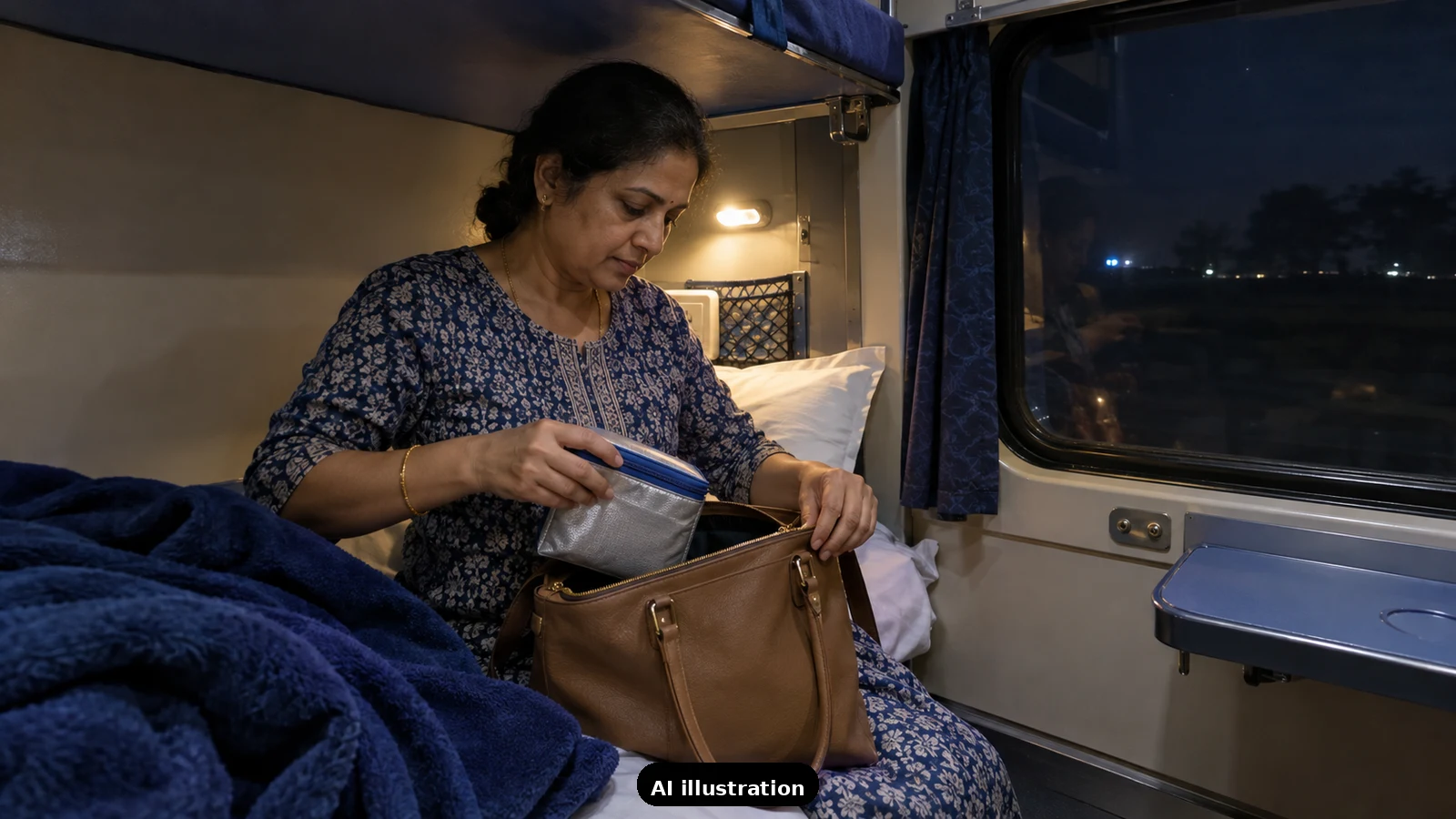
The cooling kit that works on a train. An evaporative cooling wallet (the kind you soak in water) or an insulated pouch with gel ice packs keeps spares cool through the night without electricity - do not count on the coach's charging points, and a mini-fridge is impractical on a berth. Two rules protect the medicine: never let it touch ice or gel packs directly (freezing destroys insulin as surely as heat), and keep it in its box or an inner sleeve inside the pouch. Wrap a layer of cloth between the pack and the medicine if needed.

Pack it where the heat cannot reach it. The cooling pouch goes in your hand baggage, not in a suitcase on the floor near the door or under a sunny window at a daytime halt. During station stops in the day, keep the bag with you, away from direct sun. If your journey includes a long hot wait on the platform, that wait - not the AC night - is what your gel packs are really for.

The overnight checklist. One: separate in-use from spare stock before packing. Two: spares into the cooling pouch, in their box, never against ice. Three: pouch into your personal bag, which stays at your berth. Four: prescription and doctor's note in the same bag - they answer every question at checks and help if you need a replacement en route. Five: a quick look in the morning - if the medicine was frozen or looks different from normal, do not use it; speak to a pharmacist or doctor about a replacement.

How TripKeeper plans journeys around medical needs. When we plan train travel for travellers who carry temperature-sensitive medication, we think about the whole chain - cab, platform, coach, hotel fridge at the other end - so nothing depends on luck. If you would like your family's journeys planned that way, send us a trip-planning inquiry.

Send to Mummy-Papa Opens WhatsApp with a short summary — pick who to send it to.
Cheshta Agarwal
Founder · Travel Creator · Lawyer

A Miranda House graduate and lawyer who traded courtrooms for slow travel. Cheshta travels with the batches we host ourselves, with a soft spot for travelling alongside elders.

or let us do all of it

Planning your next trip?

We'll handle insurance, hotels, airport assistance and the itinerary — the same way we do it for every trip.

Questions on this article

asked by readers, answered by us

Does insulin need to be refrigerated during an overnight train journey?

Usually not, if it is the pen or vial you are currently using: most insulins stay safe below about 30C for around 28 days once in use, and AC coaches run cooler than that. Spare, unopened stock does need 2-8C storage, so carry it in an insulated cooling pouch. Always follow your pack leaflet and your doctor's advice.

How do I carry refrigerated medicine on a train without a fridge?

Use an evaporative cooling wallet (soaked in water) or an insulated pouch with gel ice packs - both work for an overnight journey without electricity. Keep the medicine in its box or an inner layer so it never touches ice directly, since freezing damages it as much as heat does.

Can I keep my insulin directly on ice packs in a cooler bag?

No - never let insulin or similar injectables touch ice or gel packs directly. Frozen insulin must not be used, even after it thaws. Keep the pen or vial in its box or wrap a cloth layer between the ice pack and the medicine.

Is an AC train coach cold enough to damage medicine?

No - AC coaches are cooled to comfortable passenger temperatures, far from freezing. The real risks are heat (a sunny window, a hot platform wait, a warm taxi) and accidental freezing from direct contact with ice packs inside your own cooling pouch.

Should I pack temperature-sensitive medicine in my suitcase or handbag on a train?

Handbag or personal bag that stays with you at your berth. Suitcases end up on floors, near doors, or in the sun at daytime halts - places where temperatures swing. Your medicine, prescription and doctor's note should all be within your reach.

What documents should I carry for medicines on a train journey in India?

Carry the prescription and, for injectables or larger quantities, a doctor's note naming the medicine and the need for it. These answer questions at any check and make it far easier to get a replacement from a pharmacy if your stock is damaged or lost en route.

Was this helpful?

one tap, no sign-up

Read next

← Journal See our trips