




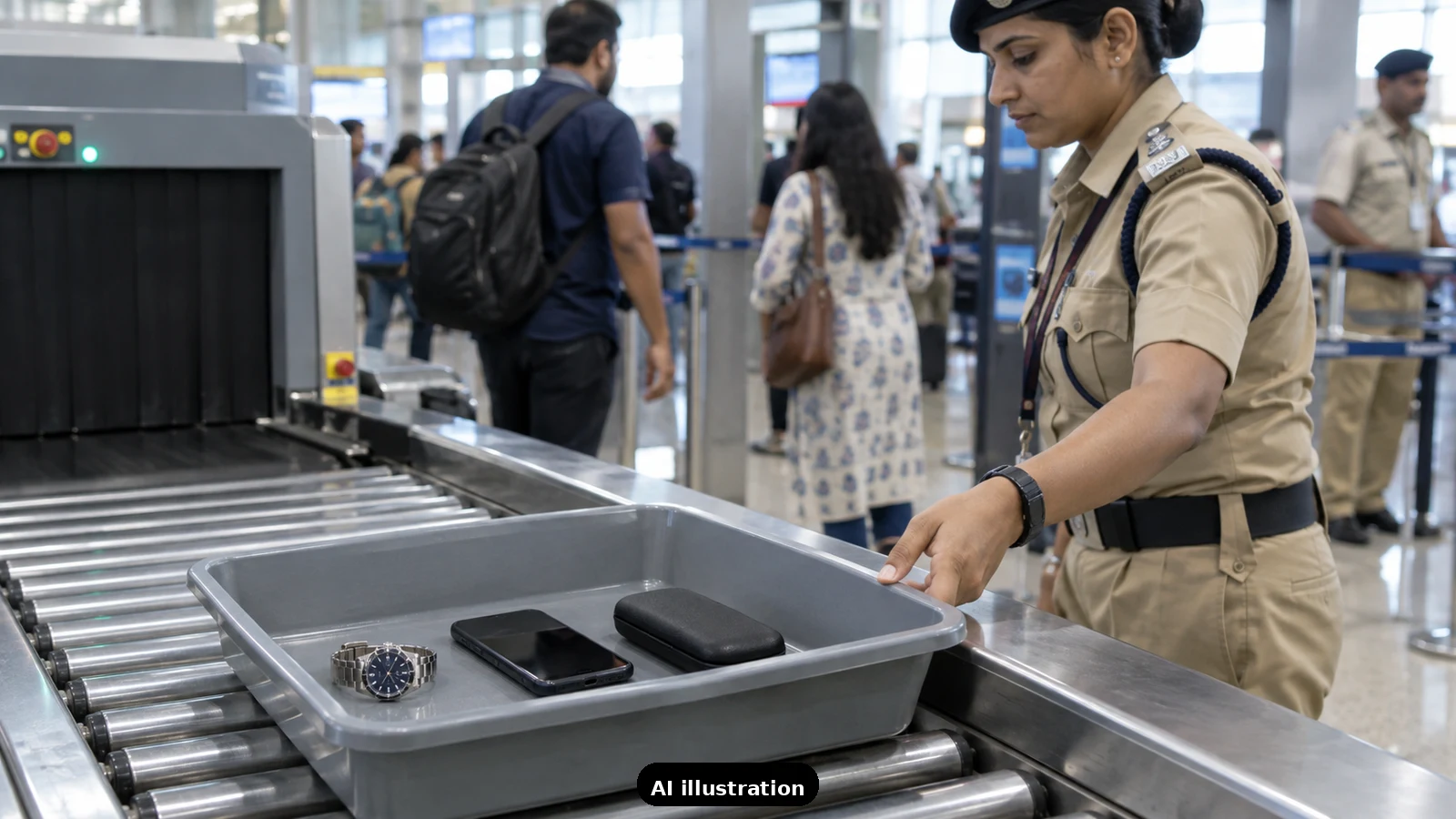
Short answer: if you have just walked away from the security check, go straight back to the same lane - items are usually still in the tray or with the CISF officer. If you have already boarded or left, the airport's lost property system takes over: Delhi airport hands every found article to its lost property team, logs it in a database, and returns it to the owner free of charge. Recovery is very much possible - the keys are speed and knowing whom to contact.
Step one: retrace, immediately. Most forgotten items - phones, watches, belts, spectacle cases - are recovered within minutes simply because the passenger returns to the same security lane. Tell the CISF officer at the lane what you left and describe it. If you have cleared into the departure area, any airline or airport staff member can walk you back to the security point. Speed matters more than anything else here.
Step two: the lost property desk. If the item is not at the lane, it travels to the airport's lost property office. Delhi airport's process: found articles go to the lost property team and are entered in a database. To claim, you need three things - proof of travel (boarding card or e-boarding card), a government photo ID (passport, driving licence, Aadhaar or voter card), and a detailed description of the item. Items are kept at the respective terminal and can be claimed within seven days of being deposited; after working hours, an appointment is needed at least 48 hours ahead by email to the lost property desk.
Step three: claiming on behalf of family. If your parent has flown on and you are recovering the item in Delhi, the airport allows an authorised person to collect it. Carry your own government photo ID plus an authorisation letter from the owner - the airport may also ask for a PAN card copy to verify the owner's signature on that letter. For families managing parents' travel from another city, this is the single most useful thing to know: the letter plus your ID opens the claim.
What will not be in lost property. Items CISF removes during security screening itself - liquids over the limit, and anything perishable, flammable or classed as a security-restricted article - are not deposited with lost property at all. So a surrendered bottle of perfume or a large tube of cream is gone; a forgotten phone is not. Disposal periods differ too: valuables like gold, phones, cameras and laptops are kept 30 days, while everyday items - belts, reading glasses, water bottles, flasks, keys - follow a 7-day cycle. And one warning worth repeating to parents: the airport provides no courier service for lost items and charges nothing; anyone calling to 'return your item for a fee' is a fraud.
Prevention, the boring but winning habit. Families can cut most of this risk with a two-step tray routine: at the security lane, everything goes into one tray (never two), and before walking away, the passenger counts - phone, watch, belt, wallet, boarding pass. It takes ten seconds and it is how frequent flyers never leave anything behind.
How TripKeeper prepares for this. Our pre-departure briefs walk parents through the security routine step by step, and when something does get left behind, we coordinate the lost property claim with the family - including the authorisation letter. If you would like that support on your family's next trip, send us a trip-planning inquiry.

A Miranda House graduate and lawyer who traded courtrooms for slow travel. Cheshta travels with the batches we host ourselves, with a soft spot for travelling alongside elders.
Planning your next trip?
We'll handle insurance, hotels, airport assistance and the itinerary — the same way we do it for every trip.
Questions on this article
asked by readers, answered by us
Was this helpful?
one tap, no sign-up