




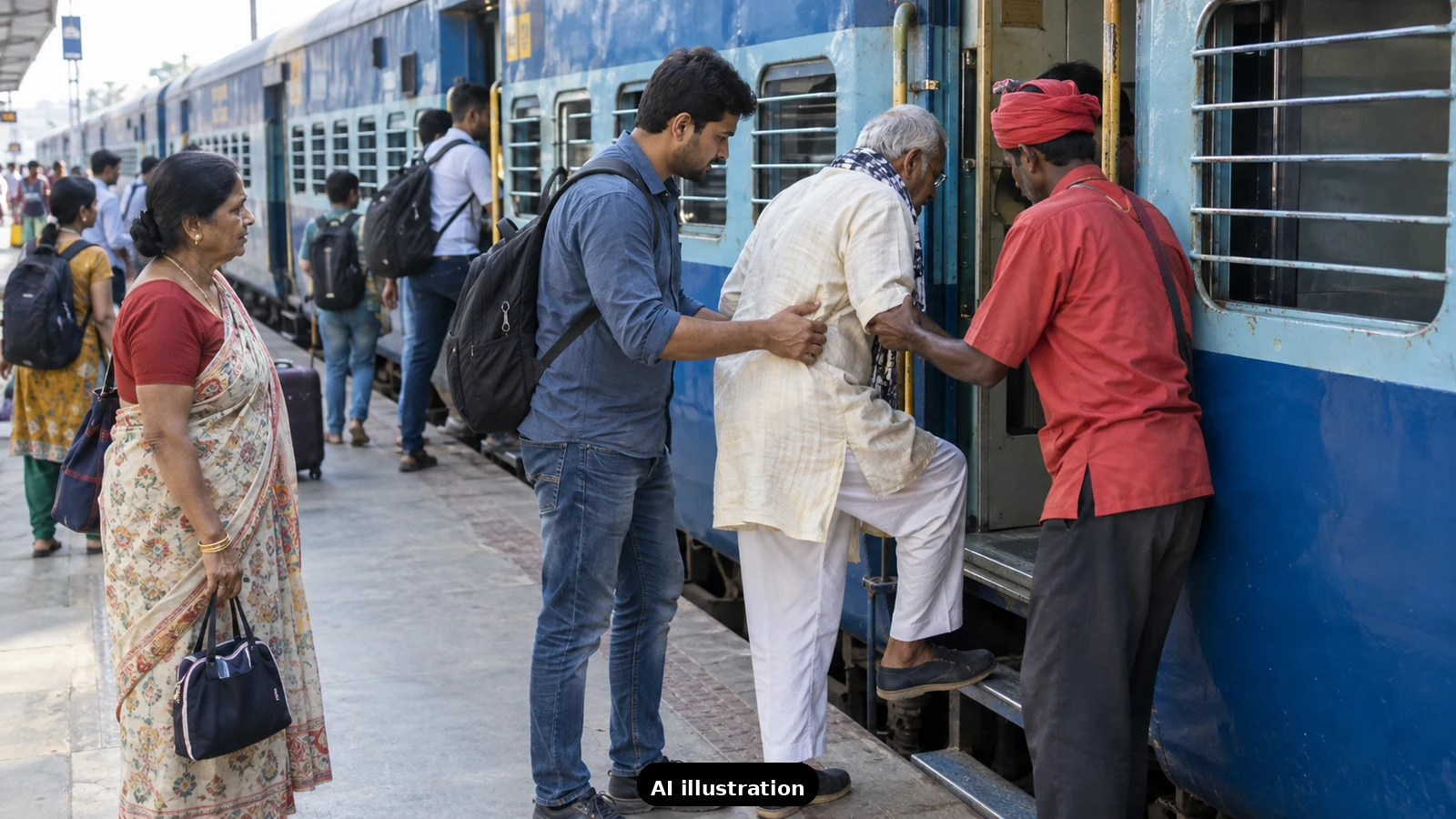
Short answer: a two-minute halt is enough for an elderly parent - but only when everything is decided before the train arrives. The boarding itself should be one slow, supported step: parent at the correct coach position, bags closed and carried by a porter or family member, someone at the door to guide the step up. If your parent cannot manage even that, the honest answer is to avoid the short halt entirely - and there are easy ways to do that.
The preparation checklist - this is where the boarding actually happens. One: know the coach and where it stops. Coach position boards on the platform, announcements, or any railway staff can confirm it; wait at that exact spot. Two: bags ready and minimal. Closed, tagged, and in the porter's or companion's hands - the parent carries nothing but perhaps a small sling bag. Three: the parent waits seated or standing calmly at the boarding spot, away from the crowd surge. Four: agree who does what - one person at the door guiding the parent's step, one handling luggage. Five: phones charged, so the family hears 'we are in our seats' within minutes.
Boarding itself: slow beats fast. When the train stops, let the getting-off passengers come out first - the doorway clears in seconds, and pushing against it costs more time than it saves. Then one person steps in first and turns to guide, the parent holds the door-side railing and steps up at their own pace, and the second person follows with the bags. Never let a parent hurry because the whistle blew: a moving train is never the risk to take. If the train starts before they board, step back - there is always a safer alternative, and no journey justifies a fall at the coach door.
Use the help the station already offers. A porter handles the luggage so both hands are free for the parent. A station wheelchair - free at many stations, bookable in advance through IRCTC's e-wheelchair service at nominated ones - takes the parent right to the coach door without the platform walk. TTEs and coach attendants help too: mentioning 'senior citizen' at the door gets cooperation, not complaints. RailMadad (139) connects to station help if nothing is arranged and the situation turns difficult.
The smarter alternatives when a short halt is genuinely unsafe. If the parent uses a walker, is recovering from surgery, or simply cannot do a quick step-up, change the plan, not the passenger. Board from the train's origin station instead - the train stands at the platform far longer, and boarding is unhurried. Or choose a train whose halt at your station is longer, or pick a nearby bigger station on the route with a longer scheduled stop. A taxi to a station thirty minutes away often buys a calm, seated boarding that a two-minute halt never will.
How TripKeeper handles short-halt boardings. We pick trains and boarding stations around the parent's mobility, arrange porters and wheelchairs in advance, and brief the family on the exact boarding sequence. If you would like that planning for your parents' next train journey, send us a trip-planning inquiry.

A Miranda House graduate and lawyer who traded courtrooms for slow travel. Cheshta travels with the batches we host ourselves, with a soft spot for travelling alongside elders.
Planning your next trip?
We'll handle insurance, hotels, airport assistance and the itinerary — the same way we do it for every trip.
Questions on this article
asked by readers, answered by us
Was this helpful?
one tap, no sign-up