




- Booking
- Walk-in counter; no online booking (2026 guides)
- Carry
- Locked bag, train ticket, photo ID, cash
- Charges
- Per bag per 24 hrs; set by each station
- Storage limit
- Usually up to 30 days; counters vary
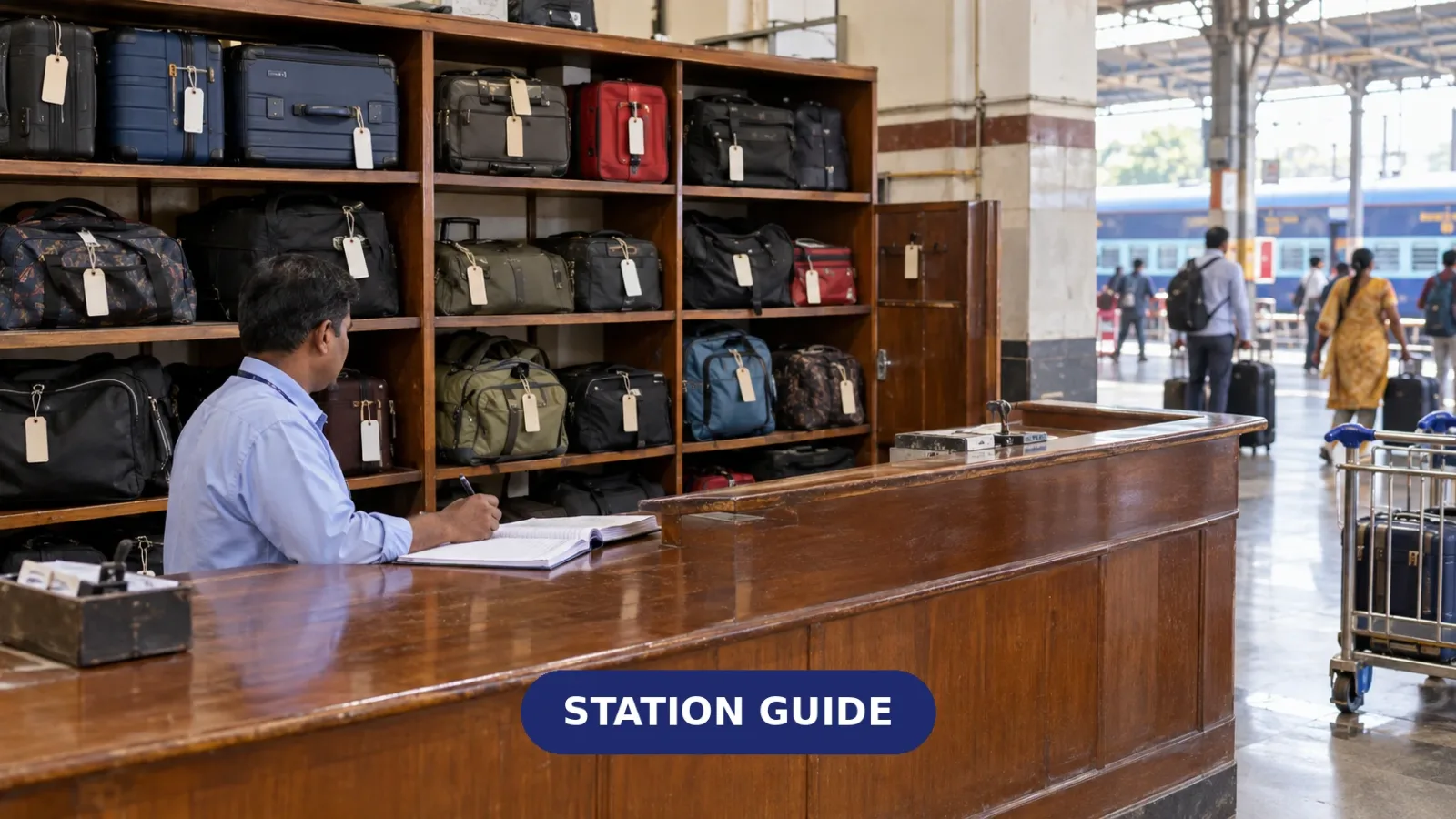
Short answer first: in the usual case you do not book a railway cloakroom in advance at all. According to TrainHelp's July 2026 cloak room and locker guide, there is currently no online booking - you use the counter at the station, or a self-service digital locker where one is installed, and the whole deposit takes a few minutes in person. Because the service is run station by station, treat the counter's own notice as final: check your station for current availability, hours, charges and the storage limit before you build a plan around it. Here is how the conventional process works.
Where cloakrooms exist
The July 2026 guide lists cloak rooms and lockers at most big stations - New Delhi, Mumbai CSMT, Howrah, Chennai and Bengaluru City among them - and self-service digital lockers are being rolled out at busy stations, with Mumbai CSMT's QR-tracked lockers named as an example. Smaller stations often have nothing, so if your plan depends on storing bags during a connection or a day in the city, confirm your specific station has the facility before counting on it.
What to carry, and how depositing works
Per the 2026 guides, counters ask for a valid train ticket showing you have just arrived at or are departing from that station, a photo ID such as Aadhaar, and a securely locked bag - unlocked bags are not accepted. RailMitra's September 2026 cloakroom guide describes the same check as a ticket with confirmed PNR status plus ID proof, used to verify you are an eligible passenger. You pay the applicable charge - most counters take cash only, so carry some - and collect the receipt, which is your proof of deposit: you surrender it when you collect the bags. Keep valuables, documents, electronics and medicines with you, not in the deposited bags. If the receipt is lost, a dated example: eRail's 2018 description of the New Delhi counter says delivery then required a stamped indemnity note and a written receipt from the passenger. That is one station's old procedure, not a guaranteed current one - ask the counter staff what applies today, and keep the receipt safe.
What it costs
Charges are per bag, per 24 hours or part thereof, and are set by each station. As a general guide, the July 2026 source gives these ranges: small bags about Rs 20-30 for the first 24 hours (Rs 10-20 for each extra 24 hours), medium bags Rs 30-40 (Rs 15-25 extra), large suitcases Rs 50-100 (Rs 20-30 extra), with busy stations at the higher end; the September 2026 guide quotes a similar Rs 15-50 per package. Oversized or overweight bags may cost more. Figures move, so confirm the current rate on the counter's information board before you deposit.
Limits and what you cannot store
Storage is usually allowed for a maximum of 30 days, though some counters set a shorter limit - read the notice at your counter, per the July 2026 guide. Charges add up per 24-hour block, so collect on time. Articles of a dangerous, explosive, offensive or perishable nature are not permitted, per the Railways' passenger information on cloak rooms. If a delay may push your bags past the posted limit, contact the cloakroom counter before the limit ends and ask what extension or collection arrangements are permitted - do not assume the storage resets on its own.
Quick questions
Can I book a cloakroom online or by phone? Not as of 2026: current rail-travel guides state there is no online booking - you use the station counter, or a self-service digital locker where one is installed. Services run station by station, so check your station's enquiry or website for current arrangements.
What do I need to deposit luggage? A securely locked bag, a valid train ticket showing arrival or departure at that station, and a photo ID such as Aadhaar, per 2026 guides; one guide describes the ticket check as confirmed PNR status. Most counters take cash only, so carry some.
How much does it cost per day? Per bag per 24 hours or part thereof, set by each station. A July 2026 guide's general ranges: small bags about Rs 20-30 for the first 24 hours, medium Rs 30-40, large Rs 50-100, with extra days cheaper and busy stations at the higher end. Confirm the current rate at your counter.
What if I lose the receipt? The receipt is your proof of deposit, so keep it safe. As a dated example, a 2018 description of the New Delhi counter required a stamped indemnity note and a written receipt before releasing luggage without it - not a guaranteed current procedure, so ask the counter staff what applies today.
How long can I leave my bags? Usually up to 30 days per a July 2026 guide, but some counters set a shorter limit - read the notice at the counter and confirm before depositing.

A Miranda House graduate and lawyer who traded courtrooms for slow travel. Cheshta travels with the batches we host ourselves, with a soft spot for travelling alongside elders.
Planning your next trip?
We'll handle insurance, hotels, airport assistance and the itinerary — the same way we do it for every trip.
Was this helpful?
one tap, no sign-up