




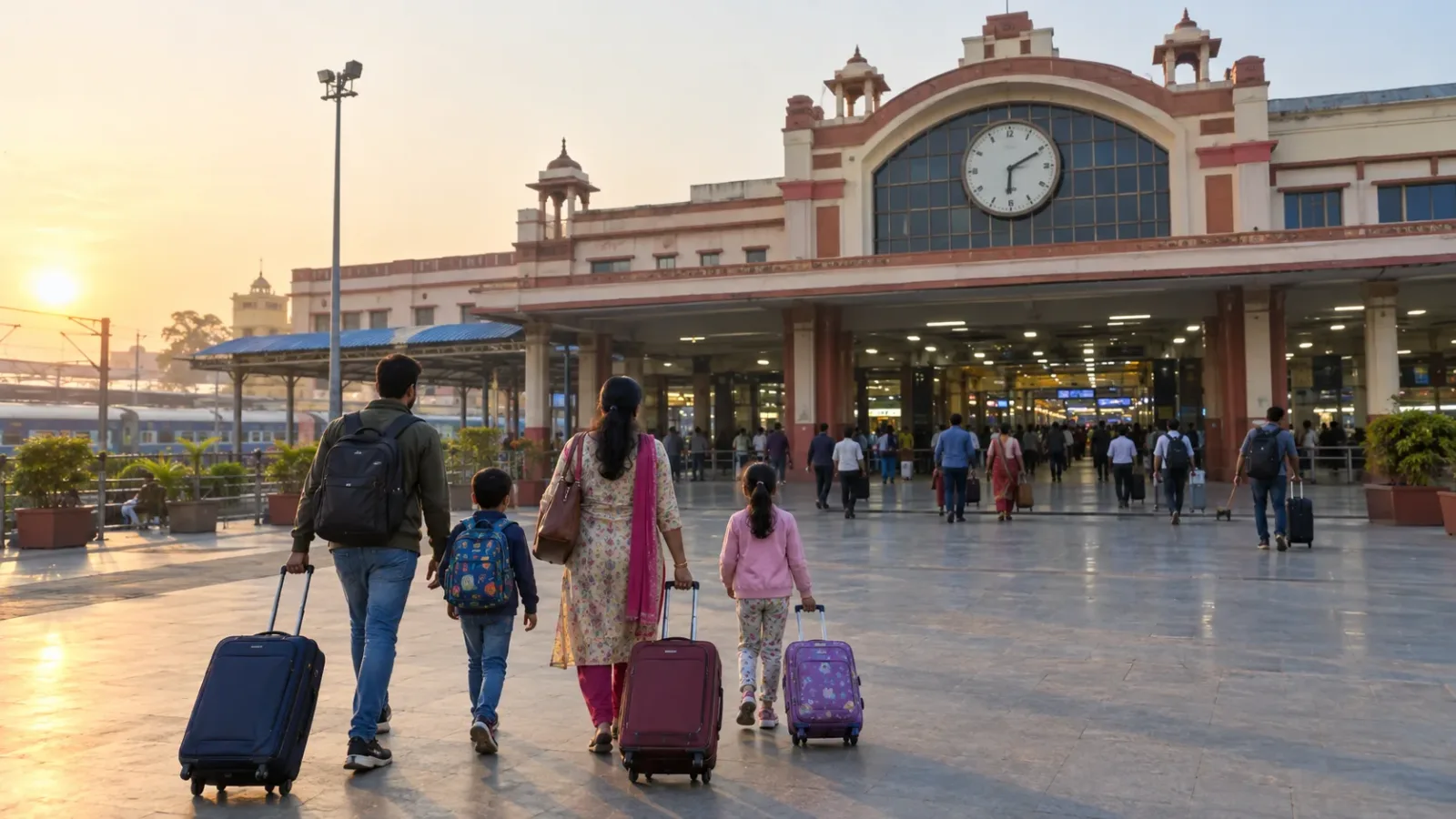
- Big city station
- Reach 45 to 60 min early (advice)
- Small station
- 20 to 30 min is usually enough (advice)
- Reviewed rules
- No reporting time set in the reviewed docs
- Real deadline
- Unused RAC or WL refund closes 30 min before departure
- Fully WL e-ticket
- Dropped after chart, do not go to board
None of the official railway documents we reviewed for this guide sets a check-in style reporting time for an ordinary ticket, so the honest answer is practical: at a big-city station, reach 45 to 60 minutes before departure; at a small station, 20 to 30 minutes is usually enough; add more time if you are a first-timer, travelling with elders or kids, or need any counter work done. That is advice, not a rule. What the rules do set are a few real deadlines, and missing those is what actually ruins a trip.
Airlines have trained us to expect a check-in deadline. The reviewed Indian Railways documents, the Railway Board's reservation FAQ, IRCTC's e-ticket rules, and the refund rules, set no boarding reporting time; the cut-offs they do set are about charts and cancellations. So let us separate those real deadlines from the sensible buffer.
The deadlines that are actually rules
None of these is a reporting time, but each one decides something important:
- Cancelling an unused RAC or waitlisted ticket: per Indian Railways' refund rules, you can cancel for refund up to half an hour before the train's scheduled departure, minus clerkage. After that, no refund. So the real decision point is at home, not at the station: if your PNR is still hopelessly waitlisted on travel day, cancel before you leave.
- Fully waitlisted e-tickets: per IRCTC's rules, if your e-ticket is still fully waitlisted after the reservation chart is prepared, your name is dropped from the chart and you cannot board. The ticket is auto-cancelled and refunded. There is nothing to reach early for; the trip is over before the station.
- Online e-ticket cancellation: IRCTC allows self-cancellation only before chart preparation. After the chart, claims go by email to etickets@irctc.co.in.
Check your 10-digit PNR status on the Indian Railways passenger enquiry site or by calling 139 before you leave. That one check tells you which of the three situations you are in.
Why experienced people still reach early
The buffer is not for rules, it is for the station itself:
- Finding things takes time. Platform numbers come off display boards, platforms can change after an announcement, and your coach stops at one specific stretch of the platform. Coach position signs help only if you are standing there to read them.
- Big stations are big. Entry queues, foot overbridges with luggage, and the walk to a far platform can quietly eat fifteen minutes.
- Trains do not wait for one passenger. At intermediate stations the halt can be a couple of minutes. If you are boarding mid-route, being on the platform before the train arrives is not caution, it is the whole plan.
How early, by situation
Advice, not rules:
- First time, or a large city station you do not know: about an hour before departure.
- Familiar big station: 45 minutes is comfortable.
- Small station where the train starts or halts briefly: 20 to 30 minutes, and be on the platform before the train is due.
- Travelling with elderly family, small children, or heavy luggage: add 15 to 20 minutes to whichever line above fits.
- Counter work needed (name changes, counter tickets, enquiries): add the queue, not a guess, so go earlier still.
How to shrink the buffer safely
Check the PNR status before leaving so you know your coach and berth. Look up the platform on the enquiry site or app, then still confirm it on the station display board, because platforms change. Note your coach number and use the platform's coach position signs to stand where your coach will halt. Do these three, and the station stops being a maze and becomes a short walk.
Common questions
Is there a reporting time like flights have?
None of the official documents we reviewed (the Railway Board reservation FAQ, IRCTC's e-ticket rules, and the refund rules) sets one. The deadlines those documents do set are about cancellations and chart preparation, not about when you may enter the station.
Can I board if I reach just as the train is leaving?
Reaching as the train moves off is a terrible plan, not a strategy: doors, crowds, and a moving train leave no margin. Be on the platform before arrival, especially at intermediate stations with short halts.
My e-ticket is fully waitlisted. Should I still go to the station early?
No. After chart preparation a fully waitlisted e-ticket is dropped from the chart, boarding is not allowed, and IRCTC cancels and refunds it automatically. Check your PNR status before leaving home instead.
I have an RAC ticket. Does reaching early help?
It does not change your berth chances, but it gets you to your coach calmly. Per the Railway Board's FAQ, RAC passengers can board and get sitting accommodation first, with a berth allotted if confirmed passengers do not turn up.
What if I need to cancel a waitlisted ticket on travel day?
Do it before leaving home. Unused RAC or waitlisted tickets get a refund, minus clerkage, only up to half an hour before scheduled departure, and online self-cancellation closes at chart preparation.
Sources checked on 24 October 2026: Railway Board advance reservation FAQ, IRCTC waitlisted e-ticket rules, Indian Railways refund rules. The arrival-time suggestions are advice, not railway rules.

A Miranda House graduate and lawyer who traded courtrooms for slow travel. Cheshta travels with the batches we host ourselves, with a soft spot for travelling alongside elders.
Planning your next trip?
We'll handle insurance, hotels, airport assistance and the itinerary — the same way we do it for every trip.
Was this helpful?
one tap, no sign-up