



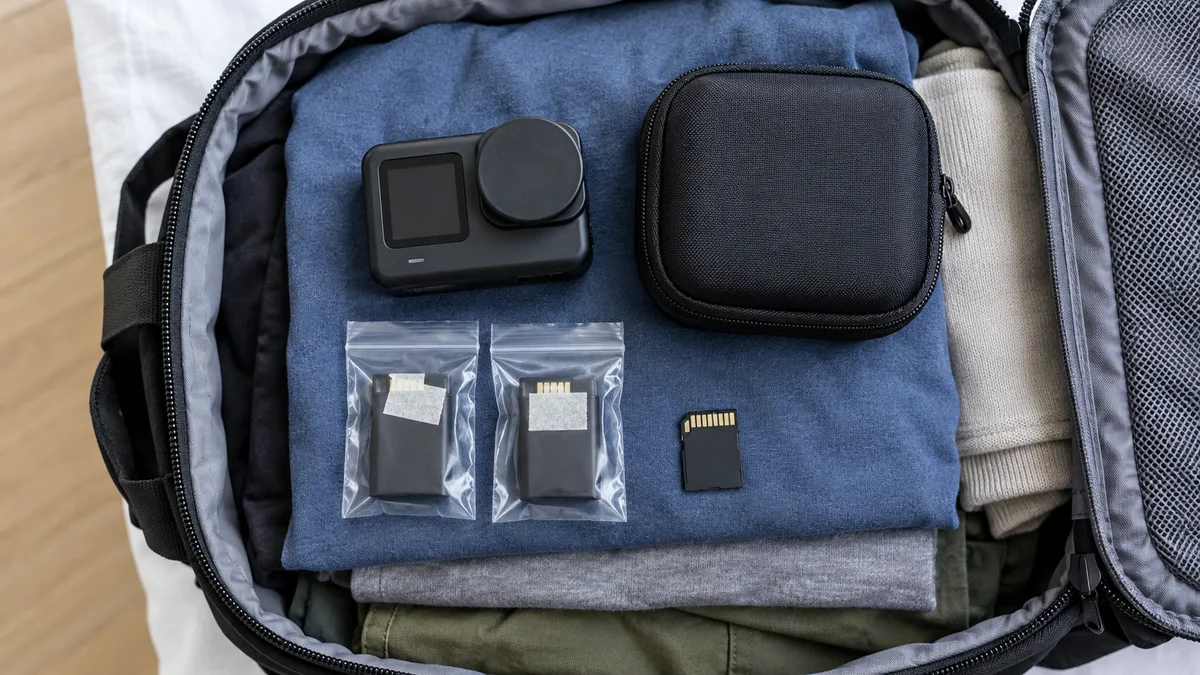
- Camera
- Cabin bag - allowed both, cabin advised
- Spare batteries
- Cabin only, never checked
- Limits
- 100 Wh / 2 g, max 2 spares
- In the bag
- Switched off, lens covered, cushioned
Short answer: pack it in your cabin bag. The camera and the battery inside it are allowed in both cabin and check-in, but the cabin is the right place - IndiGo explicitly recommends carrying cameras in cabin baggage and accepts no responsibility for them in checked bags. And if you carry spare batteries, those are cabin-only, no exceptions.
Cabin or check-in: both legal, one sensible
Air India's unsafe and restricted items page lists "Camera equipment/undeveloped film" as allowed on both - cabin and check-in. IndiGo's baggage item table and notes go a step further: the airline recommends that valuables including cameras, jewelry and electronics be carried in cabin baggage, not checked baggage, and says it does not accept responsibility for these items. Between rough baggage handling and that liability note, the cabin bag wins. An action camera is small enough that this costs you nothing. One caution before you check it: the camera-equipment listing does not itself settle whether the rechargeable battery stays inside. Air India's portable-electronics rows list camcorders - the closest listed device - as carry-on yes, check-in no, allowed in checked baggage only without the battery, with a 100 Wh maximum battery capacity note. The listing does not name action cameras, so if you plan to check one, take the battery out and carry it in the cabin, and confirm your camera with the airline.
The battery rules, installed and spare
A rechargeable action camera is a portable electronic device with a lithium battery inside, and that is fine: IndiGo's table allows portable electronic devices with lithium-ion batteries up to 100 Wh or lithium metal up to 2 g, with a maximum of 15 devices per passenger. Action camera batteries are far below those caps, but check the watt-hour (Wh) rating printed on your battery or in its manual to be sure - if you see only volts (V) and amp-hours (Ah), multiply them.
Spare batteries are stricter. Air India's restricted page is direct: spare batteries are carry-on yes, check-in no - up to 100 Wh for lithium-ion and 2 g for lithium metal, a maximum of two spare batteries per person, each individually protected against short circuits (tape the terminals or keep each battery in a plastic bag or protective case). Power banks and spare batteries also cannot go in overhead bins on Air India, so keep them at your seat. IndiGo likewise keeps power banks in the cabin only, with the rating visible on the battery.
How to pack it
- Switch the camera off so it cannot start recording or drain in the bag, and make sure nothing can press the power button. IndiGo's cabin list bars electronic devices that cannot be switched off at all - an action camera switches off, so that rule does not affect it.
- Leave the installed battery in the camera. Protect the lens with its cover or a soft wrap, and cushion the camera in a small case or between clothes.
- Pack spares separately, each with its terminals covered, in your cabin bag - never in checked luggage, and on Air India, not in the overhead bin.
- Keep the camera reachable at the top of your cabin bag in case security wants a look, and back up your memory cards before you fly.
Quick questions
Can I carry an action camera in cabin baggage? Yes. Air India lists camera equipment as allowed in both cabin and check-in, and IndiGo recommends carrying cameras in the cabin rather than checking them.
Can I put my action camera in checked luggage? Air India's list allows camera equipment in check-in too, but that listing does not itself settle the rechargeable battery: its portable-electronics rows list camcorders - the closest listed device - as allowed in checked baggage only without the battery, and action cameras are not named. If you check one, remove the battery and carry it in the cabin. Either way, IndiGo recommends cameras travel in cabin baggage and accepts no responsibility for checked valuables - so cabin is the safer choice.
Where do spare action camera batteries go? In your cabin bag only. On Air India, spare lithium-ion batteries up to 100 Wh (lithium metal up to 2 g) are cabin-only, a maximum of two spares per person, each protected against short circuits, and not in overhead bins. IndiGo also keeps power banks in the cabin with the rating visible.
Is there a size limit for camera batteries? For spares, 100 Wh for lithium-ion and 2 g lithium content for lithium metal on Air India, with a maximum of two per person. IndiGo applies the same 100 Wh / 2 g caps to portable electronic devices, up to 15 devices per passenger. Check the Wh rating on the battery label - multiply volts by amp-hours if only those are shown.
Does the camera need to be switched off in my bag? It is good practice - a camera that turns on inside a bag can record, drain, or get damaged. IndiGo's cabin list bars electronic devices that cannot be switched off at all; an action camera switches off, so that rule does not affect it.

A Miranda House graduate and lawyer who traded courtrooms for slow travel. Cheshta travels with the batches we host ourselves, with a soft spot for travelling alongside elders.
Planning your next trip?
We'll handle insurance, hotels, airport assistance and the itinerary — the same way we do it for every trip.