




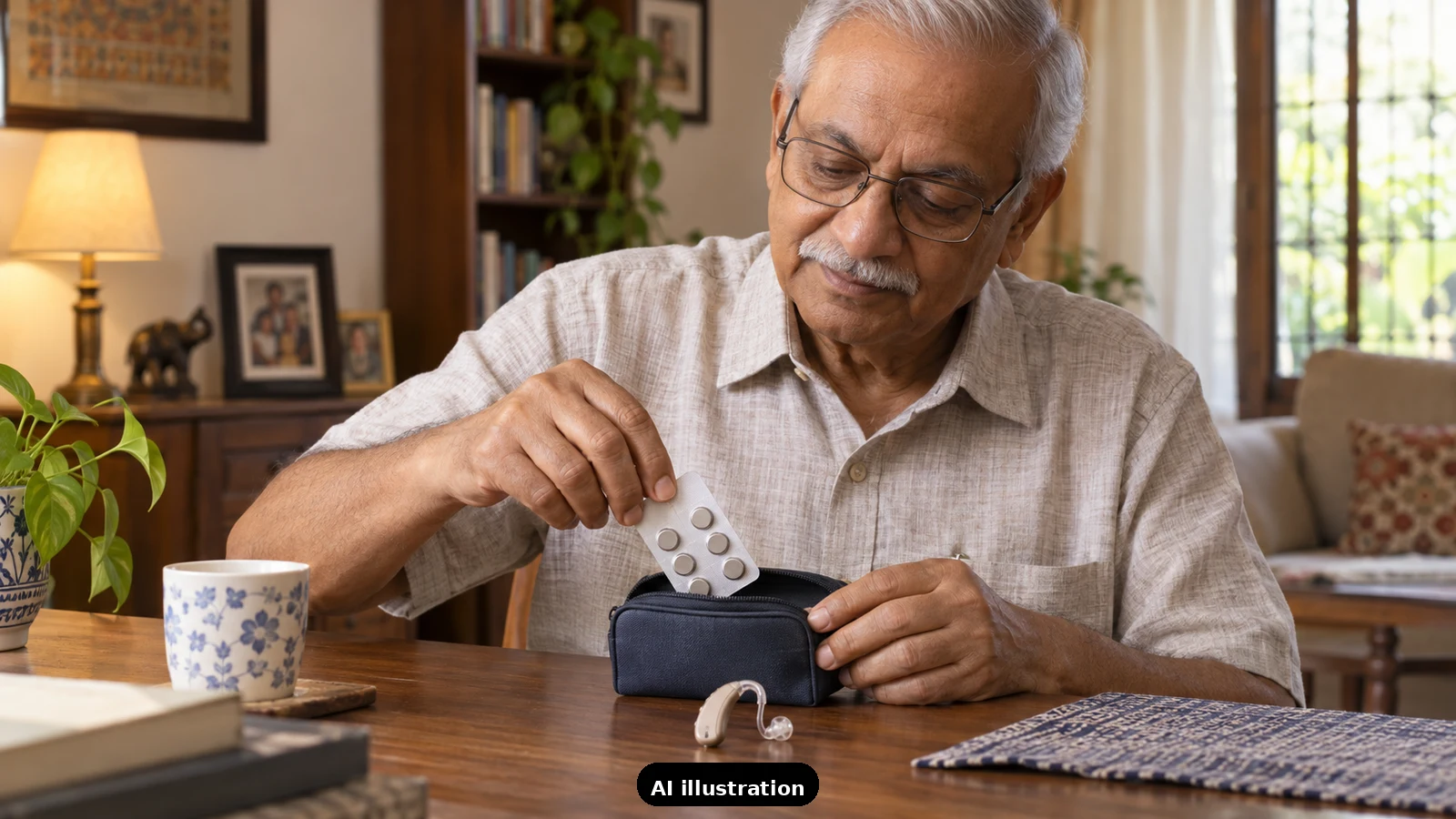
Short answer: check what kind of batteries the hearing aid takes, because the rules split there. Disposable zinc-air batteries - the small button cells with coloured sticker tabs, in sizes 10, 13, 312 and 675 - are permitted in both carry-on and checked luggage. Lithium-ion batteries, which power rechargeable hearing aids and their chargers, are banned from checked baggage and must stay in the cabin, with spare terminals protected against short circuits. In practice, the right place for everything hearing-related is the cabin bag, within arm's reach.
Why the cabin wins even where checked is allowed. Zinc-air spares may legally ride in the suitcase, but a hearing aid battery does not die on schedule - it dies mid-flight, mid-layover, mid-welcome-dinner. A battery in the hold helps nobody at 35,000 feet. Hearing specialists who write about air travel say it plainly: pack disposables in the carry-on for accessibility, because you want them the moment the current one fades.
The lithium rules for rechargeable aids. If your parents' hearing aids are rechargeable, the device itself flies with them - worn, ideally - and the charging case, which contains a lithium-ion battery, stays in the cabin like a power bank. Loose spare lithium cells need their terminals protected: original packaging, a case, or tape over the contacts. And the gate-check trap applies: if the cabin bag is taken at the aircraft door on a small plane, pull the charger and any lithium spares out before it goes below.
Security screening is the easy part. Hearing aids can be worn straight through security - no removal needed, and most contain too little metal to trigger anything, though telling the officer beforehand smooths the moment. Keep the aids in ears or safely in the bag, never loose in the X-ray tray where they vanish between laptops. Cochlear implants may need an alternative screening like a pat-down; mentioning the device at the start of the line settles it.
How many spares to carry. A disposable zinc-air battery typically lasts days, not weeks, once its tab is pulled - and the clock starts when the tab comes off, not when it goes into the aid, so leave tabs sealed until use. For a trip, count the days, divide by the battery's usual life in that person's aid, and then double it. Button-cell sizes are standard worldwide, but hunting a size 312 in an unfamiliar pharmacy on day two of a holiday is a scavenger hunt nobody needs.
Keep the little ecosystem together. Batteries, the cleaning brush, wax guards and the charger belong in one pouch in the cabin bag's easiest pocket. Not scattered across three bags, not in the checked suitcase, not "somewhere in the big purse." When a hearing aid goes quiet, the fix should be a 30-second reach, not an excavation.
The one line to teach your parents. "Hearing aid ki batteries aur charger cabin bag mein, sabse upar wali jeb mein - suitcase mein kabhi nahi" - the hearing aid batteries and charger go in the cabin bag, in the topmost pocket, never in the suitcase. The rule is simple because the stakes are not: a battery in the wrong bag is a day spent half-hearing a holiday.
How we cover it at TripKeeper. For travellers with hearing aids we put the medical-device kit on the trip card - batteries in the cabin, charger with them, buffer counted for the whole trip - so the small things never become the loud problem. If you want that checklist built for your parents' journey, send us a trip-planning inquiry.

A Miranda House graduate and lawyer who traded courtrooms for slow travel. Cheshta travels with the batches we host ourselves, with a soft spot for travelling alongside elders.
Planning your next trip?
We'll handle insurance, hotels, airport assistance and the itinerary — the same way we do it for every trip.
Questions on this article
asked by readers, answered by us
Was this helpful?
one tap, no sign-up