




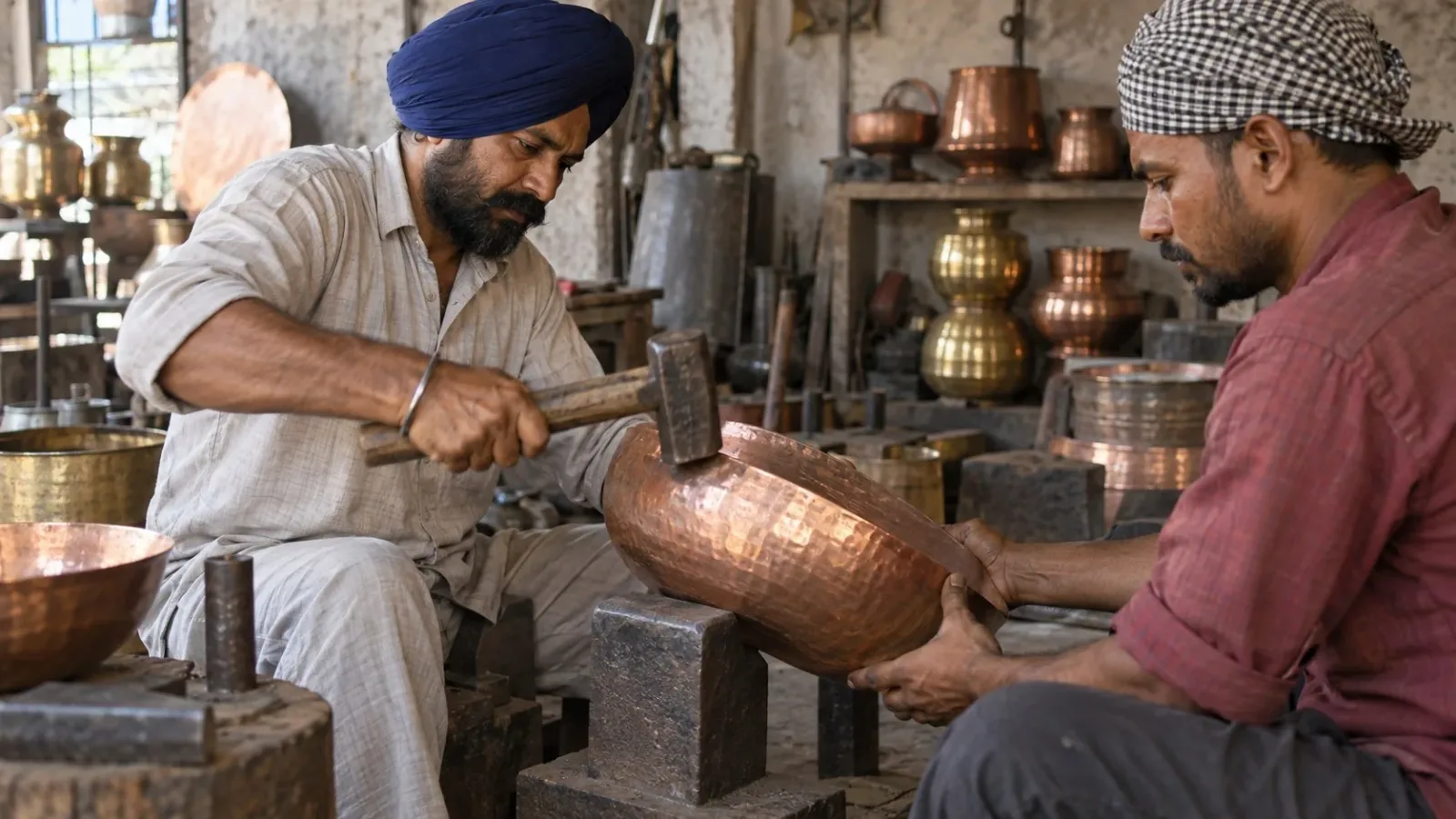
- Starting form
- Metal plate
- Action described
- Hammering into curved forms
- Subject
- Vessel shaping
- Product suitability
- Not assessed
- Reviewed
- 17 November 2026
Reviewed: 17 November 2026. Selective heritage outline, not a ticket or access guarantee.
AI-generated fictional craft scene, not an identified artisan, verified tool or process setup, composition test, food-suitability assessment, tutorial or current workshop record.
UNESCO's account of the Thatheras of Jandiala Guru describes a craft in which metal plates are hammered into curved vessel forms. The useful relationship is between the plate and the shape it becomes, rather than treating the finished vessel only as a metal surface.
Begin with the plate
The account describes metal flattened into plates before those plates are shaped. It connects the work with brass and copper utensils and gives bowls, rimmed plates and pots among its examples.
Those examples help make the change in form clear. A plate is part of the material's described preparation; the vessel is the form produced through the shaping work. They are not simply two names for an unchanged object.
This article does not identify the metal in a particular vessel. A place name, colour or photograph is not used here to establish composition, purity or authenticity.
Relate hammering to the vessel's form
In UNESCO's description, hammering helps turn plates into curved shapes. Read that action as part of forming the vessel, rather than assume that hammering refers only to decorating its surface.
This is a qualitative explanation. It does not establish how every part of an individual object was made, whether the object contains joins, or which marks belong to shaping rather than finishing. No surface mark is offered as a test.
There are no instructions for hammering, heating, thinning, joining or polishing metal. No tool choice, temperature, recipe or sequence for making a vessel is supplied.
Keep a craft description separate from an individual object
The source describes a craft relationship, not the condition or suitability of an item offered for sale. It does not certify that item for cooking, drinking, storage or any other use. Nor does this article repeat health beliefs about metals as medical advice.
No scraping, heating, tasting or other material test is proposed. Understanding the plate-and-form relationship does not require testing a vessel or entering a working area.
The narrow takeaway is the transformation described by the source: a metal plate and a curved vessel form are connected through shaping work. A maker, demonstration, class, purchase or present visitor arrangement is not confirmed here.
Frequently asked questions
What relationship does UNESCO describe?
Metal plates are hammered into curved vessel forms.
Is hammering described only as surface decoration?
No. The account also connects it directly with shaping the vessel.
Can marks or colour certify a particular item here?
No. No composition, authenticity or manufacturing test is supplied.
Does the explanation confirm a workshop or a product's suitability?
No. Neither a current visit nor an individual product assessment is established.
Does this state every vessel has no joins?
No one-piece or no-join claim is made.
Does this recommend testing or heating an item?
No scraping, heating, tasting or other material test is proposed.
Official sources and limits
Official plate-to-curved-vessel shaping relationship and qualitative vessel examples only. No tool, temperature, heating, polishing, joining recipe, composition/authenticity test, health belief, food-suitability guarantee or current workshop claim.

A Miranda House graduate and lawyer who traded courtrooms for slow travel. Cheshta travels with the batches we host ourselves, with a soft spot for travelling alongside elders.
Planning your next trip?
We'll handle insurance, hotels, airport assistance and the itinerary — the same way we do it for every trip.
Questions on this article
asked by readers, answered by us
Was this helpful?
one tap, no sign-up