




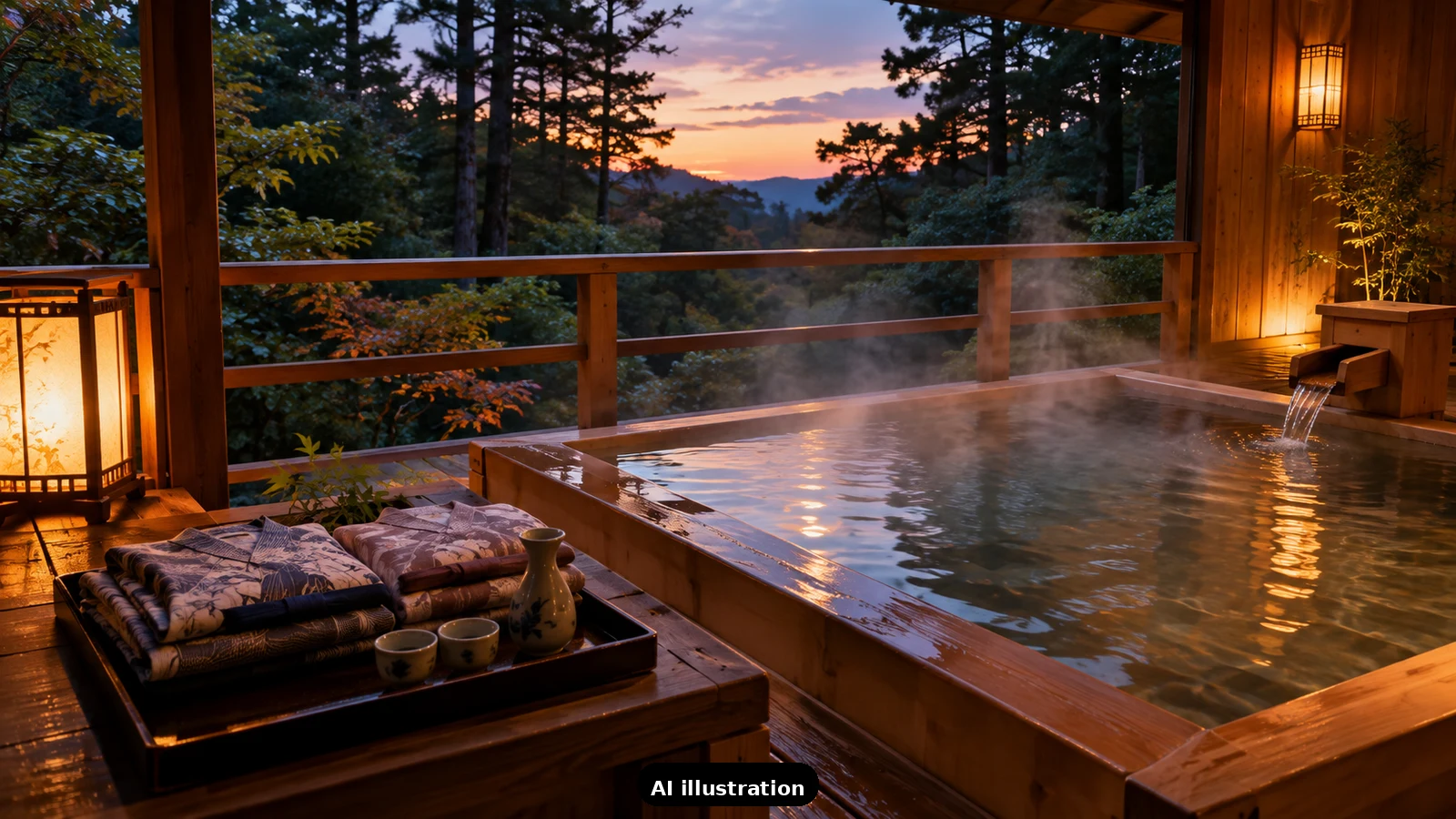
The private onsen is the single most requested item on Indian honeymoon wishlists for Japan: steaming mineral water, a mountain view, and nobody else in it. It is absolutely real and absolutely worth it. It is also the booking most likely to arrive with surprises - the "onsen" bath fed by ordinary heated water, the discovery that the baths are gender-separated, the cancellation policy that keeps your money. Every one of these is avoidable with the right questions before you pay.
Know the two kinds of private onsen. Japan's tourism agency draws the official line clearly. Type one: an onsen right in your room - usually an open-air rotenburo on your balcony - which you use whenever you like, included in the room price. Type two: a kashikiri bath, a private onsen you reserve for a set period (typically 45-60 minutes), usually for a fee, booked in advance or at the front desk in exchange for a key. The in-room bath is the honeymoon dream and prices accordingly; the kashikiri delivers ninety percent of the experience at a fraction of the cost.
The water question nobody asks. Here is the quiet industry secret: not every "private onsen bath" is fed by the hot spring. Some rooms - even lovely ones - fill the tub with ordinary heated water. If the mineral water matters to you (and on a honeymoon, it should), ask the property directly whether the room bath is onsen-sourced before booking. Properties that have the real thing state it proudly; vagueness is its own answer.
Couples, gender rules and tattoos. Public baths are gender-separated - men and women bathe apart - which surprises couples expecting to soak together. Private baths have no such rule: your kashikiri slot or in-room bath is yours as a couple, completely. Tattoos follow their own logic: public baths may refuse them, but private baths almost never care, since nobody else sees. Still, confirm the policy in writing if either of you is inked - five minutes now beats a refund fight later.
The fine print that bites. Ryokan cancellation policies are famously strict - sliding scales that start taking percentages a week or more out, with no-show charges at full price. Check-in has a hard deadline, often 5-6 pm, because the kaiseki dinner is served on a schedule; a late Shinkansen can cost you the meal you paid for. Pricing is per person, not per room. And dietary requests - vegetarian, Jain, allergies - must go in at booking time, not at the table.
Where honeymooners actually go. Hakone remains the classic: close to Tokyo, thick with ryokan offering in-room rotenburo, views of Fuji on clear days. Kusatsu delivers Japan's most famous waters. Kurokawa in Kyushu is the romantic village in the forest. Yufuin pairs baths with cafés and lake walks. For winter weddings, a yukimi (snow-viewing) outdoor bath is the photograph of the trip.
Timing the booking. Rooms with private open-air baths are the first to sell out - for cherry-blossom and autumn seasons, book three to six months ahead; kashikiri slots at popular ryokan can be reserved in advance too, so do not leave them to check-in day. Weekday nights are meaningfully cheaper than weekends, and a Sunday-Monday honeymoon leg halves the crowd.
How TripKeeper books honeymoons. Our team confirms the things listing pages leave vague: whether the bath is true onsen water, the tattoo policy in writing, the dinner's dietary fit, the real cancellation terms, and kashikiri slots reserved alongside the room. On our founder-hosted Japan departures, honeymooners get the quiet corners of the itinerary - and a tour leader who makes sure the surprise moments are the good kind. Send a "Plan your trip" inquiry with your dates, and we will shortlist ryokan that actually match the fantasy.

A Miranda House graduate and lawyer who traded courtrooms for slow travel. Cheshta travels with the batches we host ourselves, with a soft spot for travelling alongside elders.
Planning your next trip?
We'll handle insurance, hotels, airport assistance and the itinerary — the same way we do it for every trip.
Questions on this article
asked by readers, answered by us
Was this helpful?
one tap, no sign-up