




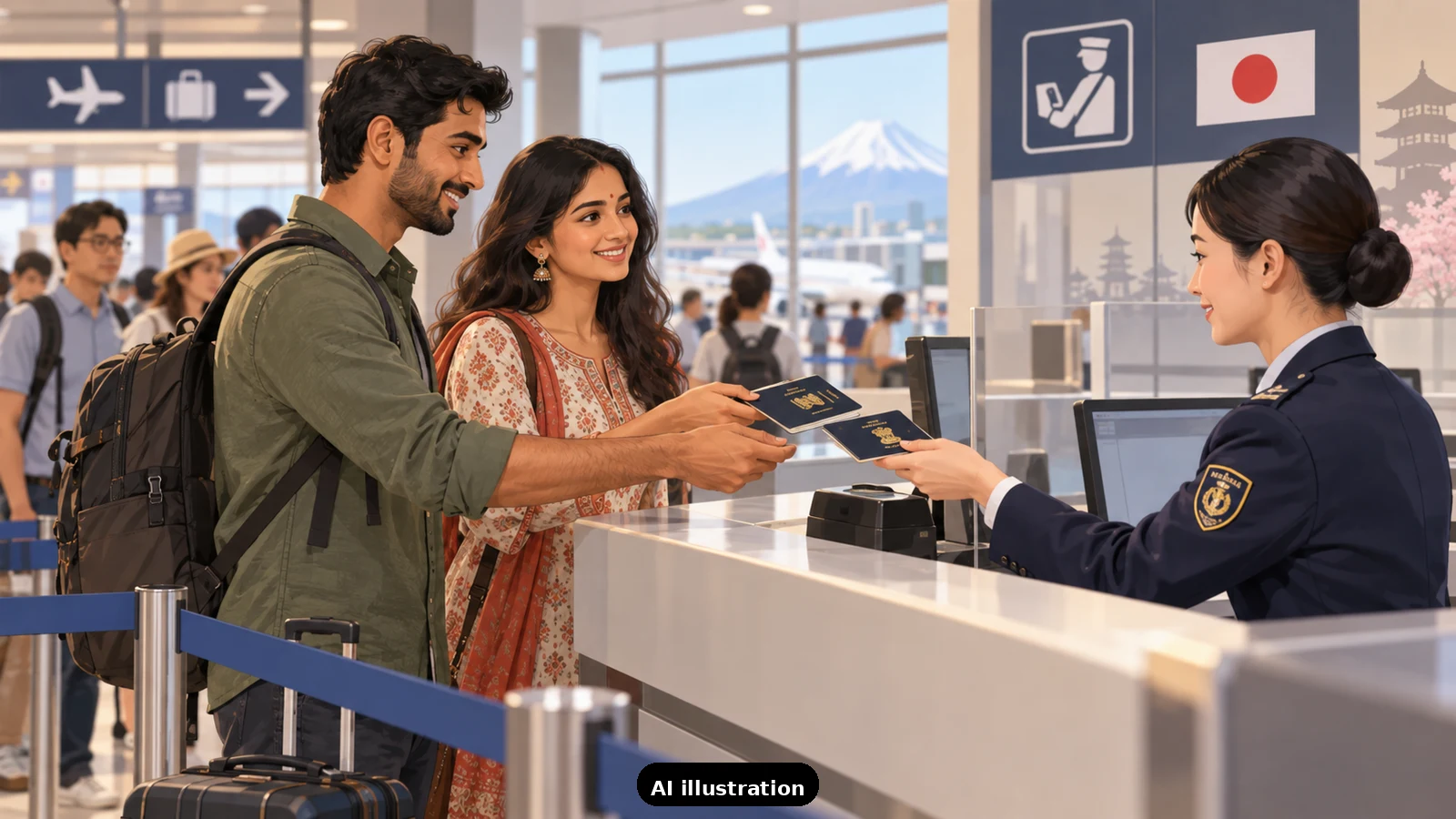
After a long flight, immigration is the part Indian travellers dread most - and in Japan it is usually the calmest border experience in Asia. Most genuine tourists hear a handful of questions or none at all, the officer takes your photo and fingerprints, and the landing permission sticker goes into your passport. Still, walking up prepared removes the last bit of anxiety, so here is what the counter actually looks like.
The process, in order. If you filled Visit Japan Web, you show the immigration QR code; otherwise you hand over the paper disembarkation card. The officer takes your passport, scans your photo and fingerprints, and may ask a question or two. When everything is in order, you get the landing permission sticker - status "Temporary Visitor" - and you are through to baggage claim. The whole thing often takes less time than the queue.
The questions that actually come up. There is no fixed script, and many travellers are asked nothing. When officers do ask, it is almost always from a short, predictable list: What is the purpose of your visit? How many days are you staying? Where are you staying - the name or address of your first hotel? Are you travelling alone or with family? Do you have a return ticket? Occasionally: what do you do for work, or how will you pay for the trip. If you used Visit Japan Web, the officer can already see most of these answers on their screen, which is why the conversation is often so short.
What they are really checking. Not your English, and not your nerves. They are checking consistency - that your answers match your visa, your stated stay matches your return flight, and the hotel you name exists in your booking. A tourist with a tourist eVisa saying "sightseeing, ten days, first hotel in Shinjuku, flying home on the 14th" is a complete, boring, perfect answer. Problems start when answers contradict documents: saying two weeks while your visa application said five days, or naming no accommodation at all.
Documents to keep in your hand luggage. You may never be asked for any of these, but carry them within reach: your passport with the eVisa, your return or onward ticket, the first hotel booking confirmation, and a rough itinerary. If you registered on Visit Japan Web, the hotel address and flight details are already in the system - the printouts are simply the fastest way to answer if a question does come.
Questions are not requirements. This distinction keeps people calm. The hard requirements were settled before you boarded: an Indian passport holder needs a valid visa for Japan, and the airline checks that at check-in. The counter conversation is verification, not a fresh exam. You cannot "fail" a question you answer truthfully and consistently; you can only create confusion by guessing or over-explaining. Short, true, consistent answers win.
If language worries you. Japanese immigration officers handle limited-English travellers all day, every day. One-word answers are acceptable. Pointing at your hotel confirmation is acceptable. If anything needs more explanation, they call for assistance rather than turning you away. Families can approach the counter together - tell the officer you are one group, and the questions usually get asked once.
TripKeeper clients get a one-page arrival sheet before they fly: the first hotel's name, address and phone number in English and Japanese, the return flight details, and the trip's day-by-day skeleton - the same information they entered in Visit Japan Web, formatted to show at the counter if needed. Our team also briefs families on a call the week before departure, so nobody rehearses answers at the immigration queue. If you would like Japan planned this way, the plan-your-trip page is where it starts.

A Miranda House graduate and lawyer who traded courtrooms for slow travel. Cheshta travels with the batches we host ourselves, with a soft spot for travelling alongside elders.
Planning your next trip?
We'll handle insurance, hotels, airport assistance and the itinerary — the same way we do it for every trip.
Questions on this article
asked by readers, answered by us
Was this helpful?
one tap, no sign-up