




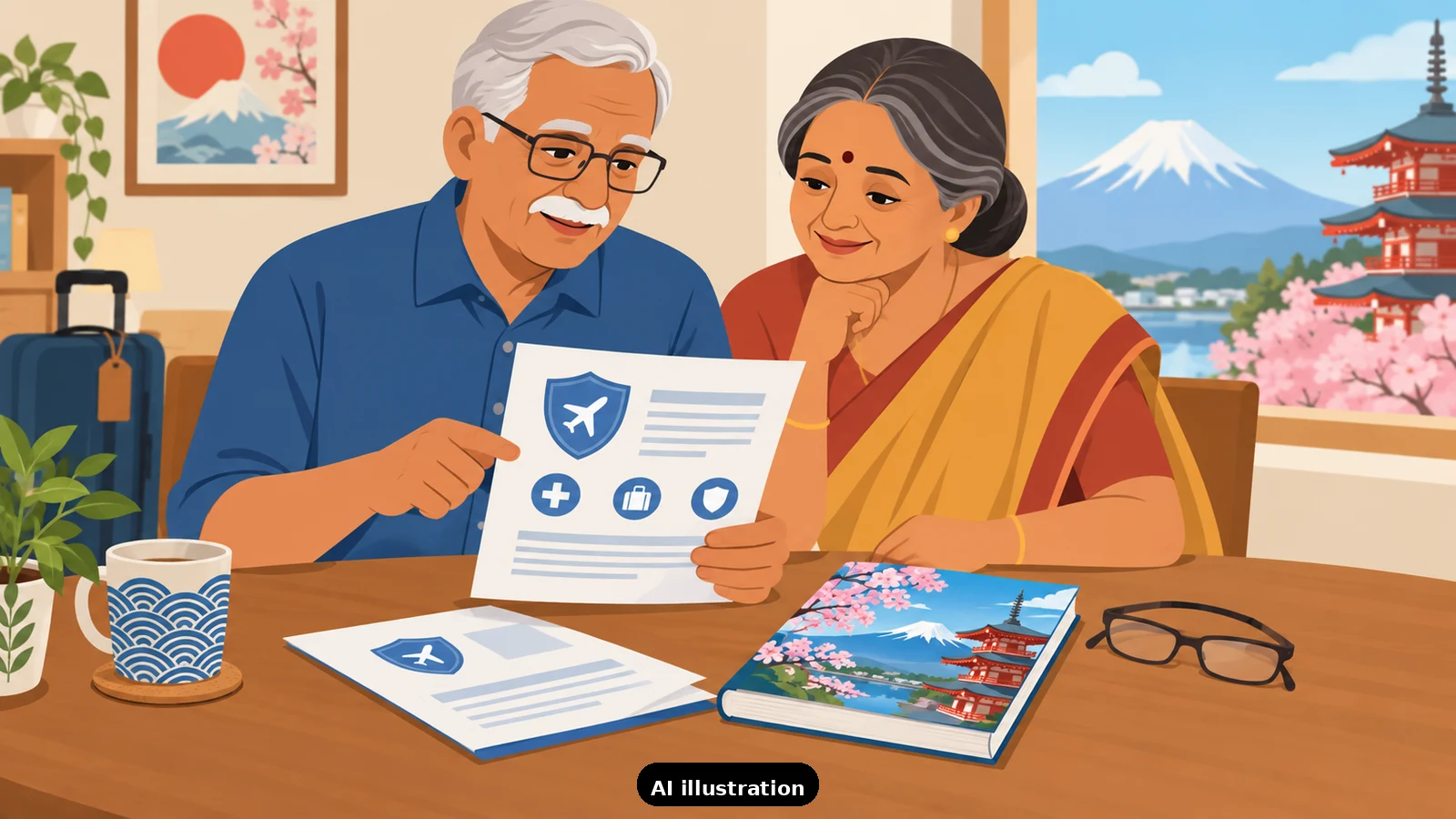
Japan is one of the safest, most senior-friendly countries to visit - and one of the most expensive places in the world to fall ill. A short hospital stay or an emergency procedure can run into sums that dwarf the trip's cost, which is why insurance for parents and grandparents is not a checkbox but the most important document after the visa. The difference between a good policy and a cheap certificate sits in five clauses.
1. Pre-existing conditions: the decisive clause. Most senior travellers carry at least one - blood pressure, diabetes, a cardiac history. Standard policies exclude claims arising from pre-existing diseases unless the plan specifically covers them, sometimes only in "life-threatening" situations, sometimes with waiting periods or sub-limits. Read this clause in the policy wording, not the comparison table, and match it to the actual medical history. If the wording is ambiguous, get the insurer's answer in writing before you buy.
2. Age limits and sum insured. Many plans cap entry age, reduce the maximum sum insured above 60 or 70, or add co-pays for seniors. For Japan specifically, lean toward a higher medical sum insured - Japanese healthcare is superb but priced accordingly, and a 3-5 lakh rupee cover that suffices elsewhere can look thin in a Tokyo hospital. Check whether the senior member's plan has a per-illness sub-limit, and prefer plans without one for this age group.
3. Cashless versus reimbursement. In Japan, foreign visitors are typically asked to pay hospitals upfront and claim later. A policy with a strong assistance network and cashless arrangement - where the insurer settles larger bills directly with the hospital - matters far more at 70 than at 30, because a "claim later" bill can be several lakhs on a card. Confirm the 24x7 assistance number works from Japan and that the family knows the claim-intimation drill: inform the insurer before or during treatment, keep every bill and report.
4. Evacuation and escort cover. For seniors, medical evacuation to India and the cost of a family member flying out or extending their stay are real scenarios. Check the evacuation sum insured separately - it should be a dedicated, sizeable figure, not a rounding line - and whether an escort's travel and accommodation are covered when a doctor recommends one.
5. Trip-level covers that actually trigger. Trip cancellation for documented medical reasons, missed connections, and loss of medicines or documents are the clauses that seniors genuinely use. Adventure-sport-style add-ons are irrelevant; medicine replacement and compassionate-visit covers are not.
Before you pay. Declare every condition honestly - a denied claim costs more than a loaded premium. Buy soon after booking so cancellation cover applies. Carry printed policy cards and the assistance numbers in the senior's own bag, not only in yours.
How TripKeeper handles senior travel. On our founder-hosted Japan departures and private family tours, insurance is part of the planning conversation, not an afterthought: the team helps families compare what a policy actually covers for senior members, coordinates with insurers when paperwork is needed, and on tour the leader knows which hospitals and clinics handle foreign patients. Start with the "Plan your trip" inquiry and we will fold the insurance checklist into your family's plan.

A Miranda House graduate and lawyer who traded courtrooms for slow travel. Cheshta travels with the batches we host ourselves, with a soft spot for travelling alongside elders.
Planning your next trip?
We'll handle insurance, hotels, airport assistance and the itinerary — the same way we do it for every trip.
Questions on this article
asked by readers, answered by us
Was this helpful?
one tap, no sign-up