




The Trip Keeper The Trip Keeper
three doors, pick the one that fits your family How do you want to travel?
Cheshta Agarwal, founder and host of The Trip Keeper, smiling on a green country road
Hosted by Cheshta

Founder-Hosted Group Tour

the trips where Cheshta travels with you

Our own exclusive group trips. Cheshta is on the trip, from the first flight to the last dinner.

  • Cheshta travels with the group
  • One clear price, inclusions listed
  • Meet your travel family
Next up: Vietnam, 17 DecView →
See founder trips →
A fixed-departure batch on tour

fixed dates, fixed flights

Join a batch of fellow travellers on set dates. Limited seats, flights included, with options. Our team doesn't travel on these.

  • Fixed dates and flights
  • Limited seats per batch
  • Flight options available
See departures →
A private family trip

Private Tour

your dates

just your family, nobody else

Trips planned around your family, your pace and your dates. Milestone birthdays and anniversaries.

  • Travel on your own dates
  • Route shaped around you
Ask for a quote →
← Journal ☏
Senior & Family Travel 3 min read

Japanese Toilets for First-Time Indian Travellers: Buttons, Bidets and Public Restrooms

Japan's famous high-tech toilets are a delight once you decode the panel - and its public restrooms set the global standard. Every button explained, plus paper rules, slippers and squat toilets.

share WhatsApp Facebook X
Text size
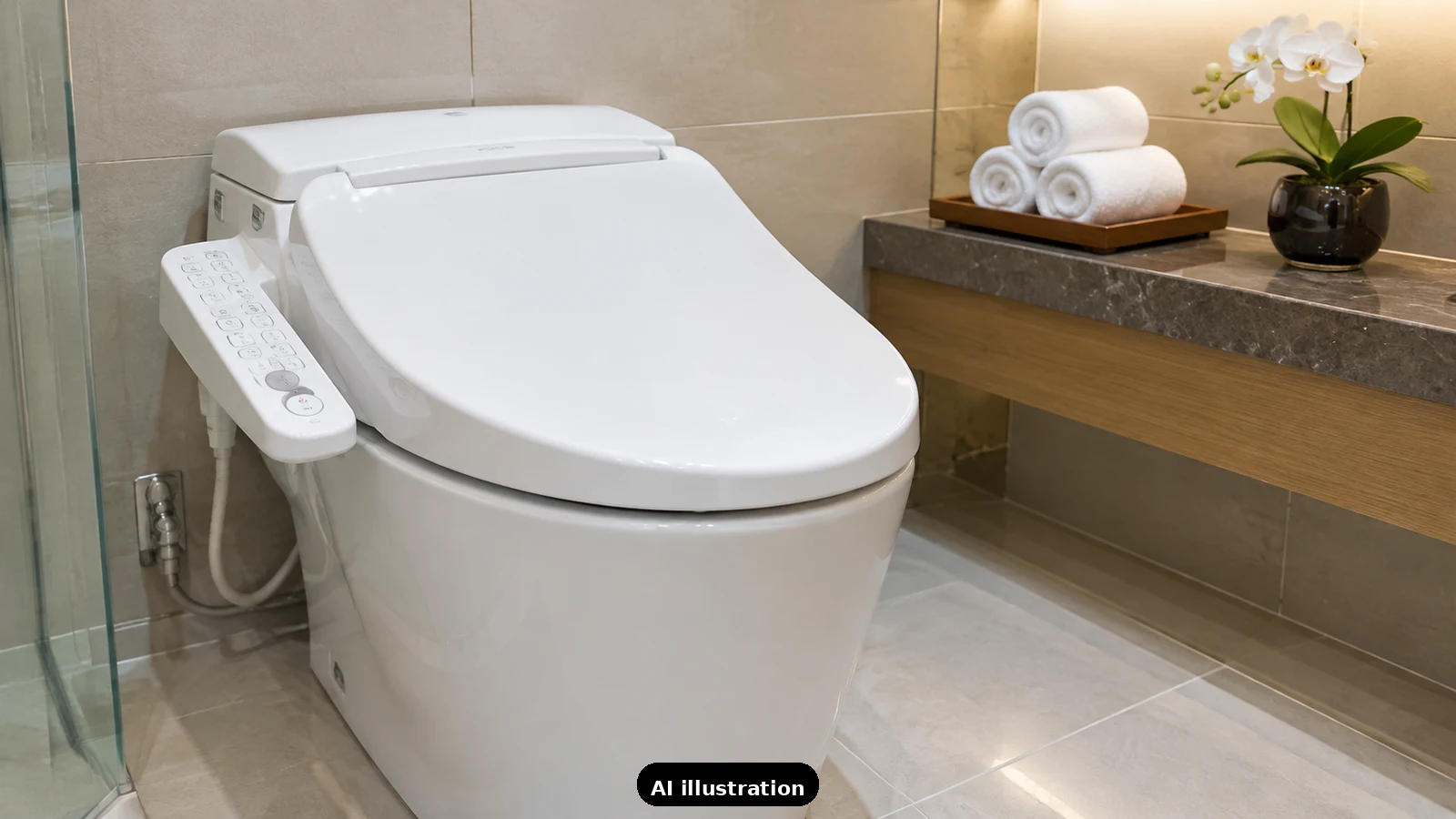
A modern Japanese bidet toilet with a side control panel in a spotless hotel bathroom
Send to Mummy-Papa Opens WhatsApp with a short summary — pick who to send it to.

Here is a travel truth nobody warns Indian families about: the thing you will miss most after Japan is the toilet. Japanese bidet toilets - warm seats, washing wands, dryers, deodorizers - turn a basic errand into a small luxury, and the country's public restrooms are so clean they reset your standards forever. The only hurdle is the first five minutes in front of a control panel covered in icons. This guide is those five minutes.

The panel, decoded. Panels vary by brand, but the iconography is shared. The two buttons you need: the rear-wash icon (a figure with a spray aimed at the back) and, on most models, a front-wash or "bidet" icon (a spray aimed forward, for women). Press to start, press the stop icon - a square - to stop. Dials or plus-minus buttons adjust water pressure, water temperature, seat warmth and wand position. When in doubt, press stop; the toilet never argues.

Features you will actually use. The heated seat is the winter revelation. The dryer - a fan icon - finishes the job after washing. The deodorizer starts automatically. Many public toilets play a flushing sound or music, called Otohime, the moment you sit, to spare you embarrassment; do not mistake it for an actual flush. And the real flush is often a large button marked with the character for flush, a wave icon, or an automatic sensor when you stand.

Toilet paper: flush it. Unlike in India, where bins are the norm, Japanese plumbing is built for paper - toilet paper goes in the bowl, always, and dissolves completely. The small bin in the stall is for sanitary products only. Paper is always provided in Japan; you will almost never find an empty dispenser, even in stations.

The slippers rule. In ryokan, many restaurants and some homes, you swap into dedicated toilet slippers at the bathroom door - and swap back when you leave. Wearing toilet slippers into the dining area is the classic foreigner gaffe; it is the one thing guaranteed to make a room of polite Japanese people visibly wince. Set a mental alarm every time.

Squat toilets still exist. Older stations, parks, schools and some temples have traditional floor-level squat toilets alongside Western ones - look for stalls marked with a seated-figure icon for the Western style, which is what most visitors want. If you do face the squat: feet on the ridged foot pads, face the hooded end, and hold your pockets' contents in advance.

Public restrooms: a blessing for families. Stations, department stores, convenience stores, parks and tourist sites all have free, clean toilets - Japan leads the world in restroom accessibility design. Larger ones include wheelchair-accessible stalls with adult changing tables, baby seats mounted inside stalls so your child watches you rather than escapes, and ostomate facilities. For parents, the baby-seat stall alone justifies the airfare.

How TripKeeper thinks about the unglamorous stuff. Great trips are made of small comforts, and our Japan itineraries quietly plan around them: hotels with proper bidet toilets, rest stops at department stores rather than highway odds and ends, and a tour leader who answers the questions you are too shy to ask. That is what travelling with a team means. Send a "Plan your trip" inquiry, and we will take care of the details you did not know to mention.

Send to Mummy-Papa Opens WhatsApp with a short summary — pick who to send it to.
Cheshta Agarwal
Founder · Travel Creator · Lawyer

A Miranda House graduate and lawyer who traded courtrooms for slow travel. Cheshta travels with the batches we host ourselves, with a soft spot for travelling alongside elders.

or let us do all of it

Planning your next trip?

We'll handle insurance, hotels, airport assistance and the itinerary — the same way we do it for every trip.

Questions on this article

asked by readers, answered by us

How do I use a Japanese bidet toilet?

Sit down, do your business, then press the rear-wash icon (figure with spray) or the front-wash bidet icon for women. Press the square stop icon to stop. Adjust pressure, temperature and seat warmth with the dial or plus-minus buttons, and finish with the dryer fan if you like. When in doubt, press stop - the toilet never argues.

Do you flush toilet paper in Japan?

Yes, always. Japanese plumbing is designed for toilet paper, which dissolves completely - the opposite of the bin habit in India. The small bin in the stall is only for sanitary products. Dispensers are reliably stocked everywhere, including train stations.

What are the toilet slippers in Japan for?

In ryokan, many restaurants and some homes, you swap into dedicated slippers at the bathroom door and back out when you leave, keeping toilet germs off clean floors. The classic mistake is walking back to dinner still wearing them - the one gaffe that makes polite Japanese staff visibly wince. Set a mental alarm.

Are public toilets easy to find in Japan?

Very. Train stations, department stores, convenience stores, parks and tourist sites all have free, famously clean toilets. Larger restrooms include wheelchair-accessible stalls, baby seats mounted inside stalls, changing tables and ostomate facilities. Japan leads the world in restroom accessibility design.

Will I still find squat toilets in Japan?

Sometimes, in older stations, parks, schools and some temples, alongside Western-style ones. Look for stalls marked with a seated-figure icon for the Western style. If you do use the squat: feet on the ridged pads, face the hooded end, and empty your pockets first.

What is the music or flushing sound in Japanese restrooms?

It is Otohime, a sound-privacy feature. Many public toilets play a flushing sound or gentle music when you sit so nobody hears your business - it is not an actual flush. Some units have a button for it instead. The real flush is a large button, a wave icon, or an automatic sensor when you stand.

Was this helpful?

one tap, no sign-up

Read next

← Journal See our trips