




- Subject
- Managed wetland habitat
- Setting
- Natural depression
- Water supply
- Regulated from outside park
- Structures described
- Dykes and sluices
- Reviewed
- 17 November 2026
Reviewed: 17 November 2026. Managed-habitat explanation, not a current water or sighting report.
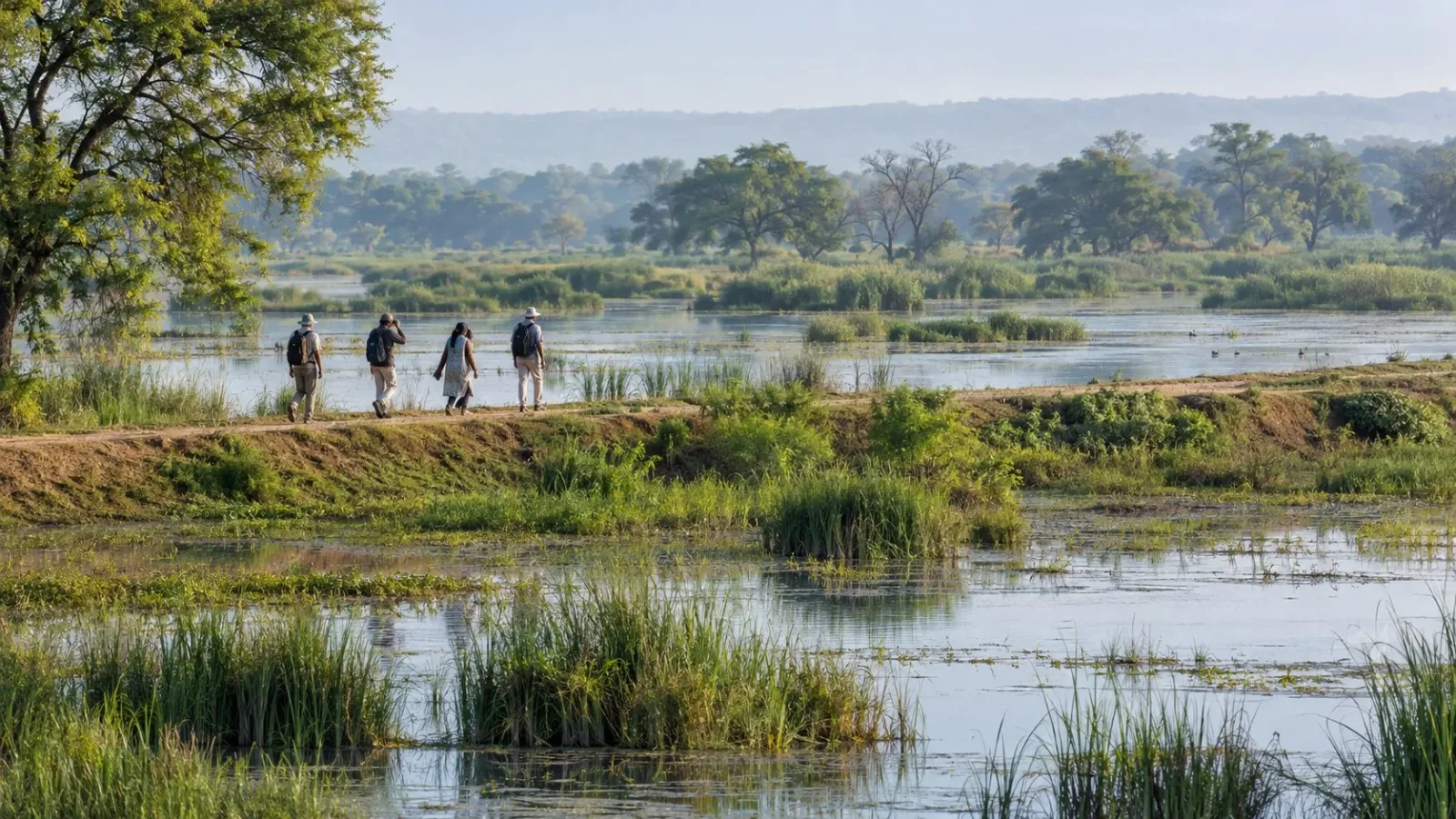
AI-generated fictional Keoladeo-inspired scene, not an identified control structure, present water condition, sighting list, current route or access record.
Keoladeo's wetland story includes water management, not only bird names. The heritage account describes a wetland developed in a natural depression, dependent on a regulated water supply from outside the park. It also describes dykes and sluices that provide areas with different water depths. These relationships help explain the habitat described by the source.
Distinguish the depression from water management
A natural depression and a managed wetland are not contradictory ideas in this account. The depression describes the setting; regulated water describes part of the wetland's management. Do not reduce that relationship to either an entirely unmanaged lake or a claim that every piece of land was constructed.
This is an interpretation of the source's description, not a claim about current inflow, water quality or the condition of a particular part of the park.
Understand dykes and sluices as a system
The heritage synthesis connects the dykes and sluices with areas of varying water depth used by birds. Their significance in this explanation is the relationship between managed water and habitat, rather than the structures being isolated engineering objects to tick off.
The source does not become a visitor map by naming that system. This article does not identify a particular gate or embankment from a photograph, establish a route along it or suggest approaching or operating water-control structures.
Separate habitat description from today's sightings
A description of habitat helps explain what kind of place Keoladeo is. It does not tell you the present water level or which birds will be visible during a visit. Do not read historical species references as a current sighting list.
This account gives no present bird count, migration forecast, water-condition verdict or conservation-success claim. It confirms no visitor route, guide, transport, facility, admission or accessibility arrangement. Managed water is the subject, not a promise of a particular scene.
Frequently asked questions
Is Keoladeo described as an unmanaged natural lake?
No. The heritage account describes a natural depression wetland with regulated water supply and management structures.
Why do dykes and sluices matter to the explanation?
The source connects them with areas of different water depth used by birds.
Does that confirm water levels for a visit?
No. A management description is not a live water report.
Does a species mentioned in the heritage account guarantee a sighting?
No. Historical references are not a present sighting list or promise.
Does this identify or operate a water-control structure?
No. No individual gate or embankment is identified and no operating instructions are given.
Does this rate water quality or conservation success?
No. No current water-quality or conservation-success assessment is supplied.
Official sources and limits
The heritage account supports the depression, regulated water and varying-depth habitat relationship. Incomplete IUCN material is excluded. No current inflow, condition, bird tally, forecast, conservation-success or access claim is established.

A Miranda House graduate and lawyer who traded courtrooms for slow travel. Cheshta travels with the batches we host ourselves, with a soft spot for travelling alongside elders.
Planning your next trip?
We'll handle insurance, hotels, airport assistance and the itinerary — the same way we do it for every trip.
Questions on this article
asked by readers, answered by us
Was this helpful?
one tap, no sign-up