




- Place
- Loktak Lake
- Focus
- Phumdi composition
- Materials
- Soil, vegetation and organic matter
- Source period
- January 2002 newsletter
- Reviewed
- 17 November 2026
Reviewed: 17 November 2026. Selective heritage outline, not a ticket or access guarantee.
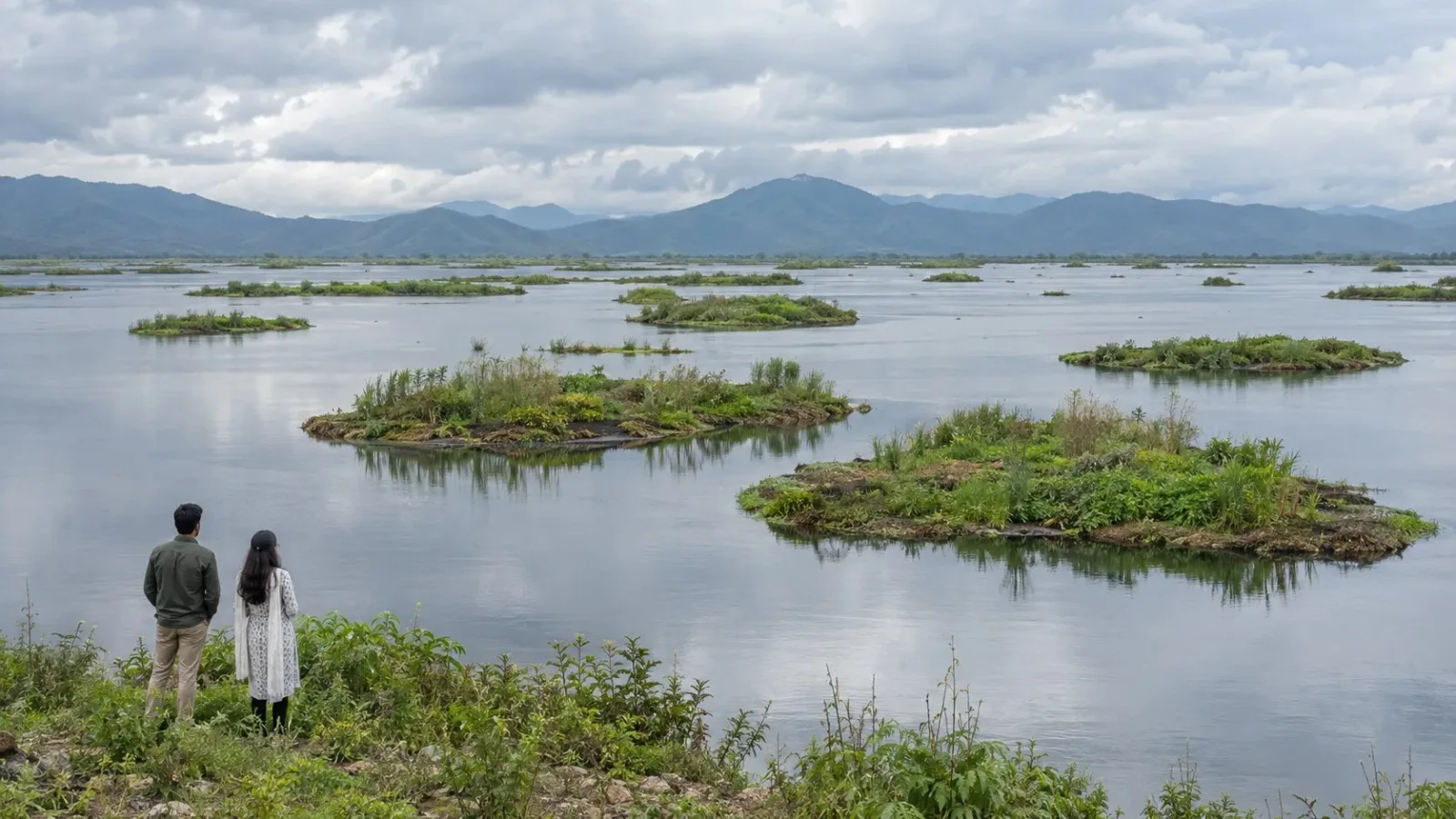
AI-generated fictional Loktak-inspired scene, not a diagnosis of pictured material or plants, a present-distribution survey or a verified viewing/access arrangement.
Loktak's phumdis are useful to understand through their composition, not simply the label floating islands. An article in the Loktak Development Authority and Wetlands International newsletter describes them as heterogeneous masses of soil, vegetation and organic matter at different stages of decomposition. The subject here is that mixture, not the lake's present condition.
Begin with a mixture, not a uniform block
The article's word heterogeneous matters. It describes a mass made from different materials, rather than a single solid substance. Soil, vegetation and decomposing organic matter belong together in its definition of phumdis.
The definition does not give every phumdi an identical recipe. This account does not assign a fixed proportion to each ingredient or identify the plants in a particular mass. Nor does it infer the composition of an individual patch from its colour in a photograph.
Separate the material from the water around it
The newsletter describes these mixed masses as floating on lake water. Its account therefore distinguishes the phumdi material from the water supporting it. Floating island is a convenient description, but the material composition gives the phrase a more specific meaning.
That explanation does not require a size, thickness or claim about how much lies above the surface. It is enough to keep the mixed material and the surrounding water conceptually separate. No physical measurement is supplied here.
Do not identify composition from a photograph
The source's material description is not a key to identifying every visible patch in an aerial image. A photograph can illustrate a subject without establishing the soil, vegetation or organic material in a particular mass. This article makes no such identification.
Keep the explanation at the level the text supports: a heterogeneous mixture, not a labelled map of individual phumdis. No particular plant or stage of decomposition is assigned to a photographed area.
Keep composition separate from ecological condition
A material definition is not a current report on the lake. It does not establish today's distribution, water quality, ecological health, wildlife or fishing conditions. None of those claims is made here.
The newsletter is historical management literature. Its composition description can be used without presenting its observations as present conditions. This article gives no route, landing, residence visit, access arrangement or service. The point remains the mixture of soil, vegetation and organic material described as phumdi.
Frequently asked questions
What does the source say phumdis are made of?
A mixture of soil, vegetation and organic matter at different stages of decomposition.
Does every phumdi have a fixed recipe?
No identical proportion or individual composition is established here.
Can this article identify composition from an aerial photo?
No. It assigns no material or plant identity to a photographed patch.
Is this a report on Loktak's present ecological condition?
No. It is a limited explanation of composition from historical literature.
Does this give a thickness or material ratio?
No. No fixed physical measurement or ingredient proportion is supplied.
Does it provide a landing or residence visit?
No. No route, landing, home visit, access arrangement or service is supplied.
Official sources and limits
The historical January 2002 newsletter supports the limited material-composition description, not current distribution, water quality, ecological health, wildlife, livelihood conditions or visitor access.

A Miranda House graduate and lawyer who traded courtrooms for slow travel. Cheshta travels with the batches we host ourselves, with a soft spot for travelling alongside elders.
Planning your next trip?
We'll handle insurance, hotels, airport assistance and the itinerary — the same way we do it for every trip.
Questions on this article
asked by readers, answered by us
Was this helpful?
one tap, no sign-up