




- Species discussed
- Asian elephant
- Focus
- Trunk anatomy
- Relationship
- Joined nose and upper lip
- Behaviour / encounter
- Not established
- Reviewed
- 17 November 2026
Reviewed: 17 November 2026. Anatomy explanation, not an encounter or behaviour guide.
AI-generated fictional Asian-elephant-inspired scene, not a species-identification key, individual behaviour/health diagnosis, safe approach distance or permitted encounter record.
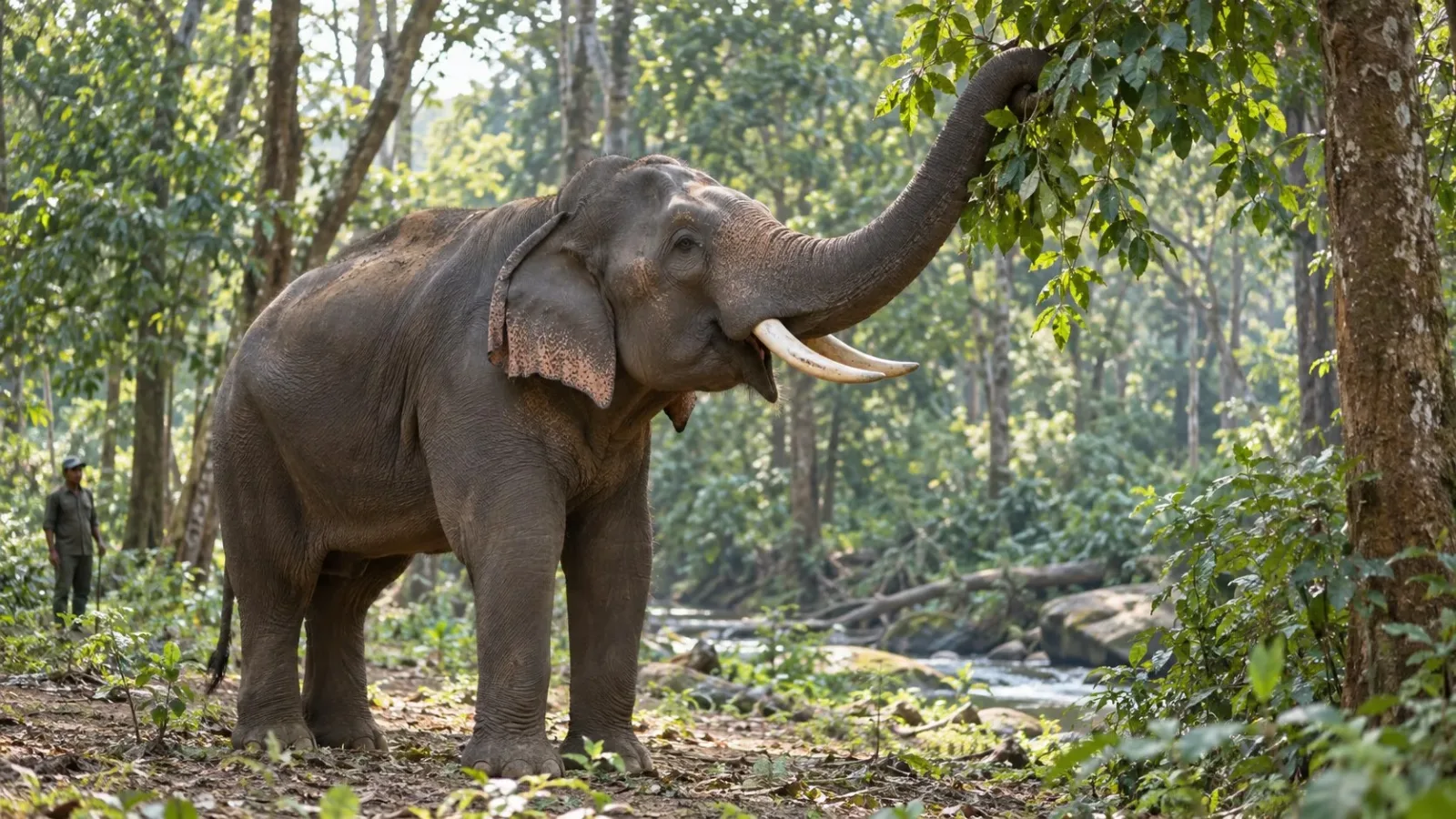
An Asian elephant's trunk is not described simply by saying that it looks like a long appendage. Zoo Berlin's species account identifies it as the nose and upper lip fused into one long formation. That relationship gives the visible shape an anatomical explanation without relying on what a particular elephant happens to be doing.
Read nose and upper lip together
The account describes the nose and upper lip as joined in the trunk. Calling it only an extended nose would leave out the upper-lip relationship that the source explicitly includes.
Smithsonian's Asian-elephant account independently gives the same fusion description. Its habitat account also includes India within the species' broad range. That is a species-level association, not a report of an elephant at a particular Indian site today.
Keep anatomy separate from an individual's behaviour
The joined nose-and-lip description concerns body structure. It does not by itself explain a particular trunk movement, a sound or an interaction between elephants.
This article does not use a photograph or the position of a trunk to judge age, sex, health or temperament. Nor does the anatomical description establish an individual's strength or what it might do next.
Do not turn the species account into an encounter plan
A description of the trunk does not certify a place offering elephant visits or establish what visitors may do there. This article recommends no touching, feeding, riding, bathing or close approach.
It verifies no current wild or captive elephant, viewing route, admission, accompanied visit or assistance. The purpose is the anatomical relationship named in the accounts: the trunk combines the nose and upper lip. Nothing about an individual's behaviour or a visitor arrangement follows automatically from that description.
Frequently asked questions
Which parts do the accounts join in the trunk?
The nose and upper lip.
Why is calling it only a long nose incomplete here?
It leaves out the upper lip included in the sources' description.
Can trunk position tell us an individual's temperament in this article?
No. No behavioural or individual diagnosis is made.
Does the explanation confirm an elephant visit or interaction?
No. No current encounter, visitor arrangement or interaction is verified.
Does the broad India association confirm a sighting today?
No. A species-level range association is not a current local sighting report.
Does this recommend feeding, riding or close approach?
No. No touching, feeding, riding, bathing or close approach is recommended.
Official sources and limits
The official institutional species accounts support the nose/upper-lip relationship. They do not establish a pictured individual, behaviour, health, temperament, strength, current sighting, visitor route or interaction permission.

A Miranda House graduate and lawyer who traded courtrooms for slow travel. Cheshta travels with the batches we host ourselves, with a soft spot for travelling alongside elders.
Planning your next trip?
We'll handle insurance, hotels, airport assistance and the itinerary — the same way we do it for every trip.
Questions on this article
asked by readers, answered by us
Was this helpful?
one tap, no sign-up