




Reviewed 18 November 2026. A focused collection guide using the museum and Kerala Department of Museums and Zoos. Check current official visitor information.
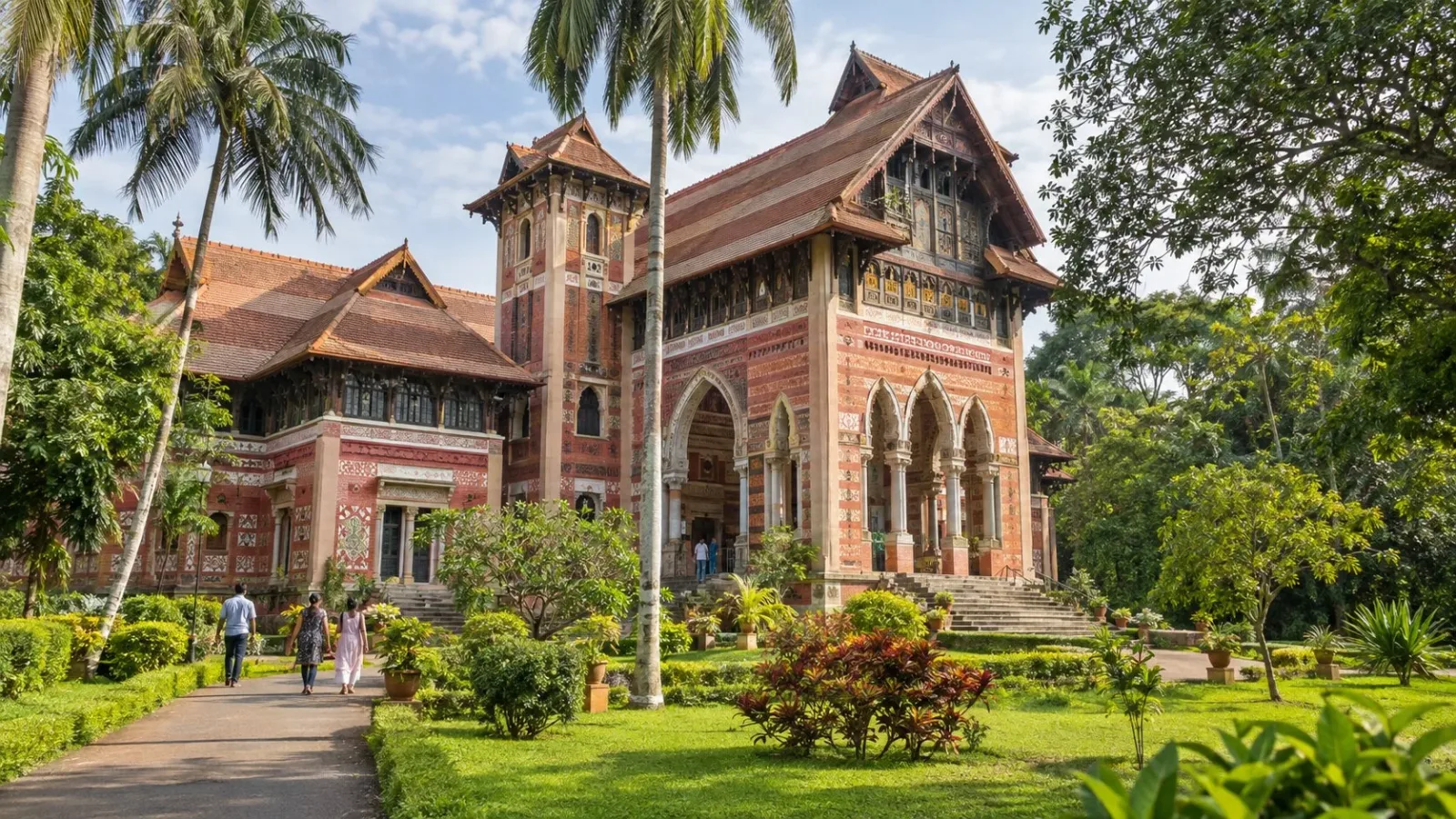
AI illustration: a fictional museum scene inspired by Thiruvananthapuram. Not an actual location, person, object record, route inspection or service.
Choose one or two collection interests
Napier Museum can be the main outing in Thiruvananthapuram. The department describes bronze and stone sculpture, wood carving, coins, musical instruments, textiles and other objects. Choose one or two interests rather than a complete inventory.
Our recommendation is a few objects understood together, a building detail, food, rest and the return. Check current official visitor information before fixing the rest of the day.
Let the building be a subject too
The museum describes three large halls linked by corridors, stained-glass windows, carved wooden balconies, painted beams and decorated wooden supports. It identifies the building with an Indo-Saracenic design drawing on several architectural traditions.
Consider how a window colours light, how painted decoration sits on a beam, or how a carved support meets the structure above it. These are looking subjects, not an identification of every motif or a promise of a particular light effect.
Use bronze to compare form and meaning
The department describes bronze images including Shiva, Vishnu, Parvati and Lakshmi. A useful question is how pose and attributes relate to the explanation of the individual object.
A deity name does not establish one century, workshop or original temple for every image. Keep each object’s description and provenance distinct rather than treating the collection as one unchanged period group.
Use wood to compare scale and purpose
The department names a temple car, a royal dressing table and a multi-compartment jewellery box among the wood collection’s interests. These give different ways to think about scale, decoration and use.
A carved museum object and a carved support in the building are not automatically the same kind of evidence. Compare their purposes without assuming the same maker, age or original setting.
Let coins raise precise questions
The department describes South Indian dynastic material alongside foreign coinage. Ask what an object’s description says about the issuing authority, period and provenance. A small object can reward careful attention.
A foreign coin in a Kerala collection does not by itself prove one particular trade route. Published collection descriptions are a starting point for interpretation, not a substitute for identifying the individual object.
Leave the rest of the compound as separate choices
The museum’s nearby-attractions page describes Sree Chitra Art Gallery and the zoo as additional interests. A shared compound does not mean every attraction must become part of the same outing.
Choose another interest only if the group still wants it after the main collection. Check current official visitor information. A few objects, the building, a conversation and a proper break can be enough.
Sources
Questions people ask at the gate
What collection thread could we choose?
Bronze, wood or coins can provide one focused thread, based on the department’s collection description.
What building details does the museum describe?
Stained glass, carved wooden balconies, painted beams and decorated wooden supports.
Does a deity name date every bronze image?
No. Keep the individual object’s description, period and provenance distinct.
Which wood objects does the department name?
A temple car, a royal dressing table and a multi-compartment jewellery box.
Does a foreign coin prove a particular trade route?
No. Its individual description and provenance matter; the collection location alone does not establish that route.
Must we include the zoo and every gallery?
No. Our recommendation is a focused Napier outing, current official visitor checks, food, rest and the return.
Next walk starts at a new gate.
Was this helpful?
one tap, no sign-up

A Miranda House graduate and lawyer who traded courtrooms for slow travel. Cheshta travels with the batches we host ourselves, with a soft spot for travelling alongside elders.