




When one parent wants more sightseeing and the other wants a slower holiday, do not make either person the permanent compromise. Agree what they want to share, then build optional parallel plans around a workable base and reunion. Different preferences do not automatically require separate holidays, but separating for part of a day only works when both adults want it and each has the access, transport, company and support they actually need.
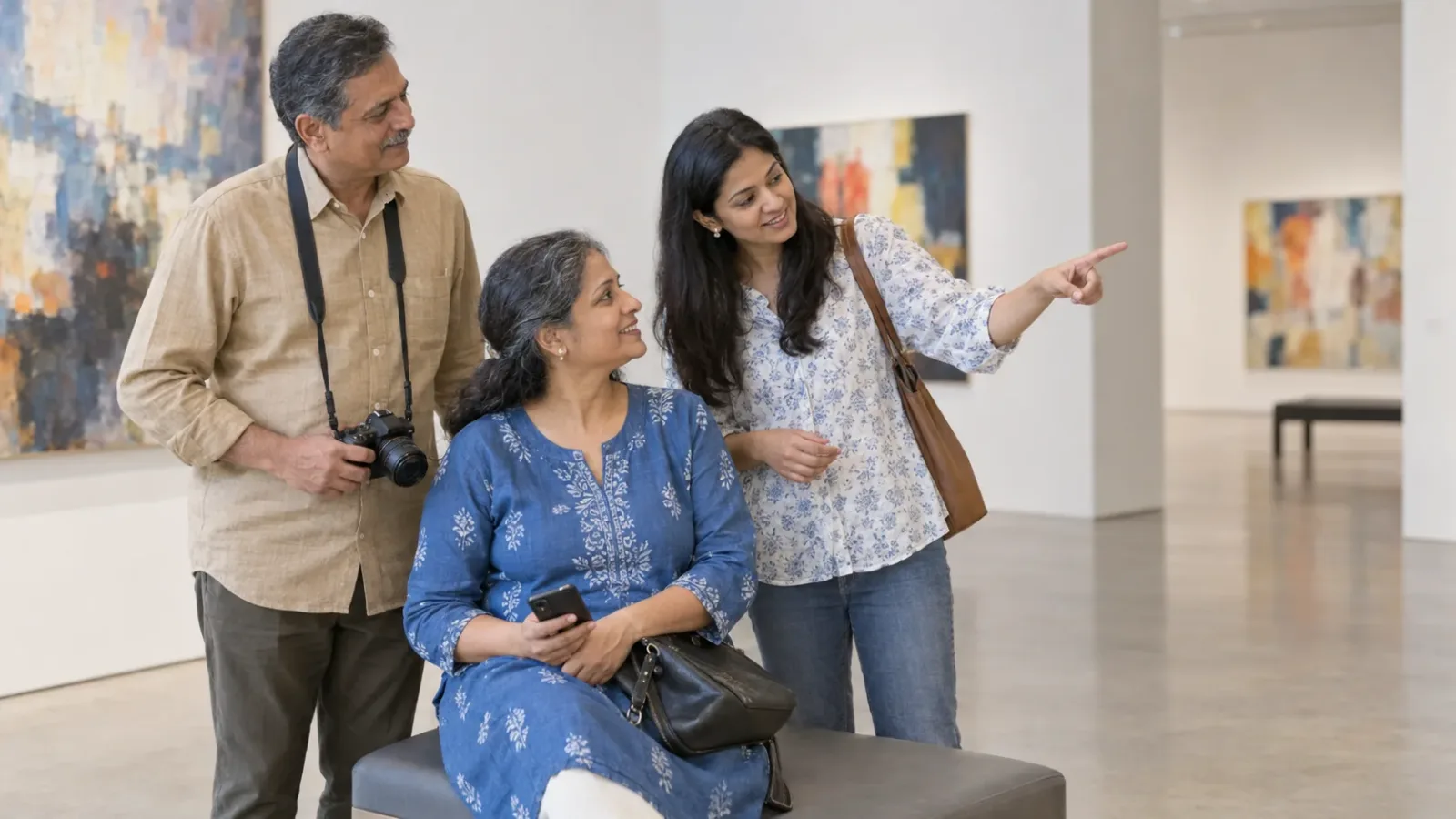
AI-generated fictional photograph of older Indian parents and their daughter discussing different sightseeing plans in a generic gallery. Not an actual museum, family, tour or support arrangement.
Ask both parents what they want, separately and together
Start with interests rather than labels such as active and difficult. One parent may want another gallery, while the other wants a seated conversation, a familiar meal or time in the room. Ask each for their most wanted experiences, preferred day shape and what they do not want to do. A slower pace need not mean no sightseeing, and enthusiasm for sightseeing need not mean wanting every scheduled stop.
Ask whether they enjoy time apart or would rather shorten the outing together. Do not assign the same parent to the hotel every day, or assume that the accompanying adult child must give up every visit. Keep private health information private; describe practical needs to providers with the traveller's agreement. This is itinerary planning, not a medical judgement about capacity, fatigue, activity duration or whether a person can be alone.
Choose a shared core, not a full programme everyone must complete
Pick an experience both actually want, such as one chosen collection or a meal together, as the shared part of the day. Then ask whether more sightseeing belongs before it, after it or on another day. Treat optional as genuinely optional: resting should not create a duty to catch up later.
For example, the family might visit one chosen gallery together, then one parent continues with a companion while the other returns to an already available room with the company they want. Everyone meets for a confirmed meal. This is a planning example, not a suggested duration or a promise that a particular museum, hotel or vehicle permits the arrangement.
Choose between three day shapes
- Stay together, do less: choose a shorter shared visit when both value company more than another attraction, or when splitting would leave an unmet support need.
- Share the start, then take different options: use a known rest base and an agreed reunion when both want time apart and both plans work independently.
- Alternate priorities across the trip: give each person's interests a place on different days, with neither required to complete the other's longer outing. Review who accompanies whom rather than assigning one family member every time.
Compare the actual experience and costs of these choices. A private tour can still have a guide's fixed hours, one vehicle and non-changeable tickets. A small group does not automatically supply a second guide or personal companion.
A seat nearby is not automatically the slower option
If both parents stay in one attraction but visit different parts, check the actual resting place, route, toilets, opening and reunion point. The person who wants a seated pause should choose that plan, not be left on a random bench because it looks convenient. A noisy café, a public seat and a private room meet different needs.
As one specific example, the National Gallery in London's access page lists seating in painting rooms, near the Getty Entrance and in cafés, along with folding stools. Its visual story warns that eating areas can be busy and noisy at lunchtime and reserves their tables for customers buying food and drink. Those facts do not establish a quiet private rest space, a guaranteed empty seat, permission to leave and re-enter an exhibition, or anyone to provide personal supervision. Ask the chosen venue about the actual plan and ticket before relying on it.
If a private room is wanted, use the afternoon-rest planning guide for the room-access and return checks. Do not replace the requested rest with whatever seat is closest to the sightseeing group.
Finish both sides of the split before anyone leaves
For each person, settle where they are going, how they get there, whether they can enter and what happens if they want to change the plan. Confirm room access and keys, a usable contact method, food and drink arrangements, the exact reunion location and local time, and the fallback if someone is delayed. Do not rely on a phone that only the other person carries or on the only vehicle leaving without an agreed return.
Ask whether each parent wants a companion and what that companion has agreed to do. If support is needed and no suitable arrangement is confirmed, change the itinerary rather than assuming reception, museum staff, a driver or the tour leader will take over. A person should not be left alone merely because a relative wants to continue sightseeing.
Intrepid's accessible-travel page says free time may be used as downtime, but explains that existing trips generally require travellers to look after themselves without the leader's supervision, including during free time, activities and meals. It also discusses travelling with a supporting companion and the limits on extensive group-trip changes. This is an operator's stated service scope, not an assessment of either parent's independence or an offer of care.
Ask the operator about opting out, not an assumed custom tour
On a booked group trip, tell the organiser which person wants to miss which activity and where they expect to rejoin. A same-hotel afternoon is a different request from staying behind on a day when the coach changes towns. Get the transport, luggage, hotel and reunion response before treating either as workable. For a walking-pace problem within a group outing, use the slower-walker guide.
Intrepid's on-trip FAQ says travellers can discuss opting out of included or optional activities with their leader and that unused included activities are not reimbursed. Its choosing-a-trip FAQ says it cannot change a group itinerary for an individual. These are different promises: permission to discuss an alternative is not a guaranteed rewritten tour, separate vehicle, replacement meal or refund. Check the applicable terms for the actual booking.
Rick Steves' bus-tour advice recognises different sightseeing preferences and the value of sometimes exploring separately. Treat that as general editorial advice, not your operator's permission or proof that either parent can manage an independent outing.
Make the extra cost and family workload visible
List any second vehicle, guide, companion, room time, separate meal or ticket, plus what remains unused from the original booking. Confirm the actual total and cancellation terms before paying. Do not promise that fewer visits will automatically produce a refund or that a more expensive private trip includes every requested service.
Also agree the family work: who plans the extra outing, who accompanies each parent if wanted, who holds the confirmations and who can change the plan. Ask the adult child what they want to see too. If every split requires the same person to miss their holiday, compare a different shared visit or trip format instead.
Review tomorrow without scoring today's sightseeing
At the end of the day, ask each person what they enjoyed and what they would change. Keep the next day's shared core, optional choices and reunion understandable. Change plans together when circumstances change. No attraction count makes one parent's holiday more valid than the other's.
Reviewed 14 November 2026 against the six primary pages linked above. Relevant current revision dates were not established; the fetched Rick Steves page carries older publication metadata and is used only as general editorial context. Operator and venue examples are bounded descriptions, not live availability, guaranteed support, individual medical advice, a refund decision or confirmation of any booking. No universal walking time or safe amount of activity is prescribed.

A Miranda House graduate and lawyer who traded courtrooms for slow travel. Cheshta travels with the batches we host ourselves, with a soft spot for travelling alongside elders.
Planning your next trip?
We'll handle insurance, hotels, airport assistance and the itinerary — the same way we do it for every trip.
Questions on this article
asked by readers, answered by us
Was this helpful?
one tap, no sign-up