




The Trip Keeper The Trip Keeper
three doors, pick the one that fits your family How do you want to travel?
Cheshta Agarwal, founder and host of The Trip Keeper, smiling on a green country road
Hosted by Cheshta

Founder-Hosted Group Tour

the trips where Cheshta travels with you

Our own exclusive group trips. Cheshta is on the trip, from the first flight to the last dinner.

  • Cheshta travels with the group
  • One clear price, inclusions listed
  • Meet your travel family
Next up: Vietnam, 17 DecView →
See founder trips →
A fixed-departure batch on tour

fixed dates, fixed flights

Join a batch of fellow travellers on set dates. Limited seats, flights included, with options. Our team doesn't travel on these.

  • Fixed dates and flights
  • Limited seats per batch
  • Flight options available
See departures →
A private family trip

Private Tour

your dates

just your family, nobody else

Trips planned around your family, your pace and your dates. Milestone birthdays and anniversaries.

  • Travel on your own dates
  • Route shaped around you
Ask for a quote →
← Journal ☏
Trip Planning 4 min read

Should Indian tourists choose INR or AED when paying by card in Dubai?

AED. Always AED - and in any other country, always the local currency. When a Dubai card machine offers to bill you in rupees, it is offering to do the currency conversion itself at a rate it sets, and tested markups run from about 2% to over 12% worse than your card network's rate. The rupee figure only feels safer. Here is the arithmetic, the exceptions, and the one-line rule to teach your parents.

share WhatsApp Facebook X
Text size
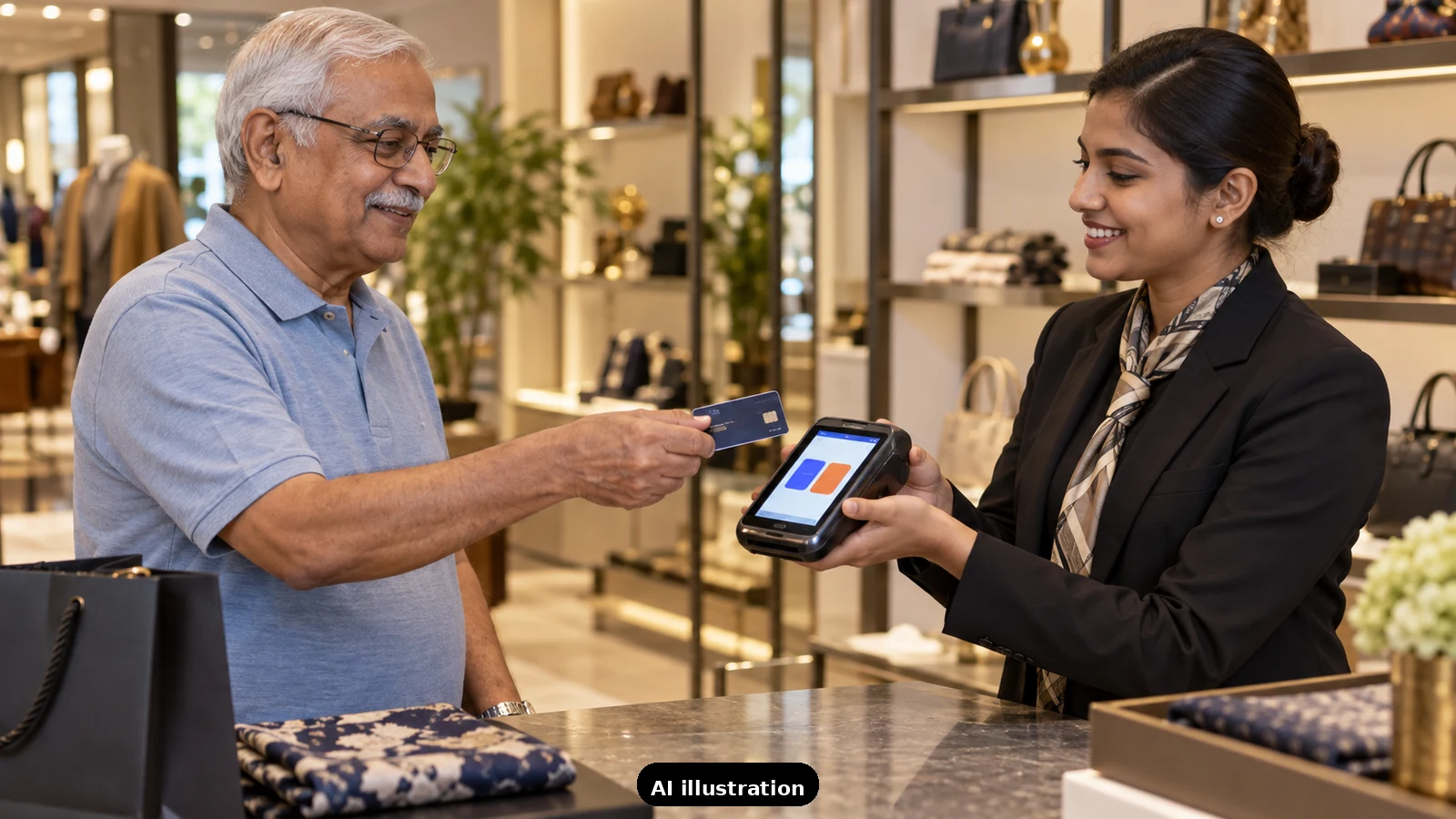
Elderly Indian man paying by card at a boutique counter abroad, terminal showing two abstract currency buttons
Send to Mummy-Papa Opens WhatsApp with a short summary — pick who to send it to.

Short answer: AED. When the card machine in a Dubai mall, restaurant or duty-free shop asks "INR or AED?", choose AED every single time. The rupee option is not a convenience - it is the merchant's payment provider offering to convert the currency itself, at an exchange rate of its own making. That trick has a name - dynamic currency conversion, DCC - and consumer studies and card issuers agree on its one reliable feature: it is almost always the more expensive button.

What the two buttons actually do. Choose AED and the charge travels to your bank in dirhams; your card network converts it at its own rate - close to the wholesale market rate - and your bank adds its published forex fee. Choose INR and the conversion happens on the spot, done by the merchant's DCC provider at a rate it sets, with its margin baked in. Tested DCC markups against network rates run roughly from 2% to more than 12% - and the same Indian bank forex fee can still apply on top, because the transaction stays an international one. You can pay the markup twice; you cannot pay it zero times.

A worked example, with honest numbers. Say dinner at a Dubai restaurant comes to 2,000 AED, and the card network's rate that day is about Rs 24 per dirham. Choose AED: 2,000 x 24 = Rs 48,000, plus your bank's forex fee - say 2% - roughly Rs 48,960 in total. The machine's INR option, with a 5% DCC margin in the rate, shows about Rs 50,400 for the same dinner, before any fee your bank still adds. One dinner, Rs 1,500 or so gone - multiply that by every meal, mall visit and taxi of a family holiday. Your real numbers will differ by card and day, which is the point: the machine's rate is the one you cannot verify in the moment, so never accept it.

With a forex card, the case is even stronger. If your parent carries a prepaid forex card with dirhams loaded, paying in AED spends from the AED wallet with no conversion at all - the exact rate you locked in when loading. Choosing INR at the machine would drag the transaction through the DCC rate anyway. Indian issuers warn about this in their own manuals: settle in the currency loaded on the card, and DCC charges once paid are generally not refunded.

The polite refusal drill. Staff sometimes press the INR button out of habit or on autopilot - "I have selected rupees for you" is a sentence every Indian traveller hears eventually. It is fine to say: please cancel, I would like to pay in dirhams. The choice is yours by card-network rule, and a cancelled-and-redone transaction costs nothing but thirty seconds. Check the receipt before walking away: it should show AED, not INR.

Where this rule travels. Dubai is the example, not the exception. The same question appears at ATMs and card machines across Europe, Thailand, Singapore, everywhere - sometimes as "pay in your home currency?", sometimes as a default selection you must untick. The answer never changes: local currency, always, and let your own card do the converting.

The one line to teach your parents. "Machine rupees ka option dikhaye to AED dabana" - if the machine offers rupees, press AED. That sentence is worth more than any exchange-rate knowledge, because it works even when nobody understands the screen.

How we cover it at TripKeeper. Before parents fly, we brief them on the exact money moments - the currency-choice screen, the ATM account-type question, the taxi that is suddenly cash-only - and print the answers on their trip card. If you want your parents carrying answers instead of guesses, send us a trip-planning inquiry.

Send to Mummy-Papa Opens WhatsApp with a short summary — pick who to send it to.
Cheshta Agarwal
Founder · Travel Creator · Lawyer

A Miranda House graduate and lawyer who traded courtrooms for slow travel. Cheshta travels with the batches we host ourselves, with a soft spot for travelling alongside elders.

or let us do all of it

Planning your next trip?

We'll handle insurance, hotels, airport assistance and the itinerary — the same way we do it for every trip.

Questions on this article

asked by readers, answered by us

Should I choose INR or AED when paying by card in Dubai?

AED, every time. The INR option is dynamic currency conversion: the merchant's provider converts at a rate it sets, and tested markups run about 2% to over 12% worse than your card network's rate. Choose AED and your own card does the conversion at a far better rate plus your bank's published forex fee.

Is paying in rupees abroad ever cheaper?

Essentially no. The rupee figure only feels familiar; behind it is the merchant provider's own exchange rate with its margin baked in, and your bank's international fee can still apply on top. Consumer studies and card issuers agree: the local-currency option is almost always cheaper.

What is dynamic currency conversion (DCC)?

The offer by a foreign card machine or ATM to bill you in your home currency instead of the local one. The merchant's payment provider sets the exchange rate itself, which is where the extra cost hides. Card-network rules say the choice must be yours - you can always refuse and ask to be charged in local currency.

Does the INR or AED choice matter on a forex card?

Even more. A prepaid forex card loaded with dirhams spends from the AED wallet at the rate you locked in when loading - no conversion at all if you choose AED. Choose INR and the transaction gets dragged through the DCC rate anyway. Issuers warn about this in their own manuals, and DCC charges are generally not refunded.

The shopkeeper already pressed INR. Can I undo it?

Yes. Ask them to cancel and recharge in dirhams - a cancelled-and-redone transaction costs nothing but thirty seconds, and the currency choice is yours by card-network rule. Check the receipt before leaving: it should show AED, not INR.

Does this rule apply outside Dubai too?

Everywhere. ATMs and card machines across Europe, Thailand, Singapore and beyond offer home-currency billing, sometimes as a pre-ticked default. The answer never changes: always choose the local currency and let your own card do the converting.

Was this helpful?

one tap, no sign-up

Read next

← Journal See our trips