




The Trip Keeper The Trip Keeper
three doors, pick the one that fits your family How do you want to travel?
Cheshta Agarwal, founder and host of The Trip Keeper, smiling on a green country road
Hosted by Cheshta

Founder-Hosted Group Tour

the trips where Cheshta travels with you

Our own exclusive group trips. Cheshta is on the trip, from the first flight to the last dinner.

  • Cheshta travels with the group
  • One clear price, inclusions listed
  • Meet your travel family
Next up: Vietnam, 17 DecView →
See founder trips →
A fixed-departure batch on tour

fixed dates, fixed flights

Join a batch of fellow travellers on set dates. Limited seats, flights included, with options. Our team doesn't travel on these.

  • Fixed dates and flights
  • Limited seats per batch
  • Flight options available
See departures →
A private family trip

Private Tour

your dates

just your family, nobody else

Trips planned around your family, your pace and your dates. Milestone birthdays and anniversaries.

  • Travel on your own dates
  • Route shaped around you
Ask for a quote →
← Journal ☏
Trip Planning 3 min read

Should you select savings or checking when withdrawing cash abroad using an Indian forex card?

Select checking (also called current) - not savings. That is the guidance printed by the card issuers themselves: Axis Bank tells forex card users to choose Checking/Current, and to pick Credit if checking is not offered; ICICI says Credit or Checking. A forex card is not linked to any savings account, so the savings option is the one that fails or misroutes. And when the ATM offers to charge you in rupees, decline it - always choose the local currency.

share WhatsApp Facebook X
Text size
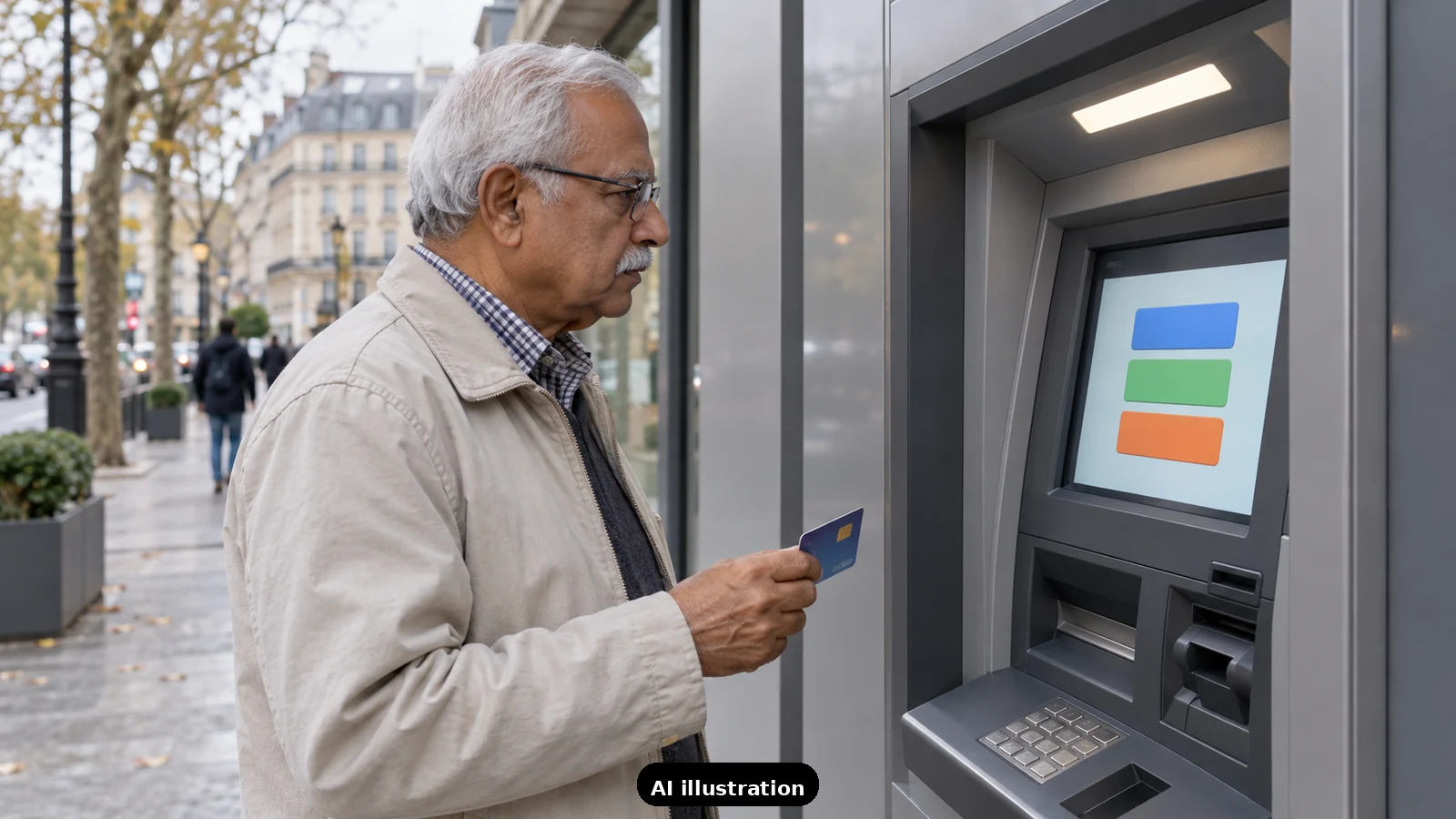
Elderly Indian man at a foreign ATM holding a forex card with abstract option buttons on screen
Send to Mummy-Papa Opens WhatsApp with a short summary — pick who to send it to.

Short answer: checking. When a foreign ATM asks whether the card is savings, checking or credit, choose checking (some screens say current). This is not folklore from travel forums - it is what the issuers themselves print. Axis Bank's own forex card guidance says to select Checking/Current at the ATM, and to choose Credit if the checking option is not available; ICICI Bank's forex card do's and don'ts say to select Credit or Checking. Nobody's manual says savings.

Why savings is the wrong button. A prepaid forex card is not linked to any bank account at all - there is no savings account behind it for the ATM to find. Pick savings and the transaction typically declines, or worse, the ATM network misroutes it and you get a failed-withdrawal scare with a temporary debit. The ATM's account-type question was designed for domestic customers of its own country; your job is simply to give it the answer that matches a prepaid travel card, which is checking/current (or credit on some networks).

The second question matters even more: which currency. Many foreign ATMs will recognise your card as Indian and helpfully offer to charge you in rupees. This is dynamic currency conversion, and it is always the expensive choice - the ATM's operator sets an exchange rate that quietly costs far more than your card's own conversion. Issuers warn about it by name: choose to be charged in the local currency of the country you are standing in, every single time, and note that DCC charges once paid are generally not refundable. The rule of thumb that survives every screen layout: local currency good, home currency bad.

What the whole ATM visit looks like, step by step. Insert the card, choose English if offered, enter the ATM PIN, choose withdrawal, select checking/current, decline any rupee-conversion offer and confirm the amount in local currency, take the cash and the card. One more line for the notebook: your issuer charges a fixed fee per withdrawal, and many foreign ATMs add their own surcharge on top - so fewer, larger withdrawals cost less than many small ones. Check your own card's fee schedule before the trip.

If the ATM declines the card. Do not let your parent try five times in a row - repeated failed PIN or network attempts can lock the card. One retry at most, then move to a different bank's ATM, and if it still fails, call the issuer's 24x7 helpline (the number should be written in the travel documents, not only saved in the phone). Balance enquiries at foreign ATMs can also carry a small charge, so check balances through the issuer's app or portal instead.

Teaching this to a parent in one minute. Write two lines on a card in their wallet, in whatever language they think in: "ATM asks account type - press CHECKING. ATM offers rupees - press NO / LOCAL CURRENCY." That is the whole lesson. Everything else - PIN privacy, taking the card back, counting cash inside the lobby - they already know from home.

How we prep it at TripKeeper. For parents travelling without their children, we write the ATM instructions onto their printed emergency card - account-type choice, local-currency rule, issuer helpline - so a foreign ATM screen never gets to improvise. Send us a trip-planning inquiry if you want your parents carrying instructions instead of guesswork.

Send to Mummy-Papa Opens WhatsApp with a short summary — pick who to send it to.
Cheshta Agarwal
Founder · Travel Creator · Lawyer

A Miranda House graduate and lawyer who traded courtrooms for slow travel. Cheshta travels with the batches we host ourselves, with a soft spot for travelling alongside elders.

or let us do all of it

Planning your next trip?

We'll handle insurance, hotels, airport assistance and the itinerary — the same way we do it for every trip.

Questions on this article

asked by readers, answered by us

Should I select savings or checking at a foreign ATM with an Indian forex card?

Checking (called current on some screens). This is the issuers' own guidance - Axis Bank tells forex card users to select Checking/Current, and Credit if checking is not offered; ICICI Bank says Credit or Checking. A prepaid forex card has no savings account behind it, so the savings option typically declines or misroutes the transaction.

Why does the savings option fail on a forex card?

Because a prepaid forex card is not linked to any bank account - there is no savings account for the ATM to find. The account-type question was designed for the ATM's own domestic customers. Selecting savings usually produces a decline or a misrouted transaction and a failed-withdrawal scare.

What should I choose if the ATM offers to charge me in rupees?

Decline it and choose the local currency. That rupee option is dynamic currency conversion, where the ATM operator sets an exchange rate far worse than your card's own. Issuers warn against it explicitly, and DCC charges once paid are generally not refundable. Local currency good, home currency bad - on every screen, in every country.

Do foreign ATMs charge extra fees on Indian forex cards?

Usually two of them: your issuer's fixed fee per withdrawal, and often a surcharge from the local ATM operator on top. Because each withdrawal carries a fixed cost, fewer and larger withdrawals cost less than many small ones. Check your card's fee schedule before travelling.

What should my parent do if the ATM declines the forex card?

One retry at most - repeated failed attempts can lock the card - then move to a different bank's ATM. If it still fails, call the issuer's 24x7 helpline, which should be written in their travel documents, not just saved in a phone. And skip balance enquiries at foreign ATMs: they can carry a charge; the issuer's app or portal is free.

Is checking the right choice in every country?

The wording varies - checking, current, or sometimes just credit - but the issuers' rule does not: choose checking/current, or credit where checking is not offered, and never savings. The exact buttons differ by country and ATM network; the answer does not.

Was this helpful?

one tap, no sign-up

Read next

← Journal See our trips