




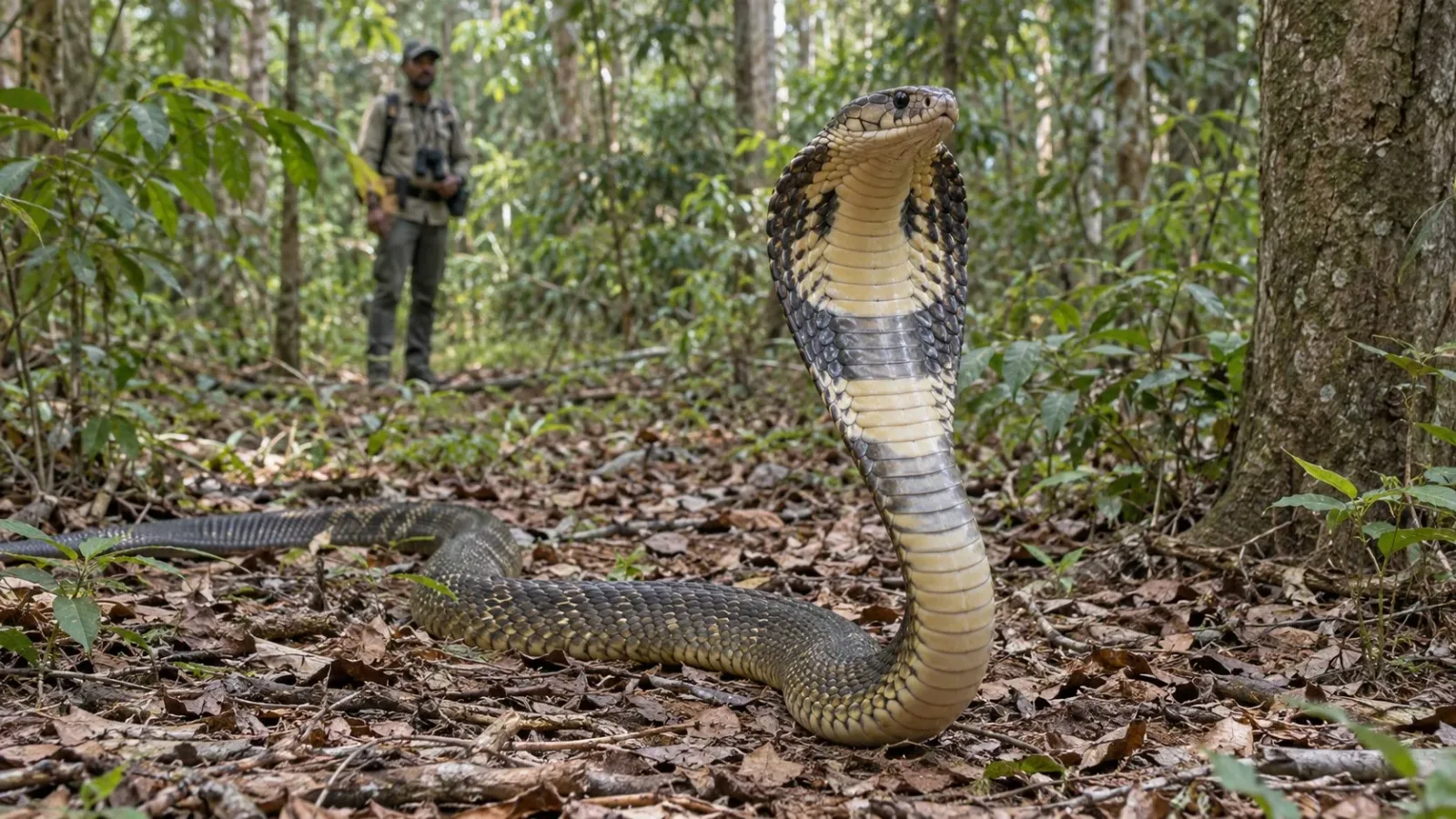
- Animal discussed
- King cobra
- Structure
- Hood
- Location
- Neck
- Named parts
- Ribs and muscles
- Reviewed
- 17 November 2026
Reviewed: 17 November 2026. Anatomy explanation, not an encounter or handling guide.
AI-generated fictional king-cobra-inspired scene, not measured anatomy, an identification key, a current animal record, safe distance or permitted encounter.
The king cobra's hood has an anatomical explanation in San Diego Zoo's account: muscles and ribs in the neck spread out to form it. Read the broad shape as a relationship within the neck, rather than imagine a separate object sitting on the head. The explanation here concerns that structure, not a prediction about a particular snake.
Locate the structure in the neck
San Diego Zoo names both neck muscles and ribs in its hood description. That is more specific than simply calling the visible outline wide. The source connects the outline with named parts of the neck.
Columbus Zoo independently describes the neck ribs forming the hood. Its range account includes northern India. This is a broad species association, not confirmation of a snake at an Indian forest, park or other site today.
Keep the shape connected to the ribs
The two accounts describe the hood through the neck's structure. In this explanation, the hood is not treated as a head-mounted object separate from that structure.
Neither the outline alone nor this short explanation supplies a full account of the tissues, joints or forces involved. No muscle or rib count, measurement or engineering model is given. The useful point is qualitative: the source connects the hood's spread shape to neck ribs, with San Diego Zoo also naming the muscles.
Separate anatomy from interpreting an animal
A structural description is not a method for judging a snake's intentions. This article does not use the hood, posture or a photograph to diagnose an individual's condition or predict its next movement.
No behaviour, handling method, display demonstration or approach advice is proposed. No current animal, viewing place, route, admission or accompanied visit is verified. Keep the distinction clear: understanding the named neck structure does not establish what a snake will do or what a person may do near it.
Frequently asked questions
Which parts does San Diego Zoo name in the hood description?
Muscles and ribs in the neck.
Does Columbus Zoo also connect the hood with neck ribs?
Yes. Its account independently gives that structural relationship.
Is the hood treated here as a separate object on the head?
No. The explanation follows the sources' description of the neck structure.
Can this explain a particular snake's intentions?
No. It is anatomy, not a behaviour or individual-diagnosis method.
Does this supply a rib count or force measurement?
No. The explanation is qualitative, without counts, measurements or an engineering model.
Does it show how to make a snake spread its hood?
No. No demonstration, handling or approach method is proposed.
Official sources and limits
Official zoo educational accounts support the qualitative neck-rib relationship, with San Diego also naming muscles. No measured model, diagnosis, behaviour prediction, handling procedure or current encounter/access is established.

A Miranda House graduate and lawyer who traded courtrooms for slow travel. Cheshta travels with the batches we host ourselves, with a soft spot for travelling alongside elders.
Planning your next trip?
We'll handle insurance, hotels, airport assistance and the itinerary — the same way we do it for every trip.
Questions on this article
asked by readers, answered by us
Was this helpful?
one tap, no sign-up