




- Terminal entry
- Government photo ID plus boarding pass or ticket, print or digital, to enter the terminal (Delhi Airport). DigiLocker documents are accepted at Indian airports (Air India).
- Immigration
- International departures: valid passport, visa if applicable, and boarding pass (Delhi Airport). Air India adds entry permits and health certificates where required.
- Security trays
- All electronics (laptop, phone, tablet, smartwatch) go in trays separately; liquids in 100 ml containers inside one transparent resealable bag, max 1,000 ml (Delhi Airport).
- Medicines
- Essential medicines are exempt from the liquids limits; carry prescriptions if required, and expect separate screening (Delhi Airport).
- Name match
- The name on your ticket must match your ID exactly; a mismatch means no airport entry and no boarding (Air India). Fix it before departure day.
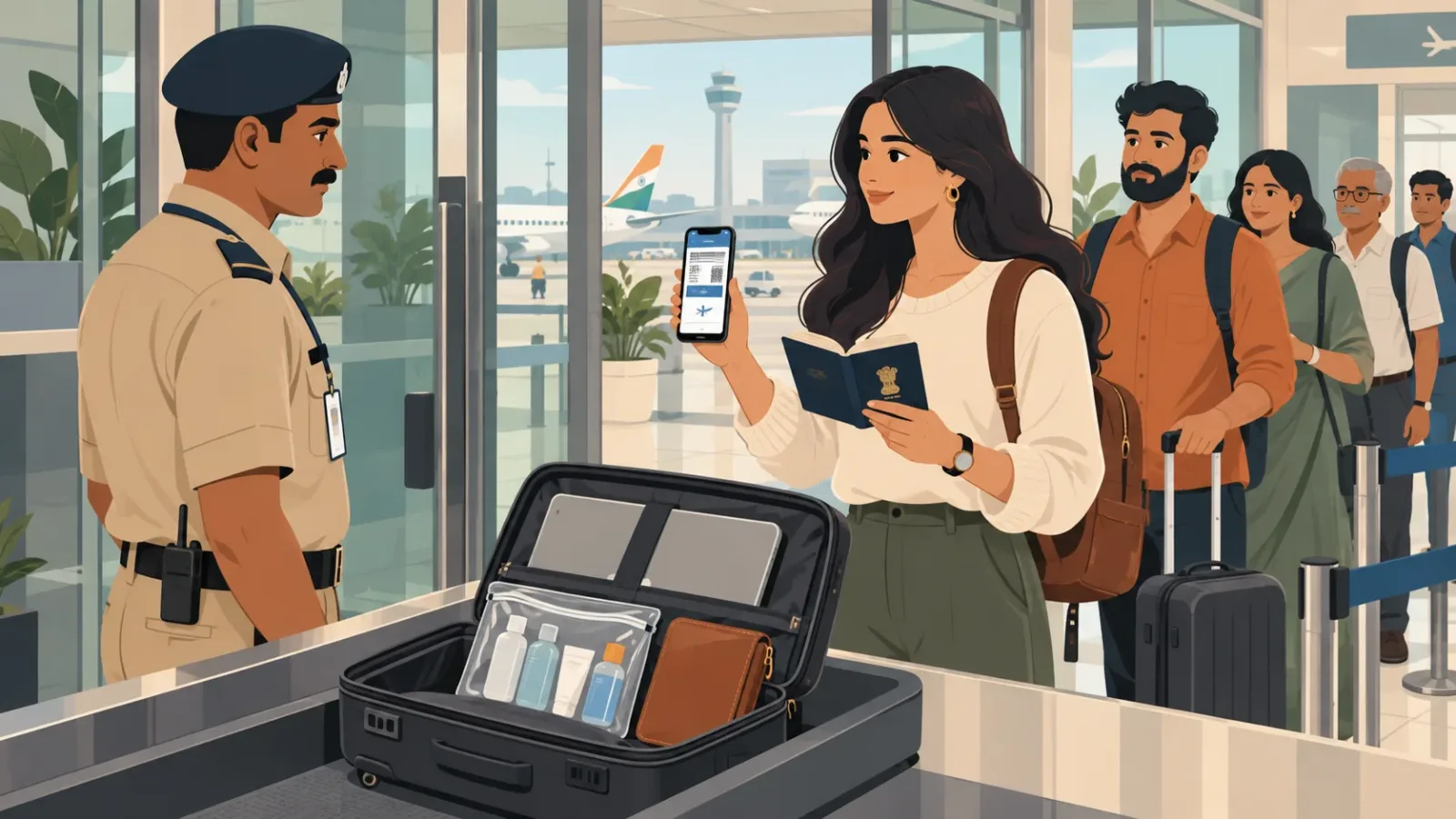
There is a special walk people do at Indian airports: three steps forward in the queue, stop, pat every pocket, swing the backpack around, dig for the passport that was in their hand forty seconds ago. The queues at terminal entry, immigration and security each want something different from you, and the whole dance gets much easier when each item has a fixed home you can reach without unpacking your life onto the floor.
Short answer: at the terminal door, keep a government photo ID and your boarding pass or ticket (print or digital) in hand. At immigration for an international departure, keep your passport, visa (if applicable) and boarding pass ready. At security, have your electronics (laptop, phone, tablet, smartwatch) and your transparent liquids bag where you can pull them out in one move. Medicines stay in the cabin with their prescription. All of this stays in your hand baggage, never in checked luggage. Sources at the end, checked 25 October 2026.
Stop one: the terminal door
Delhi Airport's guidance is blunt: present a valid government-issued photo ID and a print or digital copy of your boarding pass or air ticket to security personnel to enter the terminal. This happens before check-in, so the boarding pass can be the one on your phone from online check-in or your ticket. Air India's document checklist adds the useful modern detail: identity and travel documents stored in DigiLocker are accepted at airports in India, so a physical printout is not the only option. Keep this pair (ID plus boarding pass) in an outer pocket, because you will need the boarding pass again almost immediately at check-in.
Stop two: immigration (international departures)
At Delhi Airport, international departures clear immigration before security screening. The airport's immigration guide lists the required documents: a valid passport, a visa if applicable, and your boarding pass, which you present to the immigration officer, who verifies your documents and may ask a few questions about your travel plans. Air India's checklist for international flights adds entry permits and necessary health certificates, and notes that embarkation forms, if required, must be completed and submitted to customs and immigration authorities before boarding. These are the items to keep in a travel wallet or document pouch, not buried under a jumper.
One trap worth checking days before you fly: the name on your ticket must match your ID exactly. Air India states that if the name on the identification proof does not match the name in the booking, you will not be permitted to enter the airport or board the flight. Fix a mismatch with the airline before departure day, not at the terminal door.
Stop three: the security tray routine
Security is where packing order pays off. Delhi Airport's security guide says to remove metal objects, belts, bracelets and jackets into the trays; that all electronics, including phones, laptops, smartwatches, fitness trackers and tablets, go into trays separately; that chargers, headphones and glasses should be secured in a tray or case rather than placed loose; and that you may need to remove your shoes. Liquids, aerosols and gels go in containers of 100 ml or less, together up to 1,000 ml, inside a transparent resealable plastic bag.
The practical translation: before you join the queue, your laptop and liquids bag should be the top two things in your cabin bag, and everything metal should already be in a pocket of that bag. The thirty seconds of repacking at home beats three minutes of tray archaeology while twenty people wait.
Medicines, documents and valuables live in the cabin
Delhi Airport notes an exception to the liquids limits for essential medicines and baby food, and advises carrying prescriptions if required. Its hand baggage guidance also says electronics, medications and personal essentials must come out of bags and be screened separately. The larger principle from the airlines' own baggage terms: keep documents, medicines, electronics and other valuables in your hand baggage, because carriers exclude liability for valuables in checked bags. If it is expensive, important or hard to replace, it flies with you, within reach.
A pocket plan that works
- Outer pocket or travel wallet: passport, visa, boarding pass, photo ID, any arrival forms.
- Top of cabin bag: laptop/tablet and the transparent liquids bag.
- Cabin bag, not checked: medicines with prescription, documents, electronics, valuables.
- Phone: boarding pass PDF or airline app offline, plus DigiLocker copies of IDs as backup.
Delhi Airport's own guides have international passengers clear immigration before security screening, so there the order is: terminal door, check-in, immigration, security, gate. Other airports and connections can route the stops differently, so follow the signs and staff on the day. Pack for the stops in order and you will never be the person holding up the line with a suitcase explosion.

A Miranda House graduate and lawyer who traded courtrooms for slow travel. Cheshta travels with the batches we host ourselves, with a soft spot for travelling alongside elders.
Planning your next trip?
We'll handle insurance, hotels, airport assistance and the itinerary — the same way we do it for every trip.
Questions on this article
asked by readers, answered by us
Was this helpful?
one tap, no sign-up