




The Trip Keeper The Trip Keeper
three doors, pick the one that fits your family How do you want to travel?
Cheshta Agarwal, founder and host of The Trip Keeper, smiling on a green country road
Hosted by Cheshta

Founder-Hosted Group Tour

the trips where Cheshta travels with you

Our own exclusive group trips. Cheshta is on the trip, from the first flight to the last dinner.

  • Cheshta travels with the group
  • One clear price, inclusions listed
  • Meet your travel family
Next up: Vietnam, 17 DecView →
See founder trips →
A fixed-departure batch on tour

fixed dates, fixed flights

Join a batch of fellow travellers on set dates. Limited seats, flights included, with options. Our team doesn't travel on these.

  • Fixed dates and flights
  • Limited seats per batch
  • Flight options available
See departures →
A private family trip

Private Tour

your dates

just your family, nobody else

Trips planned around your family, your pace and your dates. Milestone birthdays and anniversaries.

  • Travel on your own dates
  • Route shaped around you
Ask for a quote →
← Journal ☏
Trip Planning 3 min read

What should you do if an ATM abroad swallows your Indian debit card?

Treat the card as gone and work the problem in two lanes: your parent at the ATM does three small things - note the machine, ask inside if it is a bank branch, and call you - while you in India block the card within minutes. Most swallowed foreign cards are never returned, so the real plan is the backup: second card, forex card, emergency cash. Here is the whole sequence.

share WhatsApp Facebook X
Text size
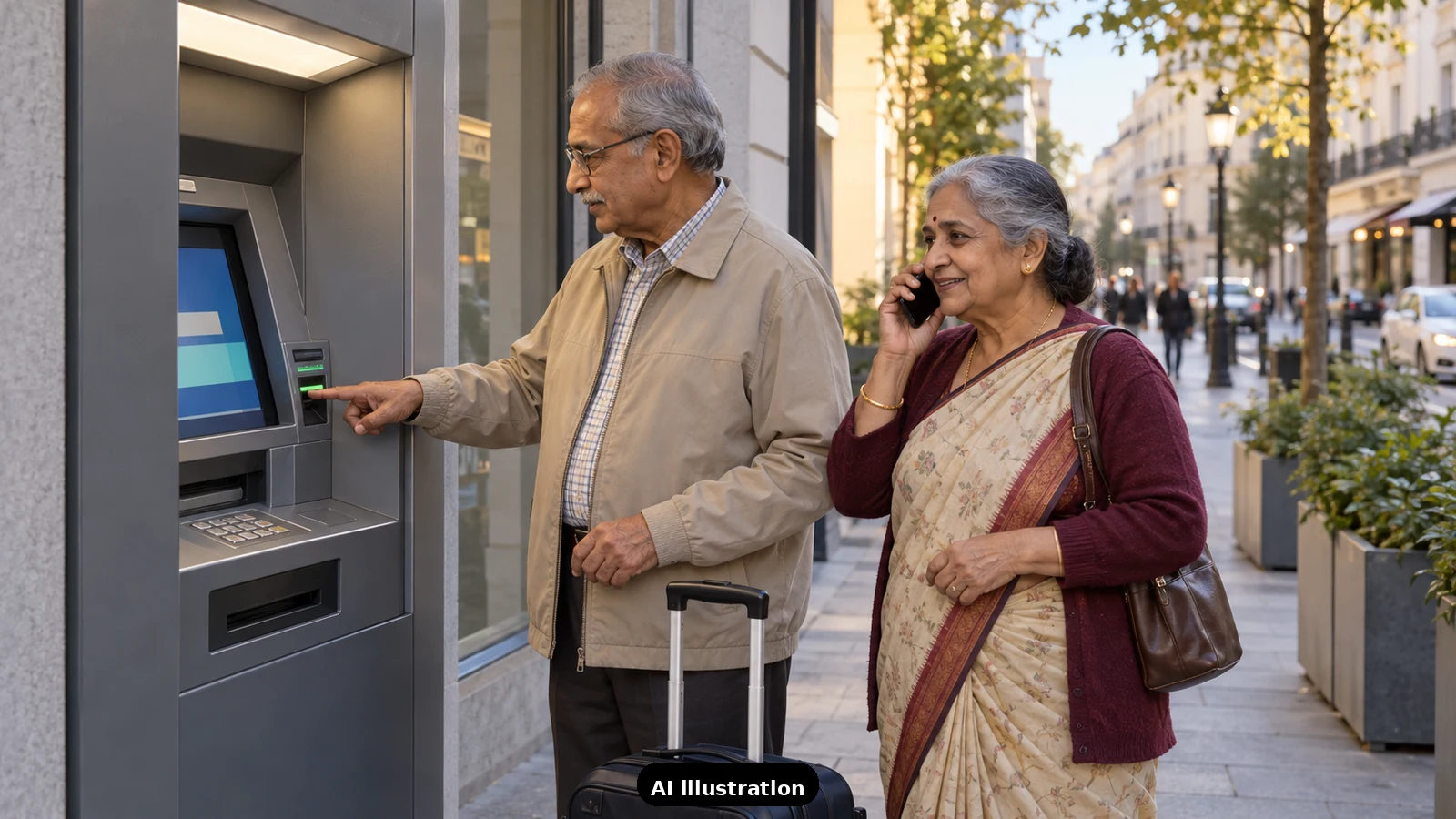
Elderly Indian couple at a foreign ATM, wife calling the bank while husband points at the card slot
Send to Mummy-Papa Opens WhatsApp with a short summary — pick who to send it to.

Short answer: the card is almost certainly not coming back, so do not spend the holiday trying to get it back. Block it immediately from India, switch your parents to their backup payment method, and order a replacement to the home address. The ATM visit that eats a card is a ten-minute problem; it becomes a five-day problem only when families skip the backup planning.

Why ATMs keep cards. Machines swallow cards for mundane reasons: too many wrong PIN attempts, the card not pulled out quickly enough, a network hiccup mid-transaction, or the bank flagging something. None of these means fraud, and none of them can be argued with at the machine - there is no slot to negotiate with, and no emergency release a passer-by can help with.

What your parent does at the machine - three small things. First, wait a minute or two: some ATMs return a held card after a timeout. Second, note exactly which machine it is - the bank's name, the branch or address, the time - and photograph the ATM if possible. Third, if the ATM is attached to a bank branch and the branch is open, walk in and ask; some branches will retrieve a card for a passport-carrying owner, though many will not, and foreign cards are often destroyed under local security rules rather than returned. Then step aside and call home.

What you do from India - the important half. Block the card immediately: through the bank's mobile app or net banking if you have the credentials, or by calling the bank's 24x7 helpline (the number lives on the bank's website and should also be written in your parents' travel papers). Do not wait to see whether the card resurfaces - a retained card that is later fished out of a machine by the wrong hands is a worse story than a blocked one. Once blocked, ask the bank to issue a replacement to the registered home address in India; banks do not courier replacement debit cards to hotels abroad.

The rest of the trip runs on the backup. This is why the pre-trip rule exists: every traveller carries two independent ways to pay, kept in two different places - a second debit or credit card packed separately from the main wallet, a forex card, and some cash in the destination currency. If the swallowed card was the only card, the family escalates: you can reload a forex card online from India, arrange a money transfer for cash pickup, or have a companion's card carry shared expenses until home.

When you are back, two cleanups. Check the account statement for any transaction after the swallow time and dispute anything unfamiliar with the bank in writing. And confirm the replacement card's international usage is switched on before the next trip - replacement cards sometimes arrive with international transactions disabled by default.

Prevention is boring and effective. Use ATMs attached to bank branches during opening hours rather than lonely street machines at night. Take the card out the moment the machine offers it - hesitation is the classic cause. And keep the issuer's helpline number on paper, because the day the card goes into the machine is the day the phone's battery also dies.

How we build for it at TripKeeper. Every parent trip we plan carries two separated payment methods per traveller plus the card-blocking numbers on the printed emergency card, so a swallowed card is an errand, not a crisis. Send us a trip-planning inquiry if you want that built into your parents' next itinerary.

Send to Mummy-Papa Opens WhatsApp with a short summary — pick who to send it to.
Cheshta Agarwal
Founder · Travel Creator · Lawyer

A Miranda House graduate and lawyer who traded courtrooms for slow travel. Cheshta travels with the batches we host ourselves, with a soft spot for travelling alongside elders.

or let us do all of it

Planning your next trip?

We'll handle insurance, hotels, airport assistance and the itinerary — the same way we do it for every trip.

Questions on this article

asked by readers, answered by us

What should I do first if an ATM abroad keeps my Indian debit card?

Wait a minute or two - some ATMs return a held card after a timeout - then note the bank name, ATM location and time, and photograph the machine. If it is a bank-branch ATM and the branch is open, walk in and ask with your passport. Otherwise treat the card as gone and have it blocked from India immediately.

Will a foreign bank return a swallowed card?

Sometimes, if the ATM belongs to a bank branch and you ask quickly with your passport - but many will not, and foreign cards are often destroyed under local security rules. Do not build the trip around getting it back: block it, switch to your backup payment method, and order a replacement to your home address.

How do I block an Indian debit card from abroad?

Through the bank's app or net banking if you have access, or by calling the bank's 24x7 helpline - family in India can do this on the traveller's behalf too. Do not wait: a card that resurfaces in the wrong hands is worse than a card blocked early.

Can my bank courier a replacement debit card to my hotel abroad?

No - banks issue replacements to the registered home address in India, not overseas. That is why the backup matters: a second card packed separately, a forex card, and some destination-currency cash. Family can reload a forex card online from India if needed.

Why did the ATM swallow the card in the first place?

Usually mundane: too many wrong PIN attempts, the card not pulled out promptly, a network error mid-transaction, or a bank security flag. It does not mean fraud. Using bank-branch ATMs during opening hours and taking the card promptly when offered prevents most of it.

What should I check after the card is replaced?

Review the account statement for any transaction after the swallow time and dispute anything unfamiliar in writing. Before the next trip, confirm the replacement card has international usage switched on - replacement cards sometimes arrive with it disabled by default.

Was this helpful?

one tap, no sign-up

Read next

← Journal See our trips