




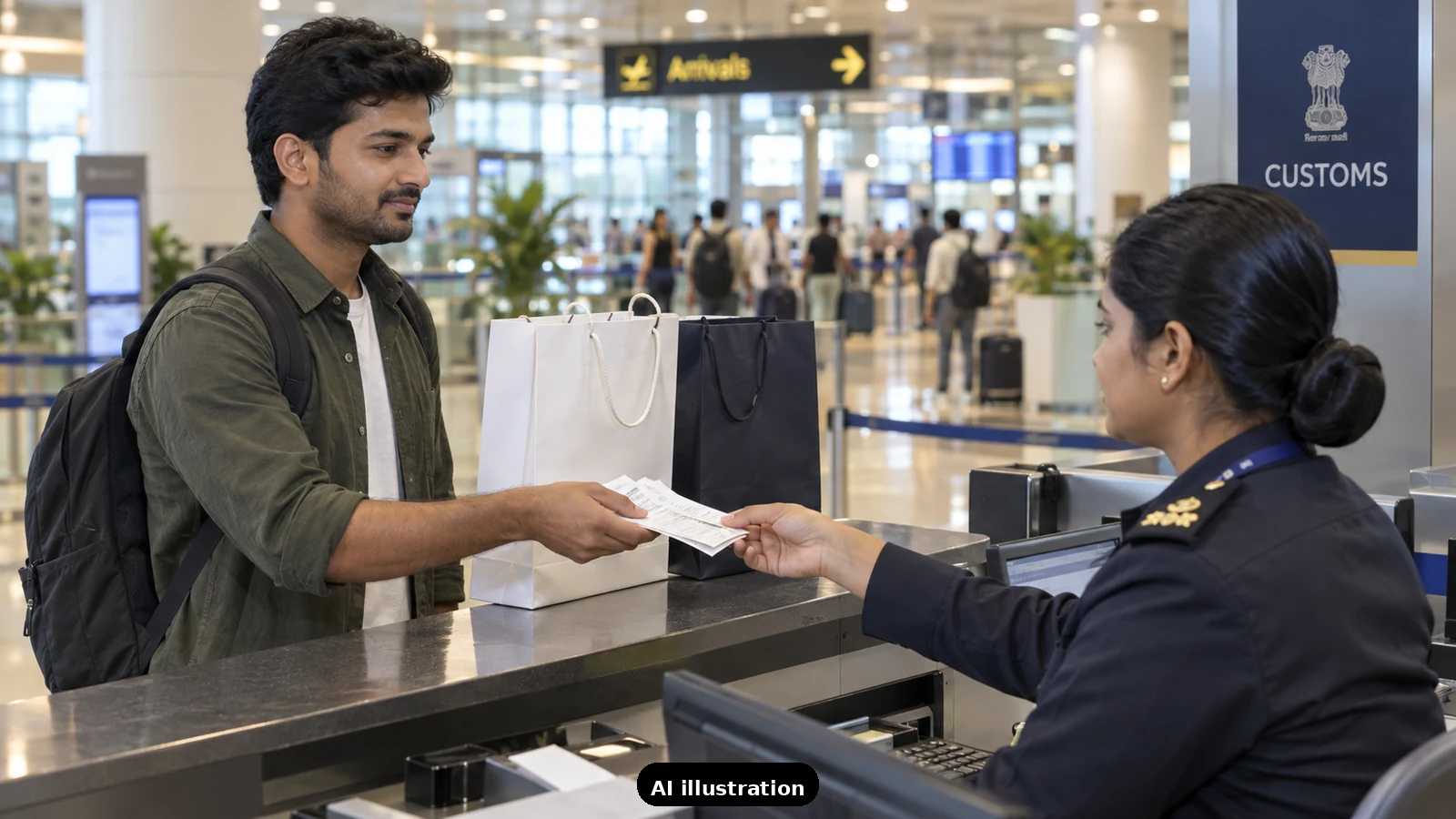
Short answer: cooperate and show what you have, in this order. Original shop receipts first - customs valuation starts from the actual purchase price on a receipt, so they usually work in your favour. If a receipt is missing, your card or bank statement entry for that purchase plus a simple list of the items and their prices is reasonable supporting evidence. If you have nothing, the officer assesses value themselves - often using the item's retail price in India, which can be higher than what you paid abroad. And remember the frame: a gift is not an exemption. Gifts and purchases count the same way toward your duty-free allowance (Rs 75,000 for a resident under the Baggage Rules, 2026), and duty applies only to the value above it.
Why the officer asks at all. The question 'do you have receipts?' is how Customs establishes value. When you declare dutiable goods, or when your bags look like more than personal effects, the officer needs a number to work from. The receipt question is not an accusation; it is the start of the valuation process, and the traveller who answers it with papers finishes fastest.
How Customs puts a price on things. The preferred method is the transaction value - what you actually paid, shown on the original receipt. Without a receipt, officers can benchmark against the item's current retail price in India, and for unusual or second-hand items they may use a comparable new item's price. This matters in a real way: electronics and branded goods often cost more in India than abroad, so a phone bought cheap overseas can be assessed at its Indian price. Your receipt is not just proof - it is usually the cheaper valuation.
If the item was genuinely a gift. Say so plainly: 'This was a gift from my aunt in Toronto, I do not have a receipt.' That is a complete, honest answer, and officers hear it daily. The officer will then value the item by their own methods. Do not invent a price to sound prepared, and never produce a fabricated receipt - a fake document turns a small duty question into a customs offence, which is a categorically worse outcome.
What the payment looks like if it comes to that. If the total value of your purchases and gifts crosses your free allowance, duty is charged on the excess, you pay it at the counter, and you receive a proper receipt for the payment. That receipt is your proof of lawful payment - keep it. For most holiday shoppers within the allowance, the receipt conversation ends with 'thank you, you can go.'
Prepare before you fly home, not at the counter. While packing abroad, drop every receipt into one envelope and photograph each as backup. Write a short list - item, price, who it is for - while you remember. Keep card statements reachable offline. The traveller who opens one folder and answers in thirty seconds is the traveller Customs waves through.
Where TripKeeper fits in. Our pre-departure and return checklists include the receipts envelope habit and the current allowance figure, so the green-versus-red channel decision is made with numbers, not nerves. Send us a trip-planning inquiry if you would like the checklist for your family's next trip.

A Miranda House graduate and lawyer who traded courtrooms for slow travel. Cheshta travels with the batches we host ourselves, with a soft spot for travelling alongside elders.
Planning your next trip?
We'll handle insurance, hotels, airport assistance and the itinerary — the same way we do it for every trip.
Questions on this article
asked by readers, answered by us
Was this helpful?
one tap, no sign-up