




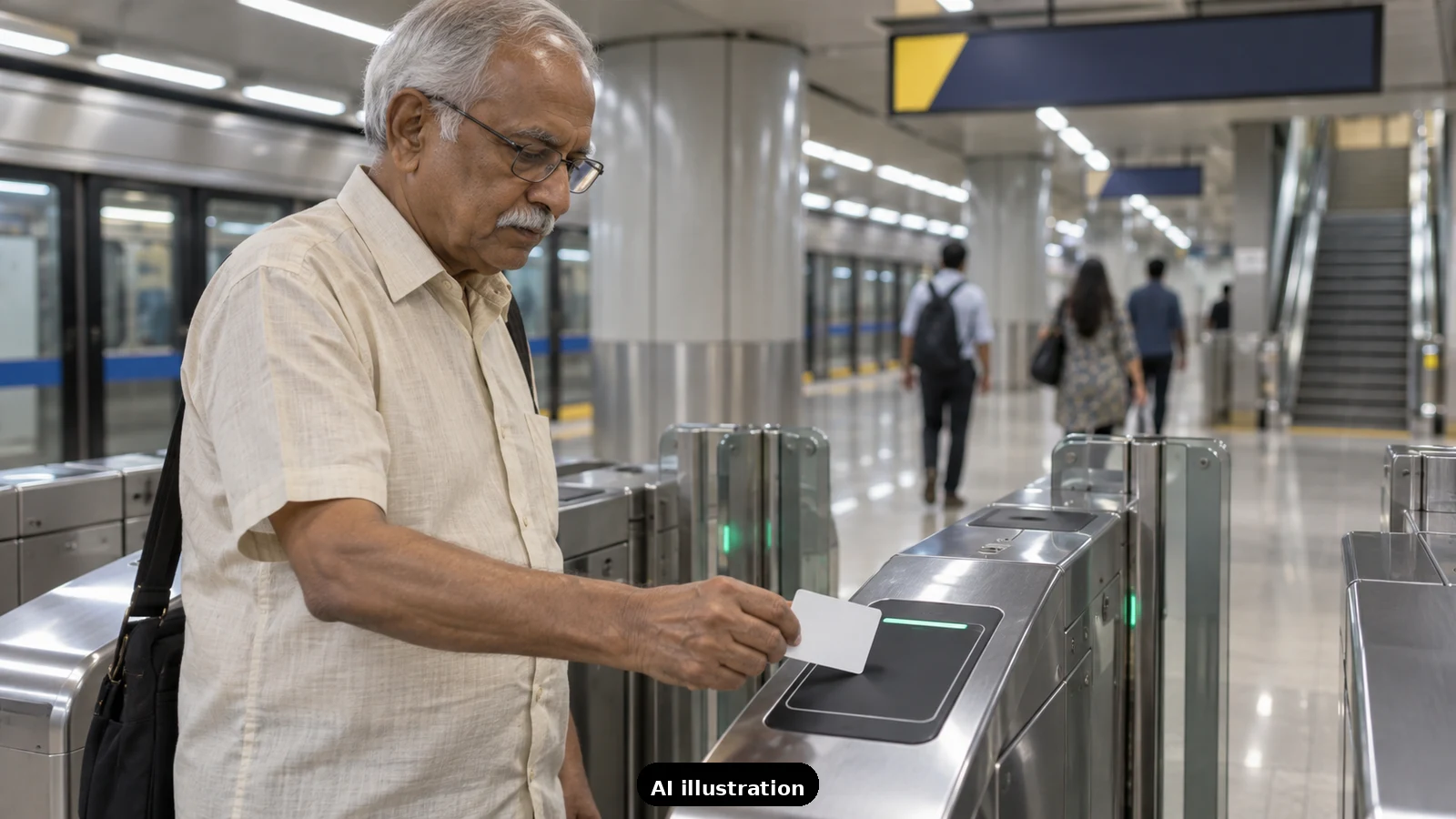
Short answer: the balance is rarely the real problem. London's gates read a forex card like any other contactless card - Transport for London itself says many cards issued outside the UK work for pay-as-you-go travel, and prepaid cards are generally accepted. When a gate declines, it is almost always one of four things: the card's international or contactless usage is switched off, the available balance cannot clear the system's maximum-fare check, two contactless cards clashed at the reader, or an old unpaid fare is sitting on that card. Each takes minutes to fix, and three of them can be prevented from India before the flight.
Reason one: the card is not switched on for this kind of payment. Indian banks ship cards with channels toggled separately - international usage and contactless are often off by default. HDFC, for example, lets you enable international usage through its MyCards platform or NetBanking with an OTP, and forex cards from the major issuers have similar per-channel switches in their apps or portals. A card can work perfectly at a Heathrow shop (chip and PIN) and still be dead at a gate (contactless). The check takes two minutes in the bank's app; it cannot be done from the barrier.
Reason two: the balance fails the maximum-fare check. The reader does not know where you are going when you touch in, so the system needs confidence the card can cover a full journey. A forex card with just a few pounds left will be refused even for a short hop, because an incomplete journey triggers the maximum fare. TfL's own guidance lists "not enough money" among the reasons a card fails at the gate. Keep a buffer - treat the last £15-20 on the card as untouchable transit money.
Reason three: card clash. A wallet holding a forex card next to a bank card, or a phone with its own wallet active, presents two signals and the reader refuses both. TfL warns about this directly. The fix is almost comical: one card, held flat, alone, on the yellow reader.
Reason four: an old debt on that card. If the card once touched in and never touched out - a gate left open, a forgotten exit - an unpaid maximum fare may be attached to it, and the system declines until it clears. Barclays' guidance for TfL failures lists unpaid fares as a standard cause. Using the same card consistently, in and out, is what prevents this; mixing devices is how it starts.
What to do at the barrier. Step aside, don't keep slapping the reader - repeated failures can look like a faulty card. Check the app for the international-contactless toggle. Try the card alone, outside the wallet. If it still declines, buy a single ticket or use a backup card for that journey and sort the forex card over Wi-Fi later. The Underground will wait; the queue will not.
The pre-flight checklist for parents. Enable international and contactless usage on the forex card from the bank's app while still in India. Load a balance with a transit buffer. Decide which card touches the readers and keep it separate from every other card and phone. And one card per traveller - one card cannot tap two people through the same gate.
The one line to teach your parents. "Gate ne card mana kiya to balance pehle mat socho - pehle dekho card akela reader pe hai aur app mein international contactless on hai" - if the gate refuses the card, don't assume the balance first; first check the card is alone on the reader and international contactless is on in the app. That ordering solves most declines on the spot.
How we cover it at TripKeeper. For London-bound families we put the working payment setup on the trip card - which card is the transit card, what is switched on, what the backup is - so a red light at the gate is a moment, not a scene. If you want that for your parents' trip, send us a trip-planning inquiry.

A Miranda House graduate and lawyer who traded courtrooms for slow travel. Cheshta travels with the batches we host ourselves, with a soft spot for travelling alongside elders.
Planning your next trip?
We'll handle insurance, hotels, airport assistance and the itinerary — the same way we do it for every trip.
Questions on this article
asked by readers, answered by us
Was this helpful?
one tap, no sign-up