




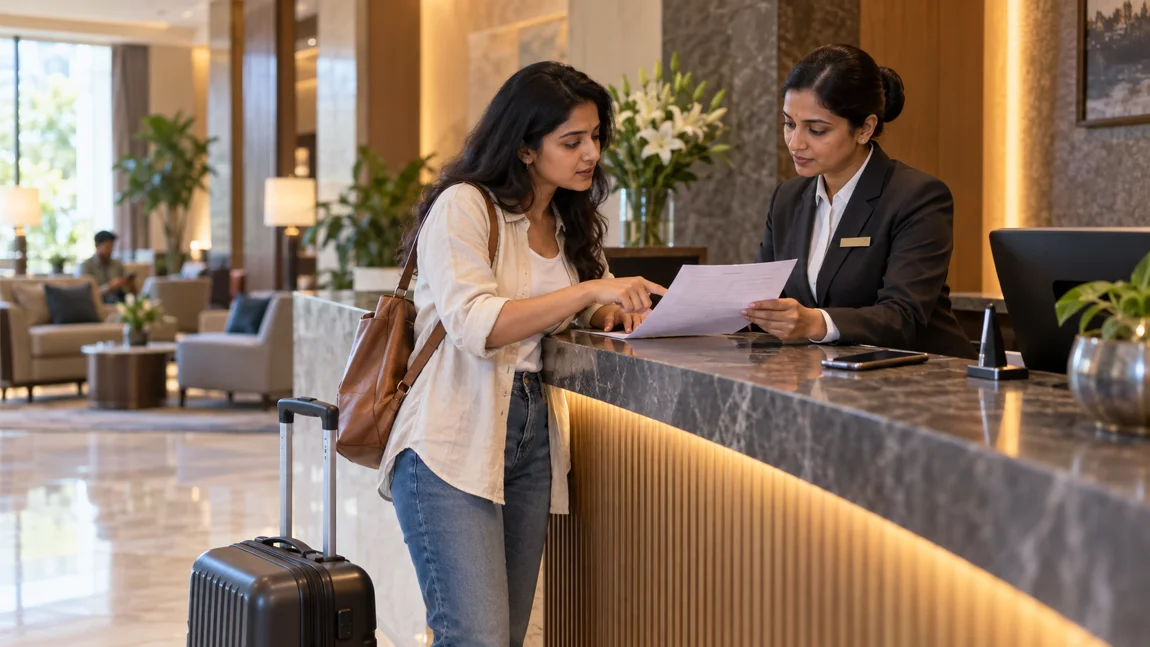
You can ask your card issuer about disputing a hotel charge you believe is wrong, but first identify what the entry is and why the property says it exists. A charge appearing after checkout is not automatically fraudulent, and a pending authorisation is not the same as a posted extra bill. Keep the hotel explanation and issuer process moving together rather than waiting on an unsupported refund promise.
Identify the entry before choosing a dispute reason
Use the issuer's app or statement to note the merchant description, transaction and posting dates, amount, currency, status and reference. Compare it with the checkout bill and earlier card entries. Ask the issuer if it is pending, a completed charge, a changed authorisation or another adjustment. A new SMS alone cannot settle that.
IHG's digital-checkout terms say that additional charges incurred during a stay may be added to the final bill after checkout. That is a named-service example showing why timing alone is not proof of an error. It does not establish that the charge in your case was incurred, authorised or correctly calculated.
Ask the property for the itemised basis
Contact the actual hotel through the booking confirmation or a contact verified from its own site. State the stay dates, booking reference and disputed entry. Ask for an updated itemised bill and the specific service, date or contractual basis for the amount. If it alleges minibar use, damage, late checkout or another extra, ask for the evidence and terms it relies on rather than guessing which category applies.
Hilton's billing-issue guidance directs guests with a billing error or a question about a recent charge to the property first, with a Billing Issue form available if further assistance is needed. This is Hilton's route, not a universal form for every hotel. Use the actual property's booking and brand channels.
Build one small evidence file
- The booking confirmation and rate/inclusion or deposit terms you accepted.
- The original checkout bill and any revised itemised bill.
- The relevant bank entries, amounts, currencies and references.
- Your clear description of what you accept and what you dispute.
- The property's explanation, supporting evidence and any written refund commitment.
- The issuer's complaint reference and requested next steps.
Keep original readable records privately. Send only the information the verified recipient needs. Do not post unmasked card screenshots or passport scans to a public complaint page, and never share a PIN, password, security code or one-time code with someone offering a refund.
Contact the issuer promptly about the correct route
Use the official banking app, number on your card or issuer's own site. Explain whether the concern is an incorrect amount, duplicate, service not received, unprocessed credit or a transaction you did not authorise. Describe the facts accurately and let the issuer identify its current process and required documents. ICICI Bank's official dispute form and HSBC India's FAQ show that different dispute reasons exist; they are not interchangeable labels.
Ask the applicable reporting deadline, whether the hotel correspondence is required, what to submit now and how to track the case. Do not assume another bank's deadline applies, and do not miss your deadline while a hotel says it is still investigating. If you genuinely do not recognise or did not authorise the transaction, say that promptly and ask about protecting the card.
Tell both sides about refunds and credits
If the hotel issues a refund after you have opened a bank dispute, tell the issuer and keep the credit reference. Likewise tell the hotel that a dispute exists when relevant to its investigation. Do not treat a temporary bank credit and hotel refund as two separate entitlements.
Hilton's refund-reversal page describes a specific Advance Purchase example in which a hotel refund and financial-institution credit create a double credit, followed by a correcting new charge when the dispute closes. That example is not an explanation for every new charge. Ask the hotel and issuer to reconcile the actual entries before calling it a duplicate or keeping an unexplained credit.
Verify the final outcome
A complaint number records reporting, not reimbursement. Check the statement for the actual refund, reversal or final charge, compare amount and currency and keep the final decision. Ask the issuer how the dispute affects any payment due rather than simply omitting the amount from a card bill. If the explanation remains inconsistent, request the next applicable escalation route with the existing case reference.
TripKeeper's practical approach is one disputed line, one itemised explanation and one recorded issuer case when needed. We do not promise that every post-checkout charge can be reversed, that every hotel accepts a challenge or that a refund arrives within a fixed number of days.
Sources and limits
Checked 4 November 2026: IHG digital check-in/checkout terms; Hilton billing issue guidance; Hilton refund reversals; ICICI dispute form; HSBC India dispute FAQ. No universal dispute deadline, refund time, currency-conversion treatment or right to reverse a particular hotel charge is confirmed here.

A Miranda House graduate and lawyer who traded courtrooms for slow travel. Cheshta travels with the batches we host ourselves, with a soft spot for travelling alongside elders.
Planning your next trip?
We'll handle insurance, hotels, airport assistance and the itinerary — the same way we do it for every trip.
Questions on this article
asked by readers, answered by us
Was this helpful?
one tap, no sign-up