




- Busan shape
- City + beaches, no car needed
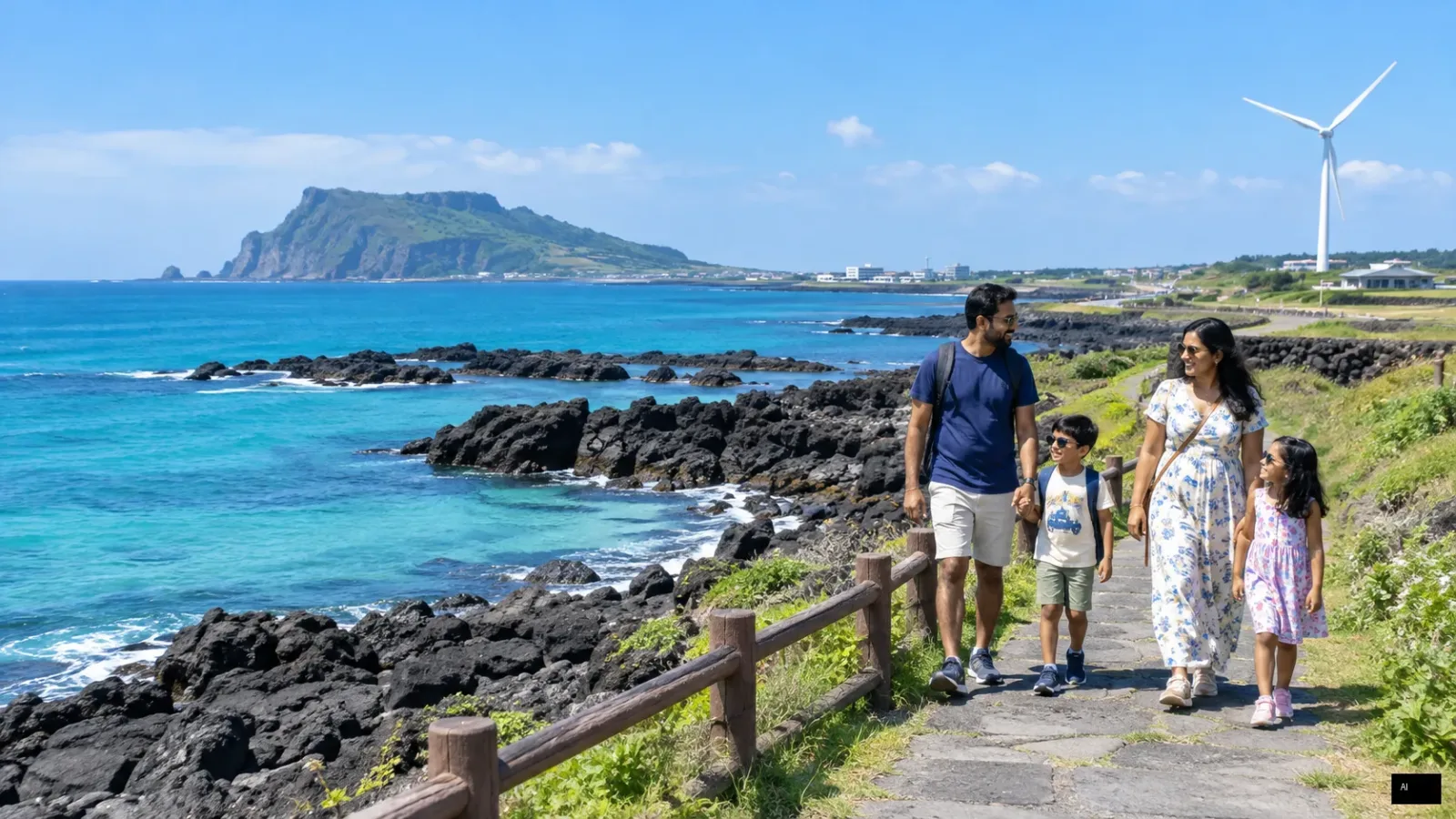
- Jeju shape
- Island drives and trails
- Hotels
- Busan 76,000 vs Jeju 66,000 won avg
- Flights
- PUS-CJU from 29,200 won, 1h 3m
- Food
- Jeju slightly pricier per dish
Both are Korea's beach answers, but they are different holidays. Busan is a city with beaches - metro, markets, day trips, restaurants at every price. Jeju is an island of drives and trails - volcanic coasts, waterfalls, tangerine farms, and distances between them. For an Indian family, the right choice is mostly about how you want your days to move.
Pace: plug-and-play vs plan-and-drive
Busan days run themselves: metro to Haeundae (1,600 won a ride), walk the promenade, bus to a temple, dinner in Seomyeon. No planning muscle needed, and grandparents manage it - see our 3-day Busan plan with parents. Jeju has no metro and no rail: Visit Jeju's own transport page notes the public buses reach the far corners but suit a slower pace of travel. With kids and limited days, most families rent a car (Indian licences need an International Driving Permit, and Korea drives on the right) or hire a driver - that adds cost and logistics but unlocks the island. Busan fits 3-4 easy days; Jeju wants 4-5 with a vehicle.
Getting there and around
Busan connects directly: KTX from Seoul in about 2h15 (54,400 won after the September 2026 merger - details in the Seoul to Busan guide) and its own international airport. Jeju means a domestic hop - Busan to Jeju nonstop averages 1 hour 3 minutes, with one-way fares from 29,200 won (Trip.com listings, October 2026; demand peaks in July, September is the cheapest month). Doing both is realistic: Seoul, KTX to Busan, fly Busan to Jeju, fly back from Jeju.
Budget: surprisingly close, differently spent
Hotels: HotelPing's February 2026 data puts Busan's citywide average at 76,000 won a night (Seomyeon 58,000, Haeundae 94,000) against Jeju's area averages of 66,000 in Jeju City, 69,000 in Seogwipo, and 135,000 in the resort strip of Jungmun - so Jeju's practical base is cheaper than Busan's average, unless you go resort. Food: the official Korea Consumer Agency regional table shows Jeju running slightly above Busan per dish - bibimbap 10,500 vs 9,686 won, kimchi stew 9,625 vs 8,429, kalguksu 10,375 vs 8,071 (full Busan numbers in the Busan budget guide). The real budget difference is transport: Busan's metro day costs a few thousand won; Jeju's rental car or driver is the trip's biggest line item.
The verdict for an Indian family
First Korea trip, mixed ages, one country in 7-10 days: Busan. Easier logistics, temples-and-markets variety, and it pairs with Seoul by one train ride. Second Korea trip, or a family that road-trips happily at home and wants nature over city: Jeju - fly in, rent the car, take it slow. If you are still weighing Busan against the capital itself, our Seoul vs Busan comparison completes the triangle.

A Miranda House graduate and lawyer who traded courtrooms for slow travel. Cheshta travels with the batches we host ourselves, with a soft spot for travelling alongside elders.
Planning your next trip?
We'll handle insurance, hotels, airport assistance and the itinerary — the same way we do it for every trip.
Questions on this article
asked by readers, answered by us
Was this helpful?
one tap, no sign-up