




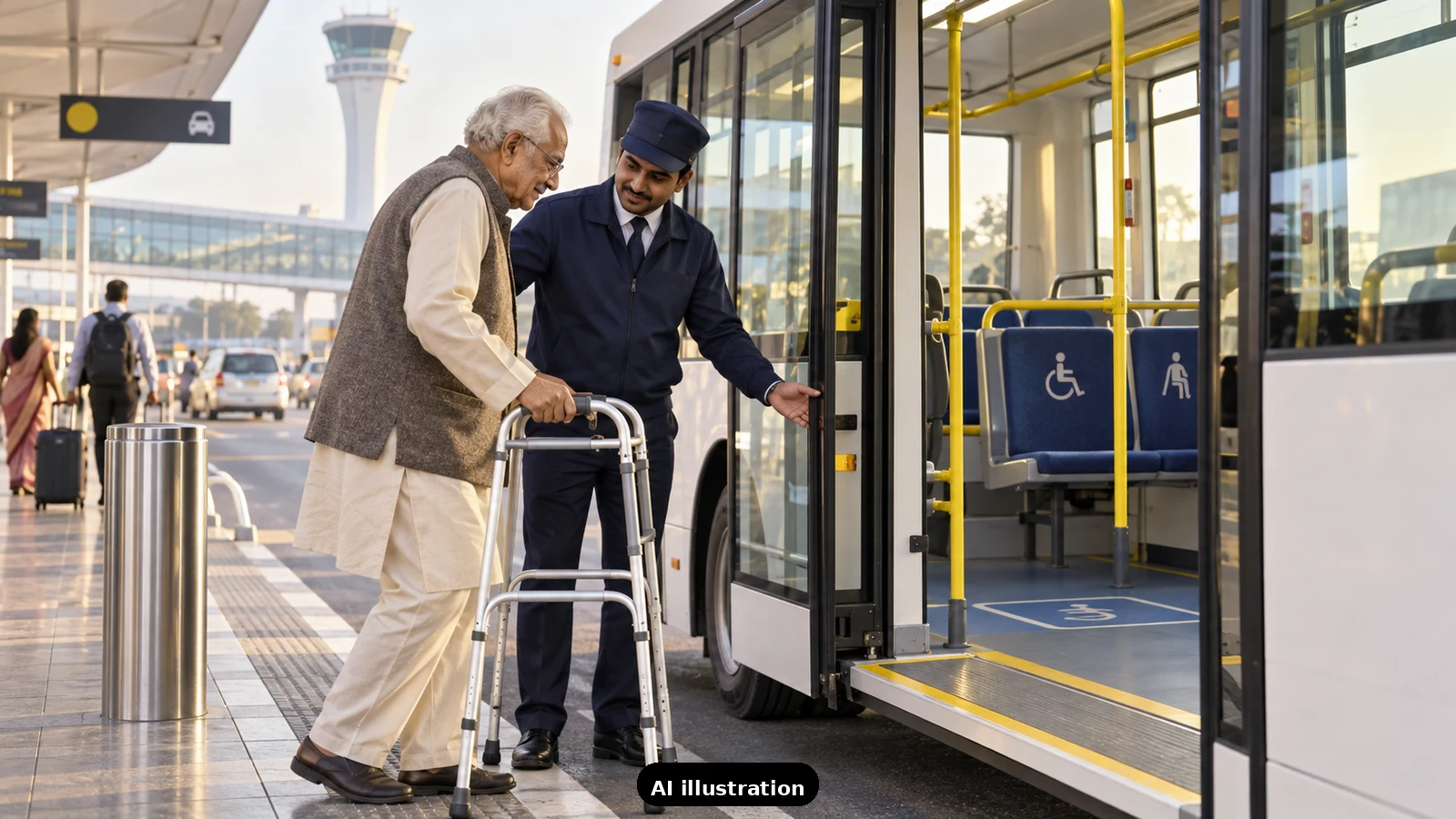
Short answer: yes. A walker or walking frame does not disqualify your parent from the airport shuttle bus - thousands of elderly passengers do this transfer every day. What matters is technique, not permission: board unhurried, fold the frame, take the priority seat, and let the driver know before the bus moves. And if the frame plus a tight connection sounds stressful, the airline's wheelchair assistance is usually the better door - their teams move passengers between terminals in accessible vehicles.
What airport shuttles are actually like. Terminal transfer buses at major airports are generally city-style low-floor buses: no steps at the door or a single small step, a priority seating area near the entrance, and grab rails along the way. Drivers see elderly passengers constantly and will hold the bus while someone boards slowly - nobody expects a passenger with a walker to hurry. If the bus that arrives has steps, it is completely acceptable to wait for the next one or ask the driver to radio for an accessible vehicle.
Boarding with the frame, step by step. One, the parent goes first, hands on the rails - the frame stays outside or gets handed to the companion after. Two, a companion or the driver folds the frame; most walkers fold flat with one lever. Three, the frame rides with the luggage, not in the aisle - a folded walker slides upright against a suitcase and is held with one hand or wedged between bags. Four, the parent sits in the priority seats near the door so the exit is short. Reverse the order on the way out: frame unfolded and stable before the parent stands.
The better option most families miss. If your parent has wheelchair assistance booked with the airline, the shuttle question often disappears. Assistance teams do not put booked passengers on the public shuttle with the crowd; they move them between terminals by buggy or an accessible van, door to door. For a slow walker with a frame and a ninety-minute transfer, this is the difference between an ordeal and a non-event. Book it free through the airline at least 48 hours ahead.
The frame itself flies free. Under India's aviation rules for passengers with disability or reduced mobility, assistive devices are carried without charge and are not counted in the baggage allowance - the walker is not luggage you pay for. At check-in the airline tags it; it can usually stay with your parent right up to the aircraft door and is brought back at the aircraft door on arrival, so the frame is available at both ends of the journey, including for that shuttle ride.
Small kit that makes the shuttle easier. A name-and-phone tag on the frame, because folded walkers look alike. Rubber ferrules (the feet) in good condition, checked before the trip. And a plan for who carries what: the parent's only job on the bus is holding a rail and sitting; bags and frame belong to the companion or the helper.
When to skip the shuttle entirely. Heavy rain, a crowded peak-hour bus, a parent who cannot stand for even a minute, or a connection under two hours - in these cases the public shuttle is the wrong tool. Ask the assistance desk, the airline staff, or the airport help point for an accessible transfer instead. It exists precisely for these situations.
How we plan it at TripKeeper. For travellers with walkers and frames, we book airline assistance so terminal transfers happen in accessible vehicles, and where a shuttle is genuinely the best option we write the boarding sequence into the family journey sheet - who carries the frame, where to sit, what to say to the driver. Send us a trip-planning inquiry and we will map the easy route.

A Miranda House graduate and lawyer who traded courtrooms for slow travel. Cheshta travels with the batches we host ourselves, with a soft spot for travelling alongside elders.
Planning your next trip?
We'll handle insurance, hotels, airport assistance and the itinerary — the same way we do it for every trip.
Questions on this article
asked by readers, answered by us
Was this helpful?
one tap, no sign-up