




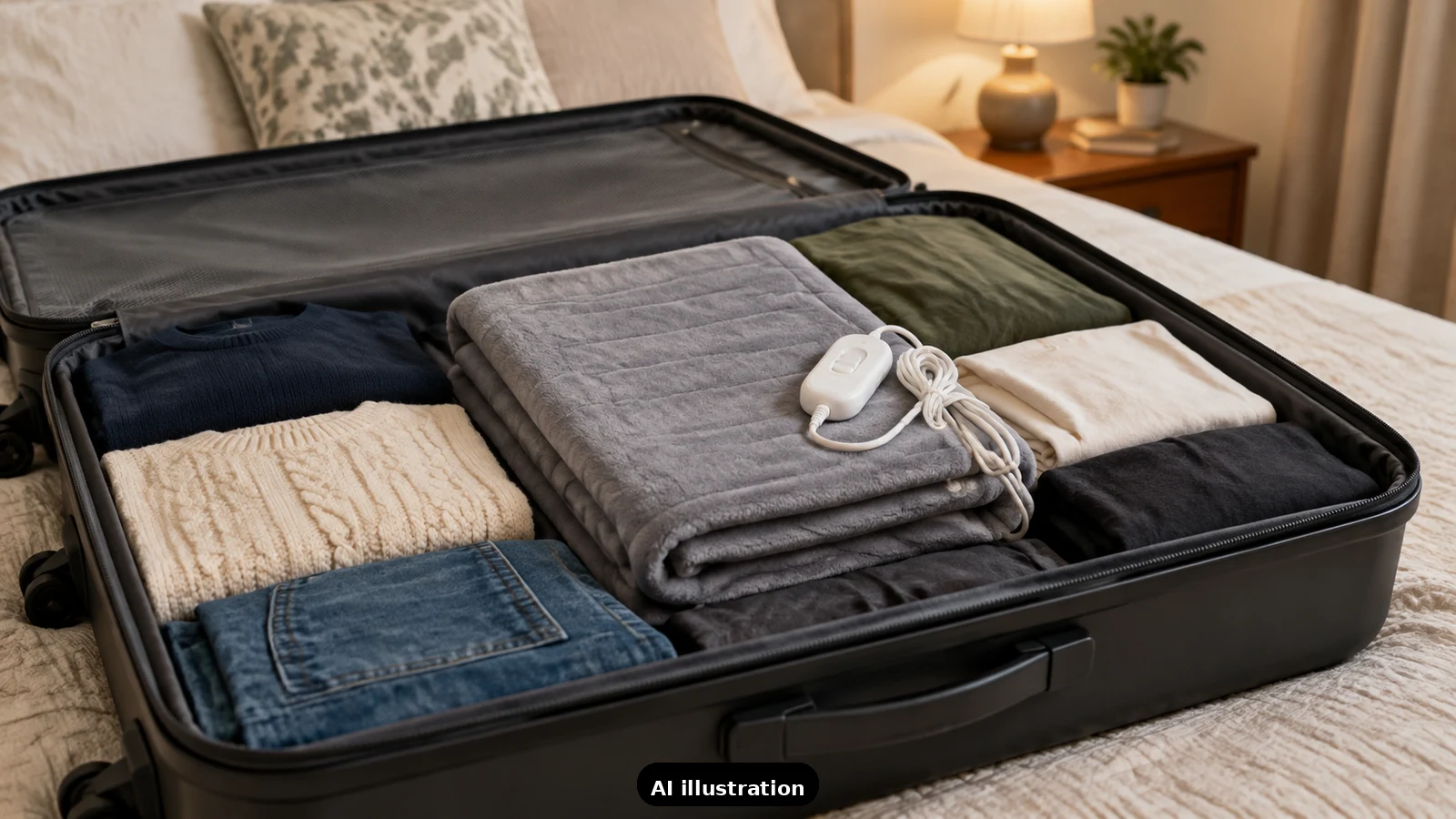
Short answer: yes for a corded electric heating pad, no for a battery-powered one. IndiGo's published dangerous-goods table draws the line exactly there: an electric heater is allowed in checked baggage but not in cabin baggage, and only without a battery - while a heater battery is banned from both the cabin and checked baggage. For parents heading to a cold destination with their trusted garam pad, the corded version packed in the suitcase is the way.
Why the battery changes everything. A heating device is a controlled heat source; add a lithium battery and you have a heat source with its own stored energy, which is precisely the combination aviation dangerous-goods rules treat as a fire risk. That is why battery-powered heaters sit on the prohibited list entirely - not moved to the cabin like a power bank, but banned outright. If your heating pad is the rechargeable cordless type, leave it home or replace it for the trip; it will be confiscated at screening wherever it is found.
How to pack the corded one. Coil the cord loosely - tight kinks break the internal wiring over a journey - and lay the pad flat or gently folded in the middle of the suitcase, cushioned by clothes on both sides. Keep the controller unit where it cannot take a direct knock: wrapped in a sweater in the bag's center, not against the shell. There is no liquid, no gas and no battery involved, so no declaration is needed; it screens like any other home appliance, which airlines also place in checked baggage as a rule.
The voltage question nobody asks until the hotel. An Indian heating pad is built for 220-240V. That is fine in most of Asia and Europe, but in the US, Canada and Japan - 100-120V countries - the pad will heat weakly or not at all, and plugging a 230V-only device into foreign sockets through a bare adapter is how trips get ruined quietly. Check the label on the pad's controller: if it does not say 100-240V, carry it only to countries on India's voltage standard, or plan to buy one locally.
Warmer alternatives that fly easier. If the heating pad is meant for aching joints in cold hotel rooms, a rubber hot water bottle travels even lighter - empty, of course, since liquids over 100 ml cannot cross security, but it fills at any hotel kettle. Disposable adhesive heat patches (the air-activated kind) are cabin-legal in reasonable quantities and need no socket at all. For genuinely cold destinations, layering usually beats wiring.
How TripKeeper preps for cold trips. Before our winter departures we send travellers a packing note tuned to the destination's voltage, weather and hotel heating realities - what to carry, what to buy there, and what to leave behind. If you would like that worked out for your next holiday, send a trip-planning inquiry.

A Miranda House graduate and lawyer who traded courtrooms for slow travel. Cheshta travels with the batches we host ourselves, with a soft spot for travelling alongside elders.
Planning your next trip?
We'll handle insurance, hotels, airport assistance and the itinerary — the same way we do it for every trip.
Questions on this article
asked by readers, answered by us
Was this helpful?
one tap, no sign-up