




The Trip Keeper The Trip Keeper
three doors, pick the one that fits your family How do you want to travel?
Cheshta Agarwal, founder and host of The Trip Keeper, smiling on a green country road
Hosted by Cheshta

Founder-Hosted Group Tour

the trips where Cheshta travels with you

Our own exclusive group trips. Cheshta is on the trip, from the first flight to the last dinner.

  • Cheshta travels with the group
  • One clear price, inclusions listed
  • Meet your travel family
Next up: Vietnam, 17 DecView →
See founder trips →
A fixed-departure batch on tour

fixed dates, fixed flights

Join a batch of fellow travellers on set dates. Limited seats, flights included, with options. Our team doesn't travel on these.

  • Fixed dates and flights
  • Limited seats per batch
  • Flight options available
See departures →
A private family trip

Private Tour

your dates

just your family, nobody else

Trips planned around your family, your pace and your dates. Milestone birthdays and anniversaries.

  • Travel on your own dates
  • Route shaped around you
Ask for a quote →
← Journal ☏
Senior & Family Travel 3 min read

Can You Travel Across Japan Without Speaking Japanese? An Honest Answer for Indians

Short answer: yes, comfortably. English signage covers the transport spine, translation apps fill the gaps, and a handful of printed phrases handles the rest. What works, what does not, and the prep that matters.

share WhatsApp Facebook X
Text size
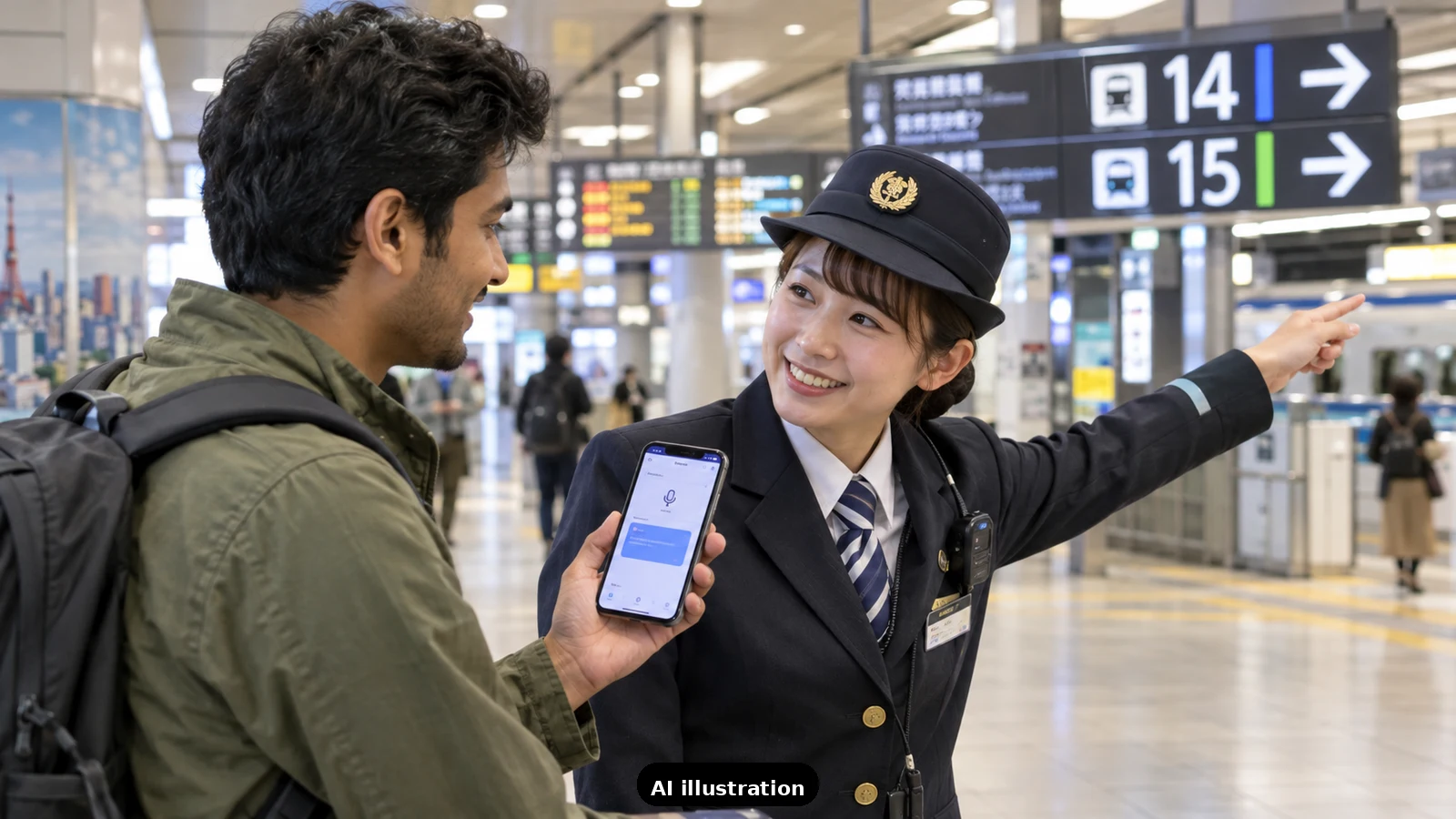
An Indian traveller showing a translation app to a helpful Japanese station attendant
Send to Mummy-Papa Opens WhatsApp with a short summary — pick who to send it to.

The single most common pre-trip worry we hear from Indian travellers is the language. The honest answer: you can travel the entire classic Japan route - Tokyo, Kyoto, Osaka, Hiroshima, Hakone - without speaking a word of Japanese, and hundreds of thousands of tourists do exactly that every month. But the comfortable version of that trip rests on five supports, and they are all set up before you leave home.

Support one: the transport spine speaks English. Station names, platform numbers, departure boards and ticket machines across the JR and metro networks in tourist cities are bilingual, and station announcements repeat in English. The station-numbering system is the quiet hero: every stop carries a letter-number code like JY-20 or M-08, so you navigate by code, not by reading kanji. Follow your line's colour and your station's number and the network opens up.

Support two: your phone is a fluent interpreter. Google Translate's camera mode reads menus, signs and packaging in real time - download the Japanese offline pack before departure so it works in basement restaurants and mountain towns. The conversation mode handles hotel check-ins and pharmacy questions passably. Keep the phone charged; a translation app is only as good as its battery, so a power bank earns its place in the day bag.

Support three: an IC card removes a thousand conversations. A Suica or Pasmo card (or their mobile versions) pays for trains, buses, taxis and convenience stores with a tap. Every tap is a ticket-window conversation you never have to have. Top up at machines with an English button, and your daily verbal load drops to near zero.

Support four: paper beats speech at the hard moments. Taxi drivers rarely speak English and Japanese addresses are notoriously vague, so carry your hotel's name and address printed or screenshotted in Japanese - ask the hotel to send it, or screenshot their Japanese website. Show the card, nod, done. The same trick works for restaurants, temples and the return trip: a small folder of Japanese-language screenshots is the most underrated item in your bag.

Support five: five phrases carry the rest. You do not need fluency; you need courtesy. Sumimasen (excuse me - the Swiss army knife of Japanese), arigatou gozaimasu (thank you), onegai shimasu (please, when ordering), eigo wa hanasemasu ka (do you speak English?), and daijoubu desu (I'm fine / no thank you). Said with a smile and a small bow, these five cover ninety percent of human interaction, and the effort is noticed and repaid warmly.

Where language still bites, honestly. Rural areas and small family restaurants have thinner English coverage; hospital visits and police matters genuinely need interpreter help (major cities run multilingual hotlines); and restaurant menus without pictures can be a lucky dip. Vegetarians and Jain travellers should not rely on spoken explanation alone - carry a printed dietary card in Japanese stating exactly what you do not eat.

How TripKeeper removes the language question entirely. On our founder-hosted Japan departures, the tour leader is your interpreter, your taxi-hailer and your menu-decoder from touchdown to take-off - while our team's pre-trip kit sends you the printed hotel cards, the dietary cards and the phrase sheet before you fly. Travelling independently? Send a "Plan your trip" inquiry and we will still set up the same kit for your route. Language should decide what you eat for dinner, not whether you go.

Send to Mummy-Papa Opens WhatsApp with a short summary — pick who to send it to.
Cheshta Agarwal
Founder · Travel Creator · Lawyer

A Miranda House graduate and lawyer who traded courtrooms for slow travel. Cheshta travels with the batches we host ourselves, with a soft spot for travelling alongside elders.

or let us do all of it

Planning your next trip?

We'll handle insurance, hotels, airport assistance and the itinerary — the same way we do it for every trip.

Questions on this article

asked by readers, answered by us

Can I travel Japan without knowing any Japanese?

Yes. The classic tourist route is thoroughly doable without Japanese: bilingual signage and announcements cover the transport network, station codes let you navigate by letter and number, translation apps handle menus and conversations, and IC cards remove ticket-window talk. Prepare an offline translation pack, hotel address cards in Japanese, and five courtesy phrases before you fly.

Do trains and stations in Japan have English signs?

Yes across the tourist network. Station names, platform numbers, departure boards and ticket machines are bilingual in Tokyo, Kyoto, Osaka and other tourist cities, and key announcements repeat in English. Every station also has a letter-number code, so you can navigate by code and line colour without reading any Japanese script.

Does Google Translate work in Japan?

Very well, and it is the single most useful app for the trip. Camera mode translates menus, signs and packaging instantly; conversation mode handles check-ins and pharmacy questions. Download the Japanese offline pack before departure so it works without data, and carry a power bank - the app is only as good as your battery.

How do I manage taxis in Japan without Japanese?

Show, do not say. Carry your destination's name and address printed or screenshotted in Japanese - hotels will provide this, or screenshot their Japanese website. Taxi drivers rarely speak English but navigate precisely from a written address or a phone number they can punch into GPS. Paying by IC card avoids the cash conversation too.

Which Japanese phrases should Indian travellers learn?

Five cover most interactions: sumimasen (excuse me), arigatou gozaimasu (thank you), onegai shimasu (please, when ordering), eigo wa hanasemasu ka (do you speak English?) and daijoubu desu (I am fine / no thank you). Delivered with a smile and a small bow, they are noticed and warmly repaid - fluency is not required, courtesy is.

Where does not speaking Japanese actually cause problems?

Three places honestly: rural areas and small family restaurants with thinner English coverage, medical or police situations that genuinely need interpreter help (major cities run multilingual hotlines), and explaining dietary restrictions. Vegetarian and Jain travellers should carry a printed Japanese dietary card rather than rely on spoken explanations.

Was this helpful?

one tap, no sign-up

Read next

← Journal See our trips