




Reviewed 18 November 2026. An editorial textile-versus-architecture comparison using national, state and district descriptions. Fabric descriptions are general accounts, not individual-product identification.
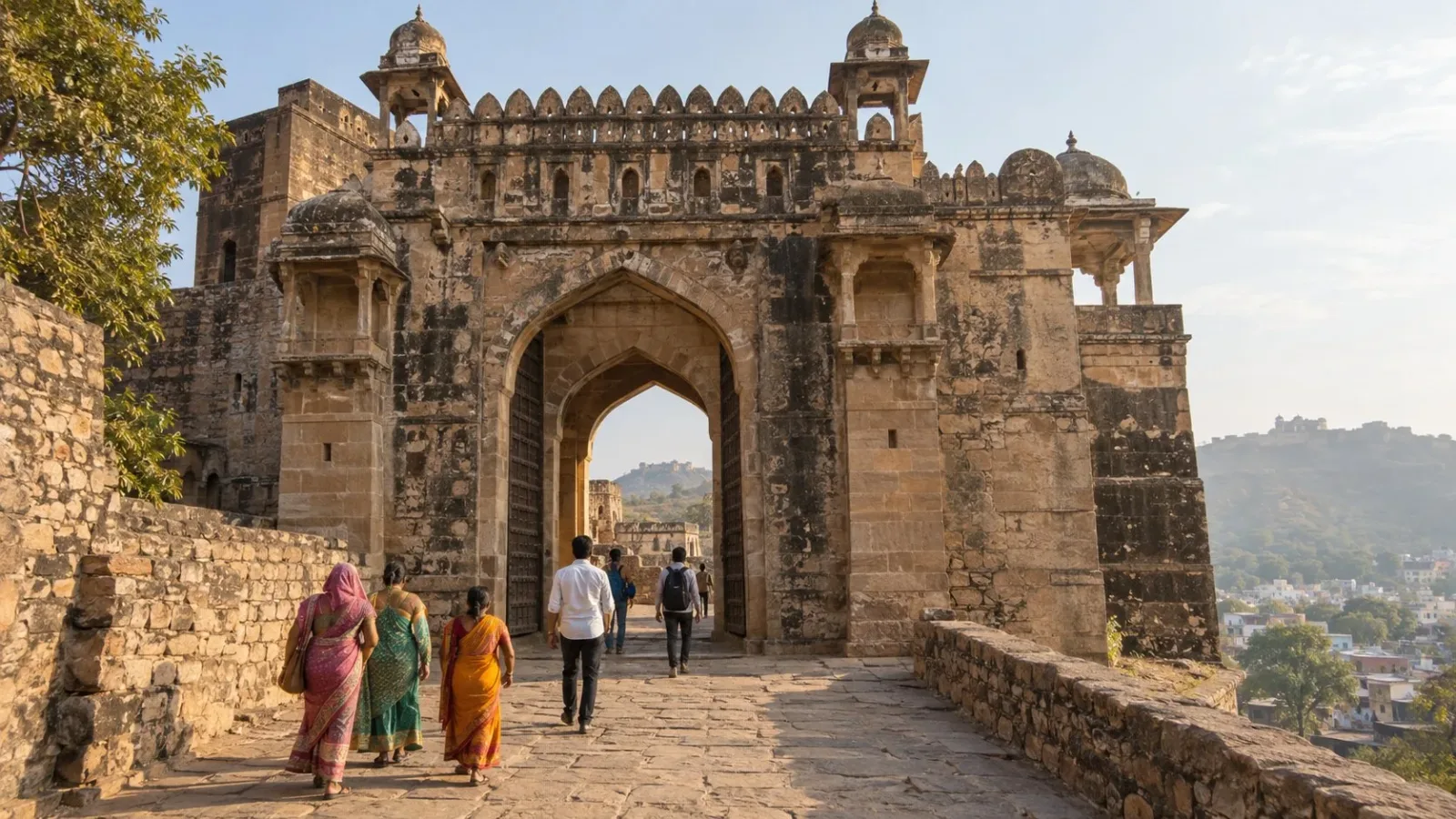
AI illustration: fictional Chanderi-inspired gateway scene. Not an actual location, person, exact architectural reconstruction, route or current condition.
Choose cloth or architectural space
Our suggestion is textiles for material and design, or town architecture for palace spaces, gateways and a hill fort. National, state and district accounts give Chanderi both identities.
Start with one interest and let the other add context. A textile has a different scale from a palace courtyard; that contrast is more useful than collecting names that share a destination.
Textiles: material, appearance and motifs
Madhya Pradesh Tourism describes Chanderi cloth through lightness and a sheer appearance, naming cotton, silk and cotton-silk varieties. It also names coin, flower and peacock motifs.
Choose this emphasis if you like understanding how material and design contribute to an object’s character. The body of the cloth and a decorative motif are related but different subjects. These are attributed general descriptions, not tests for identifying an individual piece.
Keep the fabric question specific
Incredible India’s craft account likewise highlights lightness, sheer texture, sheen and motifs. The useful question is which aspect interests you: the fabric’s appearance, its material or its design.
A familiar sari name is a beginning, not a complete explanation. This comparison does not supply a making sequence, a product certificate or a judgement about a particular textile’s composition or origin.
Palaces: openings and connected spaces
Madhya Pradesh Tourism describes Koshak Mahal as a square arrangement with large arched openings. It describes Raja Rani Mahal through separate structures joined by colonnaded passageways, with courtyards and carved pillars.
Choose this side if the arrangement of spaces attracts you. An opening belongs to a larger composition; a courtyard relates surrounding parts. These are architectural subjects, not a proposed interior route.
Gateways and the hill-fort setting
State tourism describes stone-built Badal Mahal Gate with the fort on the hilltop, while Kati Ghati is described as a rock-cut gateway. The district account also names the fort and gateways among Chanderi’s monuments.
Keep these forms distinct from palace arrangements. A gateway and a hill fort widen the architectural question without turning every structure into another palace or a compulsory sequence.
Let the second interest add context
Choose textiles when material and design hold your attention. Choose architecture when courtyards, openings, gateways and the town’s hill-fort setting do. These are editorial preferences, not an official ranking.
One main interest can be enough. Check official visitor information separately. No private-home visit, workshop, demonstration, buying advice, route, interior or current architectural condition is established by this comparison.
Sources
Questions people ask at the gate
Is Chanderi only a textile subject?
No. National, state and district accounts describe a textile identity alongside palaces, gateways and the fort.
What makes the textile interest specific?
Attributed descriptions of material, lightness, sheer appearance and decorative motifs.
Does that authenticate an individual textile?
No. General descriptions do not identify a particular item’s composition, origin or authenticity.
What makes the palace interest specific?
Koshak Mahal’s square arrangement and arches, and Raja Rani Mahal’s connected structures, courtyards and pillars in the state description.
Are a gateway and a palace the same subject?
No. Their different forms add different architectural questions within the town.
Does this arrange a workshop or private-home visit?
No. No demonstration, private space, purchase, interior route or current visitor arrangement is established.
Next walk starts at a new gate.
Was this helpful?
one tap, no sign-up

A Miranda House graduate and lawyer who traded courtrooms for slow travel. Cheshta travels with the batches we host ourselves, with a soft spot for travelling alongside elders.