




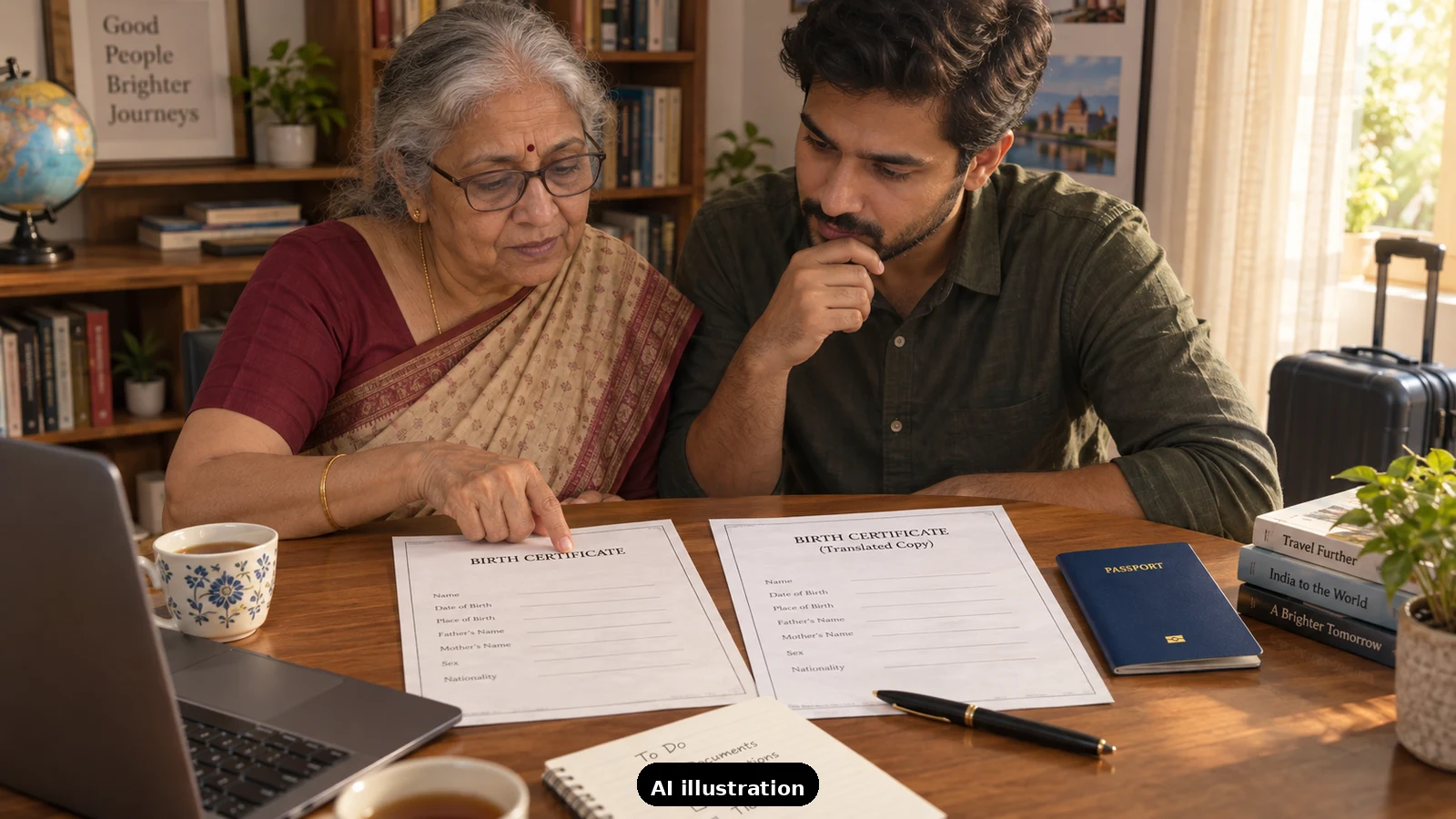
Short answer: you need a translation only when the certificate is not in a language the consulate accepts. The birth certificate itself is required when a parent sponsors your trip - the German missions' checklist for India lists it explicitly as relationship proof when the sponsor is a parent - and the translation question is decided entirely by the language printed on your document.
What the consulates actually say. The German missions' Schengen guidance for India states that documents not issued in German or English must be submitted together with a translation. The UK requires that any supporting document not in English or Welsh be accompanied by a certified translation. The US applies the same principle to foreign-language documents. Different wording, one rule: the officer must be able to read your document, and the translation must be verifiable.
Check your certificate before paying anyone. Many Indian birth certificates are issued in English, or bilingually, by the municipal authority - especially recent computerized ones. If yours is fully in English, most consulates need nothing more: no translation, no notarization of a translation, nothing. An older certificate in Hindi or a regional language is the one that needs work. Also check that names on the certificate match the passport spelling exactly; a mismatch causes more trouble than a missing translation.
When translation is needed, do it properly. A proper certified translation carries the translator's signed statement that it is accurate, the date, and the translator's name and contact details - that is the UK standard, and it satisfies the general expectation elsewhere too. Use a professional translator or a translation agency; a translation you wrote yourself, however accurate, is not certified. Keep the original-language document and the translation clipped together in the file.
The cleaner alternative: reissue in English. If the certificate is old or regional-language, ask the issuing municipal body or the state registrar for an English extract or a fresh computerized copy. Many issue them routinely. An original English certificate from the authority is stronger evidence than any translation and removes the question from the officer's desk entirely.
Does it also need an apostille? For short-stay tourist and visit visas, generally no - the Schengen checklists for India ask for the birth certificate as relationship proof, not an apostilled one. Apostille enters the picture for long-stay categories like family reunion, which is a different process. If your visa agent insists on an apostille for a short tourist visit, ask them which checklist line demands it.
Where this fits in the sponsorship file. Remember the shape of the parent-sponsored application: sponsor letter with the sponsor's passport copy, the sponsor's bank statements for the last three months, and the birth certificate as the relationship link between you. The birth certificate is what turns a generous relative into a documented sponsor, so give it the same care as the financial papers.
How we handle this at TripKeeper. When we prepare a sponsored application, we go through the relationship documents line by line - language, name spellings, translation certification - before the file reaches VFS, so there are no counter surprises. Send us a trip-planning inquiry if you would like that pair of eyes on your file.

A Miranda House graduate and lawyer who traded courtrooms for slow travel. Cheshta travels with the batches we host ourselves, with a soft spot for travelling alongside elders.
Planning your next trip?
We'll handle insurance, hotels, airport assistance and the itinerary — the same way we do it for every trip.
Questions on this article
asked by readers, answered by us
Was this helpful?
one tap, no sign-up