




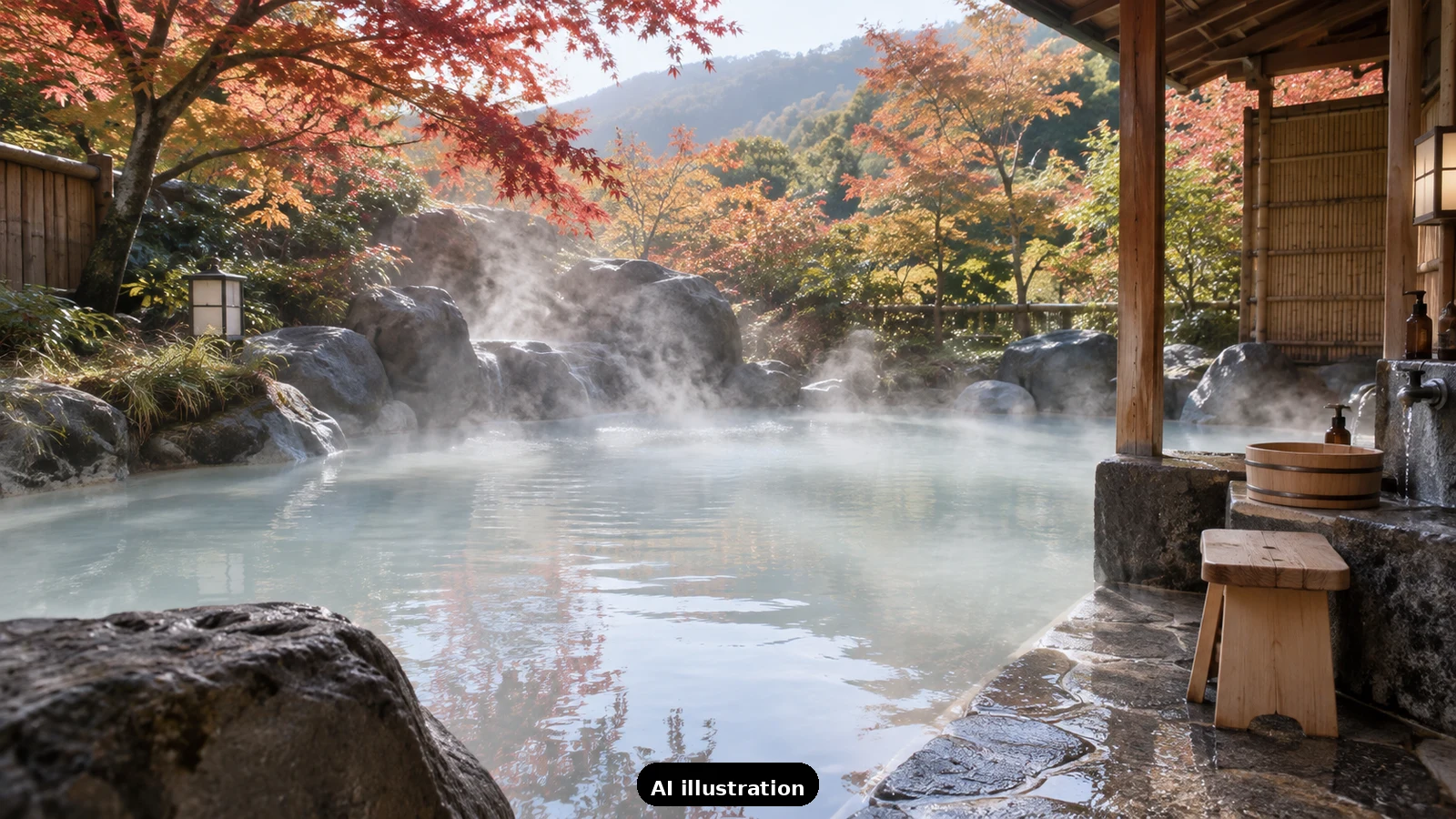
For many Indian travellers the onsen is the most anticipated and most dreaded hour of the Japan trip. The anticipation is right - a hot mineral soak under maple trees after a long walking day is genuinely one of travel's great pleasures. The dread is usually unnecessary. The rules are few, logical and kindly enforced, and there is a privacy option for every comfort level. Here is everything before you soak.
The golden sequence. Every onsen, public or private, follows the same order. Undress fully in the changing room - no swimsuits, ever, because fabric contaminates the mineral water. Take your small modesty towel and go to the washing area: sit on the stool, soap and rinse yourself completely. Only then, clean, ease into the bath. The small towel stays out of the water - folded on your head is the classic local move. That is the entire ritual, and it takes one visit to feel natural.
About the nudity, honestly. Yes, public onsen are naked. They are also gender-separated, dim, steamy and utterly non-sexual - the Japanese concept of "skinship" treats shared bathing as ordinary as shared dining. Nobody looks, and the small towel covers what you want covered while walking. Most first-timers report the self-consciousness evaporating within minutes. If it does not appeal at all, that is fine too - read on for the private options.
Every privacy option, in order of seclusion. Kashikiri baths are private onsen rooms you reserve by the hour at many ryokan and day spas - usually for a fee, booked at the front desk, and you get a key. Family baths are the same idea sized for parents with children. En-suite rotenburo rooms put a private open-air bath on your own balcony, included in the room price at higher-end ryokan - the full onsen experience with zero strangers. And mixed-gender swimsuit-required spa theme parks exist for a fully covered day out.
Tattoos: the rule that is thawing. Historically, tattoos were banned at many onsen because of their association with organised crime. The picture in 2026 is much softer: many facilities now accept tattooed guests, some ask only that small tattoos be covered with a sticker or bandage, and private kashikiri baths almost never care. If you have visible tattoos, check the specific facility's policy on its website before you go - it is always stated.
Health and comfort notes for Indian travellers. The water is hot - 40-43 degrees is normal - so soak in ten-minute rounds with breaks, hydrate before and after, and skip the bath entirely if you have heart conditions, uncontrolled blood pressure, or are pregnant without a doctor's go-ahead. Do not bathe after alcohol. Tie up long hair so it never touches the water, and remove jewellery that hot sulphur water can tarnish.
Ryokan onsen specifics. At a ryokan, the public bath is almost always free for overnight guests. Wear the yukata provided in your room, left side over right - the other way is for the deceased, the one rule worth remembering - and carry the small towel down with you. Men and women use separate entrances, usually marked by coloured curtains. Go early morning for the magical empty soak.
How TripKeeper handles onsen comfort. When our travellers want the onsen experience, we match the privacy level to the person: ryokan with en-suite rotenburo for honeymooners and modest bathers, kashikiri reservations made in advance for families, and tattoo-friendly facilities confirmed before booking - no surprises at the curtain. Our tour leaders walk first-timers through the ritual on day one. Send a "Plan your trip" inquiry and tell us your comfort level; we will book the bath to fit it.

A Miranda House graduate and lawyer who traded courtrooms for slow travel. Cheshta travels with the batches we host ourselves, with a soft spot for travelling alongside elders.
Planning your next trip?
We'll handle insurance, hotels, airport assistance and the itinerary — the same way we do it for every trip.
Questions on this article
asked by readers, answered by us
Was this helpful?
one tap, no sign-up
