




- Nagano access
- 80 min from Tokyo, 8,450 yen
- Hokkaido access
- 90-min flight Tokyo-Sapporo
- Star sight
- Snow monkeys: 800 yen entry
- Snow quality
- Hokkaido's powder is Japan's best
- Budget tilt
- Nagano cheaper; Feb doubles Sapporo
Both are Japan's snow country, but they are different kinds of trip. Nagano is a Tokyo side-quest - 80 minutes on a shinkansen and you are among temples, ski slopes and hot-spring-bathing monkeys. Hokkaido is its own chapter: a separate flight, bigger landscapes, better powder, and a festival season that changes hotel prices by 2x. Here is the family tie-breaker, factor by factor.
Getting there: the biggest practical gap
Nagano could not be simpler. The Hokuriku Shinkansen from Tokyo takes 80-100 minutes (fastest Kagayaki 1 hour 17), about 8,450 yen reserved one way, trains several times an hour, fully covered by the Japan Rail Pass (japan-guide, JR fare tables). Karuizawa's outlet mall is one stop closer, about 65 minutes. Hokkaido asks more: Tokyo to Sapporo is a 90-minute flight (LCC one-ways from around 5,500 yen when booked early - details in our Tokyo to Sapporo guide) or about 8 hours by shinkansen-plus-limited-express. With kids and grandparents, Nagano costs you a morning; Hokkaido costs you a travel day each way.
What the days feel like
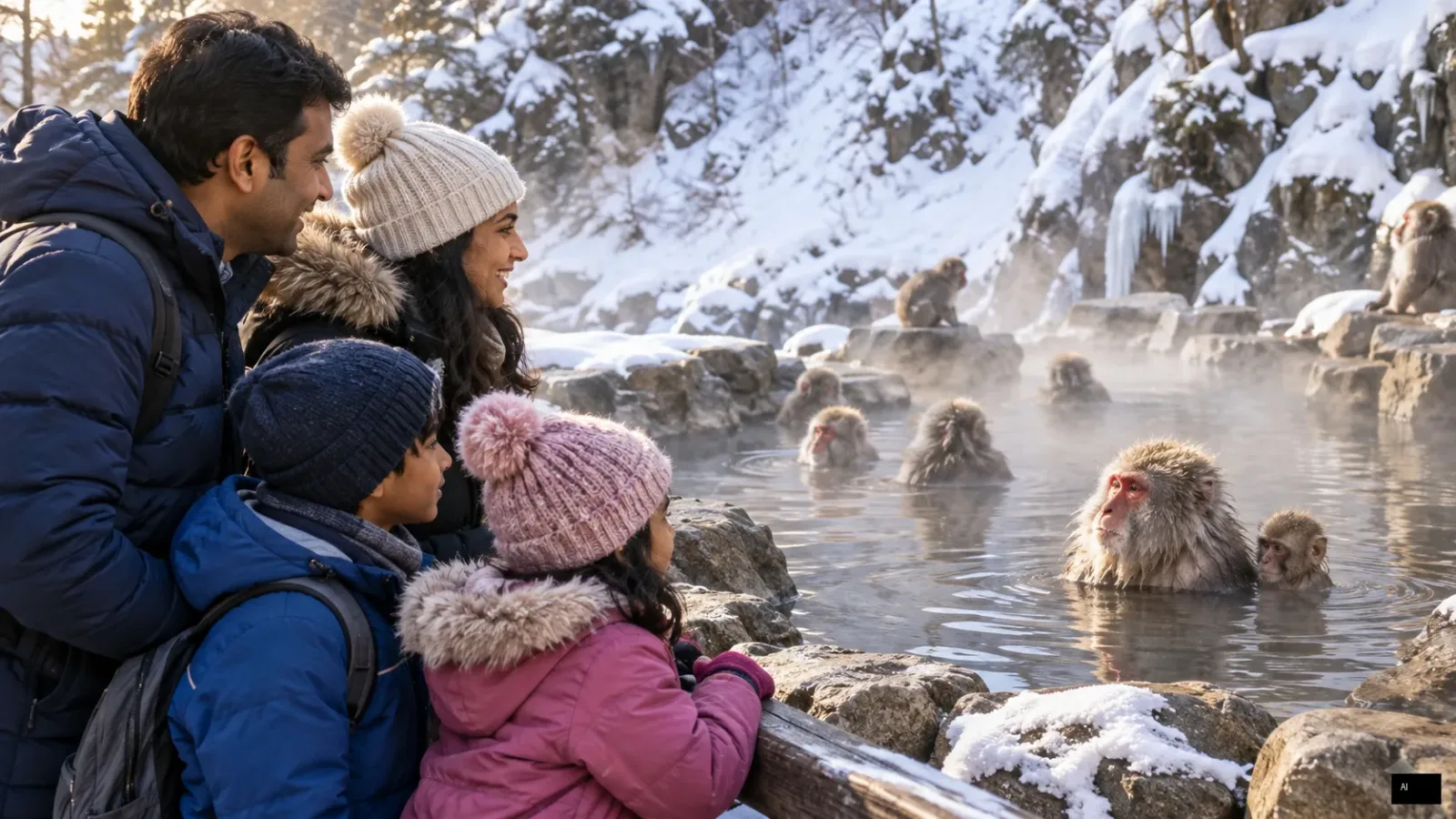
Nagano's highlights cluster tightly: Zenkoji temple in Nagano city, the snow monkeys of Jigokudani (800 yen adults, 400 yen children 6-17, open year-round - official site), Matsumoto's black castle, and Hakuba's Olympic ski slopes. The monkey park is a family winner - wild macaques soaking in a hot spring - with two honest caveats: the approach path is unpaved (no wheelchairs or strollers), and monkeys bathe mainly in the cold months, so winter visits are the reliable show. In the busy January-March window the park averages about 4,000 visitors a day and now sells date-specific web tickets from three months ahead - book one. Hokkaido's highlights spread wide: Sapporo city, Otaru's canal, Niseko's ski fields, Furano's lavender (mid-July peak) - each an excursion of its own. The upside: Niseko is the most foreigner-friendly resort in Japan (English menus are the default in Hirafu), and nothing in Nagano matches the Sapporo Snow Festival (next: February 4-11, 2027 - see our Hokkaido winter guide).
Snow, food and comfort
Skiing families: Hokkaido's powder is famously lighter and more reliable - it is why Australians effectively colonized Niseko. Hakuba answers with steeper, more dramatic Alps terrain and easier access. Non-skiing families: Nagano's compact sightseeing wins for a short trip; Hokkaido wins for a slow one - onsen towns, seafood markets, wide empty roads. Vegetarians will eat more easily in Sapporo (soup curry shops with plant-based bases, a vegan ramen counter, Indian restaurants since 1982 - our Sapporo vegetarian guide) than in Nagano's small towns, where dashi-free ordering needs more persistence; from a Tokyo base, of course, Nagano day-trippers keep Tokyo's full Indian restaurant scene.
The budget picture
Nagano is the cheaper snow fix: shinkansen 8,450 yen versus Tokyo-Sapporo flight fares, a monkey park at 800 yen, and generally modest hotel rates. Hokkaido is not expensive by Japan standards - a business-hotel double averages 17,797 yen against the national 16,067 (hotelbank October 2026 survey, from our Hokkaido budget post) - but Snow Festival week in February roughly doubles Sapporo rates, and the extra travel day adds a hotel night at each end. The verdict: five days or fewer with a Tokyo anchor - Nagano. A week or more, deep winter or lavender July, or serious skiers - Hokkaido. Families who want both: they connect fine through Tokyo, just budget the travel day.

A Miranda House graduate and lawyer who traded courtrooms for slow travel. Cheshta travels with the batches we host ourselves, with a soft spot for travelling alongside elders.
Planning your next trip?
We'll handle insurance, hotels, airport assistance and the itinerary — the same way we do it for every trip.
Questions on this article
asked by readers, answered by us
Was this helpful?
one tap, no sign-up