




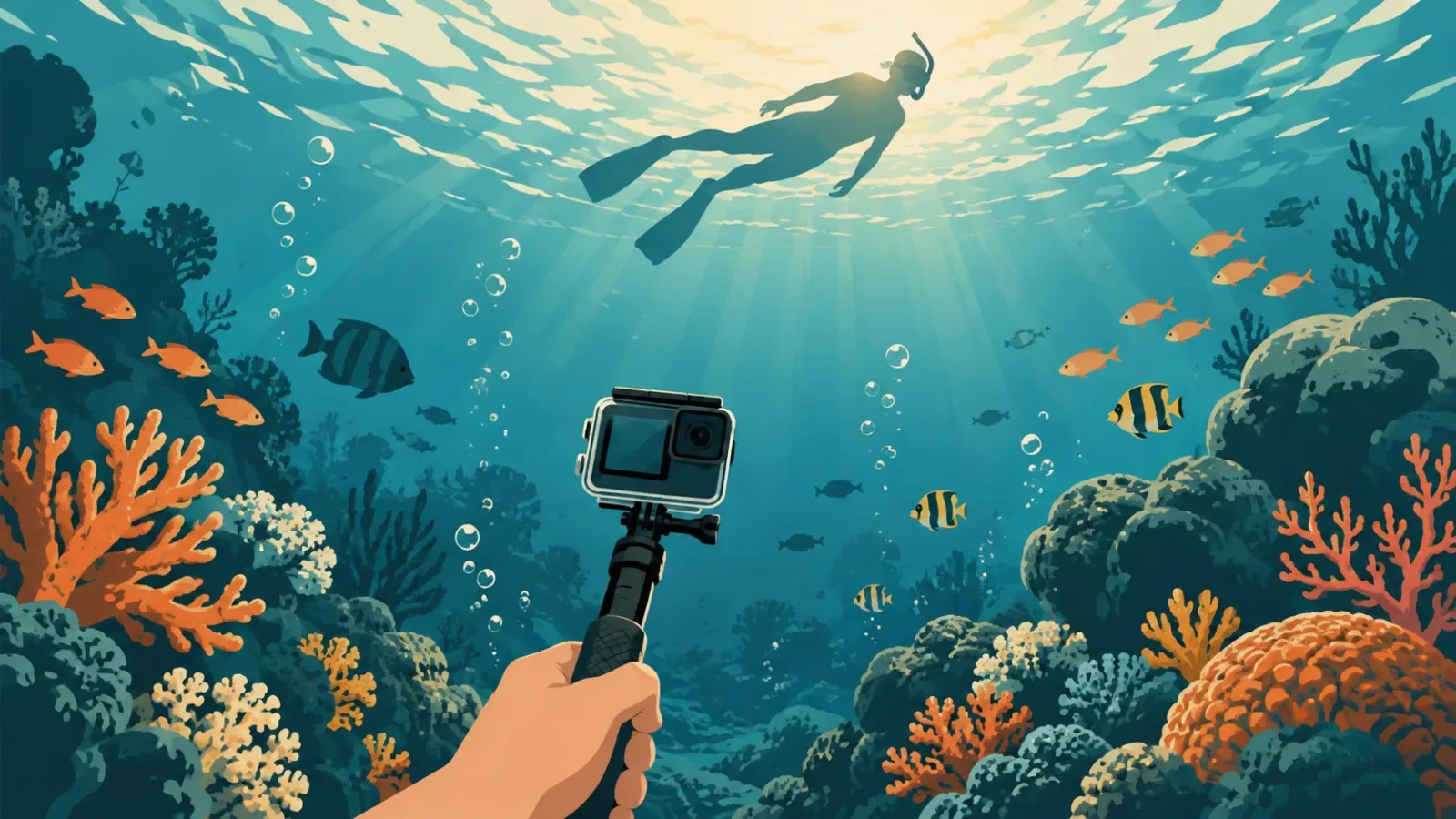
- GoPro HERO13 Black
- Waterproof to 10 m/33 ft without any housing; 60 m with the Protective Housing. Condition: door latch closed before the camera touches liquid (GoPro support).
- DJI Osmo Action 6
- 20 m without the Waterproof Case, 60 m with it, IP68 rated. Battery and USB-C covers closed, Glass Lens Cover tightened. DJI lists 16 m for Action 3 and 18 m for Action 4.
- Insta360 Ace Pro 2
- Waterproof to 39 ft (12 m) without the Dive Case, 60 m with it. Battery and USB covers fully closed, lens guard installed, rubber seals free of debris (Insta360 manual).
- The asterisks
- Every rating assumes sealed covers and clean seals. No hot springs, no jumping in at speed, no corrosive liquids, and rinse with fresh water after the sea.
- Snorkel vs scuba
- Snorkelling and swimming stay within the bare-camera ratings of the models cited here. For diving, match your planned maximum depth and activity to your exact model's guidance, use the maker-recommended housing where it applies, and never exceed the relevant rating.
Every beach holiday has the same scene: someone wades into the sea holding an action camera worth a month's rent at arm's length, trusting a number from a spec sheet they never actually read. The number is real. It also comes with more conditions than a budget airfare.
Short answer: it depends on the model. Without a housing, the three models checked here are rated to 10 m (GoPro HERO13 Black), 12 m or 39 ft (Insta360 Ace Pro 2) and 20 m (DJI Osmo Action 6). With their official housings, all three go to 60 m. The rating only holds if the camera is sealed exactly as the maker specifies, and none of the three ratings covers hot springs or high-speed entries into water. Sources at the end, checked 25 October 2026.
The numbers, model by model
- GoPro HERO13 Black: waterproof to 10 m/33 ft without any housing; the Protective Housing takes it to 60 m (GoPro support).
- Insta360 Ace Pro 2: waterproof up to 39 ft (12 m) without the Dive Case; the Dive Case boosts that to 196 ft (60 m) (Insta360's manual).
- DJI Osmo Action 6: 20 m without the Waterproof Case, 60 m with it, IP68 rated (DJI specs). Ratings move by generation: DJI lists 16 m for Osmo Action 3 and 18 m for Osmo Action 4, so check the page for your exact model, not the one you wish you had.
What the rating actually covers
A depth rating is a promise about a correctly sealed camera, nothing more. DJI's condition: close the battery compartment cover and the USB-C port cover, and tighten the Glass Lens Cover. Insta360's: battery and USB covers fully closed, lens guard securely installed, rubber seals free of debris or dust. GoPro's: door latch closed before the camera touches liquid. Miss any one of these and the rating on the box is decoration.
And the exclusions matter as much as the number. DJI says do not use the camera in hot springs or extreme underwater environments, or in corrosive or unknown liquids, and recommends the Waterproof Case for long-term underwater shooting or high water impact pressure. Insta360 warns against high-humidity environments like saunas, steam rooms and hot springs for longer than an hour, and against jumping into water at high speed with the camera. GoPro's care instruction: rinse with fresh water (side door closed) and dry after dirty or salty environments.
Snorkelling, swimming or scuba
For the way most families actually use these cameras, the bare ratings are generous. A snorkeller floats at the surface and duck-dives a metre or two; a swimmer's camera barely leaves arm's depth. All three models cited here give you 10 m or more of headroom for that.
Diving needs a careful match, not a blanket rule. Some dives stay shallow, others go deep, and the right setup depends on both. Check your planned maximum depth and activity against your exact model's guidance. Where the plan or activity exceeds the bare-camera rating, use the maker-recommended housing: GoPro, DJI and Insta360 each rate their housed versions of these models to 60 m. Whatever you choose, never exceed the relevant rating.
The habits that keep the rating real
- Close and check every cover, latch and lens guard before the camera touches water.
- Look at the rubber seals for sand, hair or dust; one grain is enough to compromise them.
- Walk into the water; do not jump in at speed with the camera.
- After the sea, rinse with fresh water and dry.
- Keep it out of hot springs, saunas and steam rooms entirely.
The short version
- Bare camera: GoPro HERO13 Black 10 m, Insta360 Ace Pro 2 12 m, DJI Osmo Action 6 20 m. Older generations rate lower (DJI Action 3: 16 m, Action 4: 18 m), so check your model's own spec page.
- With the official housing: 60 m for all three.
- The rating assumes sealed covers, clean seals, gentle entries and no hot springs.
- Snorkelling and swimming: fine within the rating. Diving: match your planned depth and activity to your exact model's guidance, use the maker-recommended housing where it applies, and never exceed the relevant rating.

A Miranda House graduate and lawyer who traded courtrooms for slow travel. Cheshta travels with the batches we host ourselves, with a soft spot for travelling alongside elders.
Planning your next trip?
We'll handle insurance, hotels, airport assistance and the itinerary — the same way we do it for every trip.
Questions on this article
asked by readers, answered by us
Was this helpful?
one tap, no sign-up