




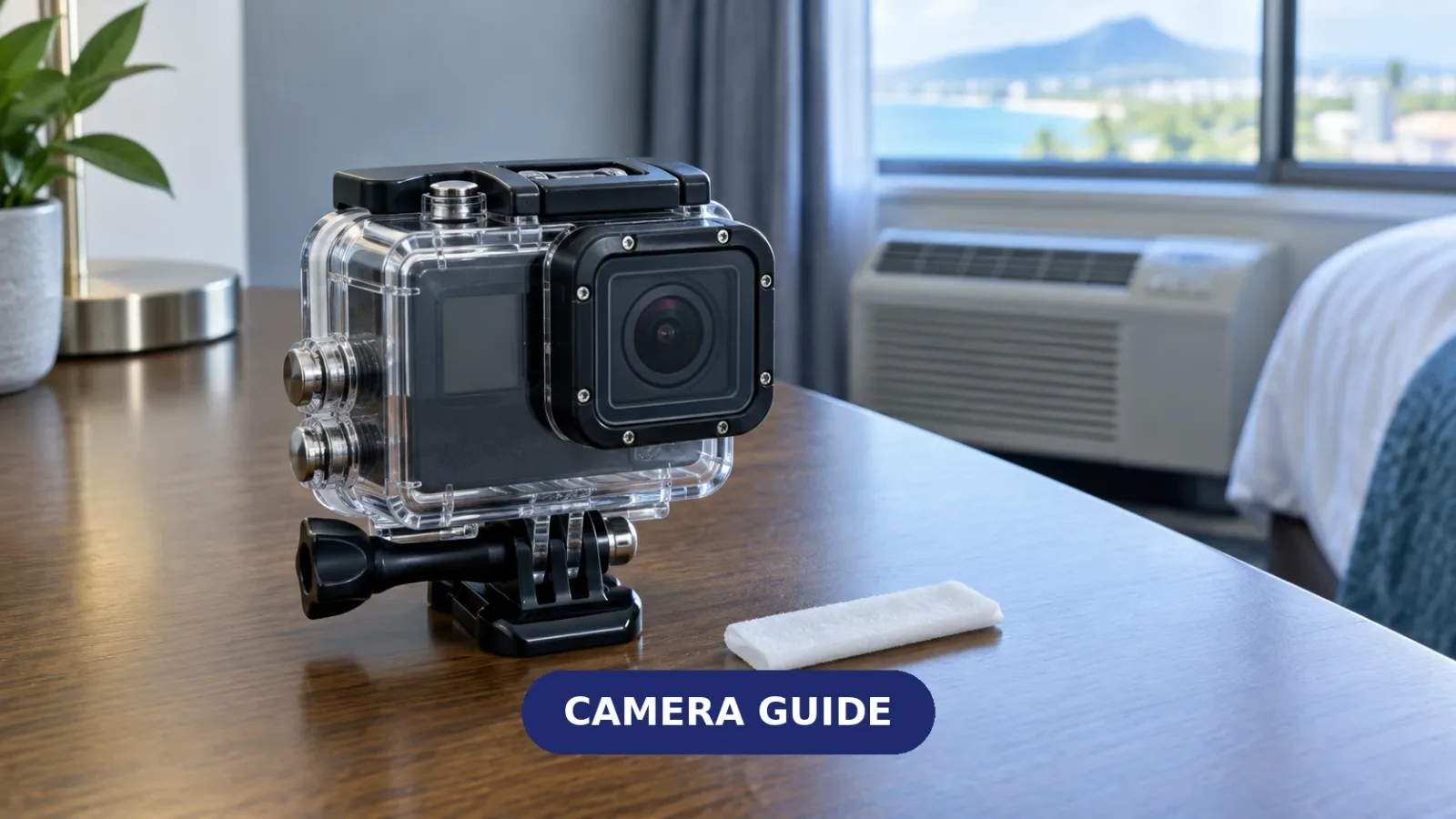
- Why it fogs
- Warm humid air trapped inside condenses in cooler water
- Biggest fix
- Open and close the housing in a dry AC room, not outside
- Inserts
- Anti-fog inserts or silica gel; keep clear of seals and buttons
- Material
- Plastic housings fog more; aluminium rarely does
Short answer first: in most cases the fog is condensation, not a leak - warm, humid air you sealed inside the housing turns to droplets on the coldest surface, usually the lens port, when the housing meets cooler water. But fog alone does not prove the housing is leak-free: if your housing or camera shows a moisture or leak warning, follow the manufacturer's procedure for it, never open the housing underwater, and always put safe dive procedure above saving a camera. So every fix that works comes down to one idea: seal less moisture in, and trap what little moisture remains. Here is how, step by step.
Why housings fog
Backscatter's housing maintenance guide explains the mechanism directly: condensation happens when you take a housing from a warm, moist environment - say a hot tropical island - and place it into a cooler one like the ocean. The humid air trapped at closing time carries the water that later fogs the port. Two practical consequences follow: the air you close the housing in matters more than anything else, and plastic (polycarbonate) housings suffer this much more than aluminium ones, where condensation is rarely a problem, per the same guide.
Seal it dry: the fix that matters most
Open and close the housing in your air-conditioned room or cabin, not outside on the beach or boat, per Backscatter. Cool, dry, conditioned air inside the housing means far less moisture available to condense later. Work calmly: assemble the camera, check the O-ring is clean and seated, and close up before you step out. If you must open the housing outside between dives, Backscatter's divers' trick is to blow dry air from a scuba tank into the housing before closing it again.
Use an anti-fog insert or silica gel
A desiccant absorbs the moisture you could not keep out. Camera makers sell purpose-made inserts: GoPro's own Anti-Fog Inserts are rated for cold and humid environments, last up to four uses each, and can be dried for reuse on a pan in the oven at 300°F for five minutes, then stored in an airtight bag - follow your own insert brand's instructions, which may differ. PADI's guide to preventing housing leaks suggests a sachet of silica gel - or, in a pinch, a carefully folded tissue - in the space below where the camera sits, with an important caution: the sachet must not interfere with button functions, the housing's seal, or the fit of the camera. Backscatter adds the honest limit: desiccants help, but do not always stop the problem, which is why the dry-assembly habit comes first.
If it fogs anyway
Once droplets form inside, there is no fix underwater - you surface with soft, hazy footage. Back on the boat or beach, open the housing, let everything dry, wipe the port, put in a fresh or re-dried insert, and reseal in the driest air you can find. If fogging keeps happening on every dive in the same spots, check the O-ring and sealing surfaces for hair, sand or salt crystals - moisture wicking along a dirty seal adds to the problem, which is why PADI's leak-prevention routine starts with seal inspection.
Quick questions
Why does my housing fog only once it is in the water? Because the water is cooler than the air you sealed inside. Humid tropical air trapped at closing condenses on the coldest surface - typically the lens port - when the housing cools down in the sea, per Backscatter's maintenance guide.
Do anti-fog inserts really work? They help, and camera makers sell them for exactly this purpose - GoPro rates its Anti-Fog Inserts for cold and humid environments. But per Backscatter, desiccants help without always stopping fogging, so combine inserts with sealing the housing in dry, air-conditioned air.
Can I use ordinary silica gel packets? Yes - PADI's guide suggests a silica gel sachet in the space below the camera. The caution: it must not interfere with the buttons, the O-ring seal or the camera's fit in the housing.
How do I dry and reuse anti-fog inserts? Per GoPro's instructions for its own inserts: each lasts up to four uses; to reactivate, heat them on a pan in the oven at 300°F for five minutes and store in an airtight bag. Check your own brand's instructions, as they may differ.
Does the housing material matter? Yes. Per Backscatter, condensation is common enough in polycarbonate (plastic) housings to plan for, and rarely a problem in aluminium housings.

A Miranda House graduate and lawyer who traded courtrooms for slow travel. Cheshta travels with the batches we host ourselves, with a soft spot for travelling alongside elders.
Planning your next trip?
We'll handle insurance, hotels, airport assistance and the itinerary — the same way we do it for every trip.
Was this helpful?
one tap, no sign-up